


A pilot randomized controlled trial of de novo belatacept-based immunosuppression following anti-thymocyte globulin induction in lung transplantation
- PMID: 35286760
- PMCID: PMC9262777
- DOI: 10.1111/ajt.17028
A pilot randomized controlled trial of de novo belatacept-based immunosuppression following anti-thymocyte globulin induction in lung transplantation
Abstract
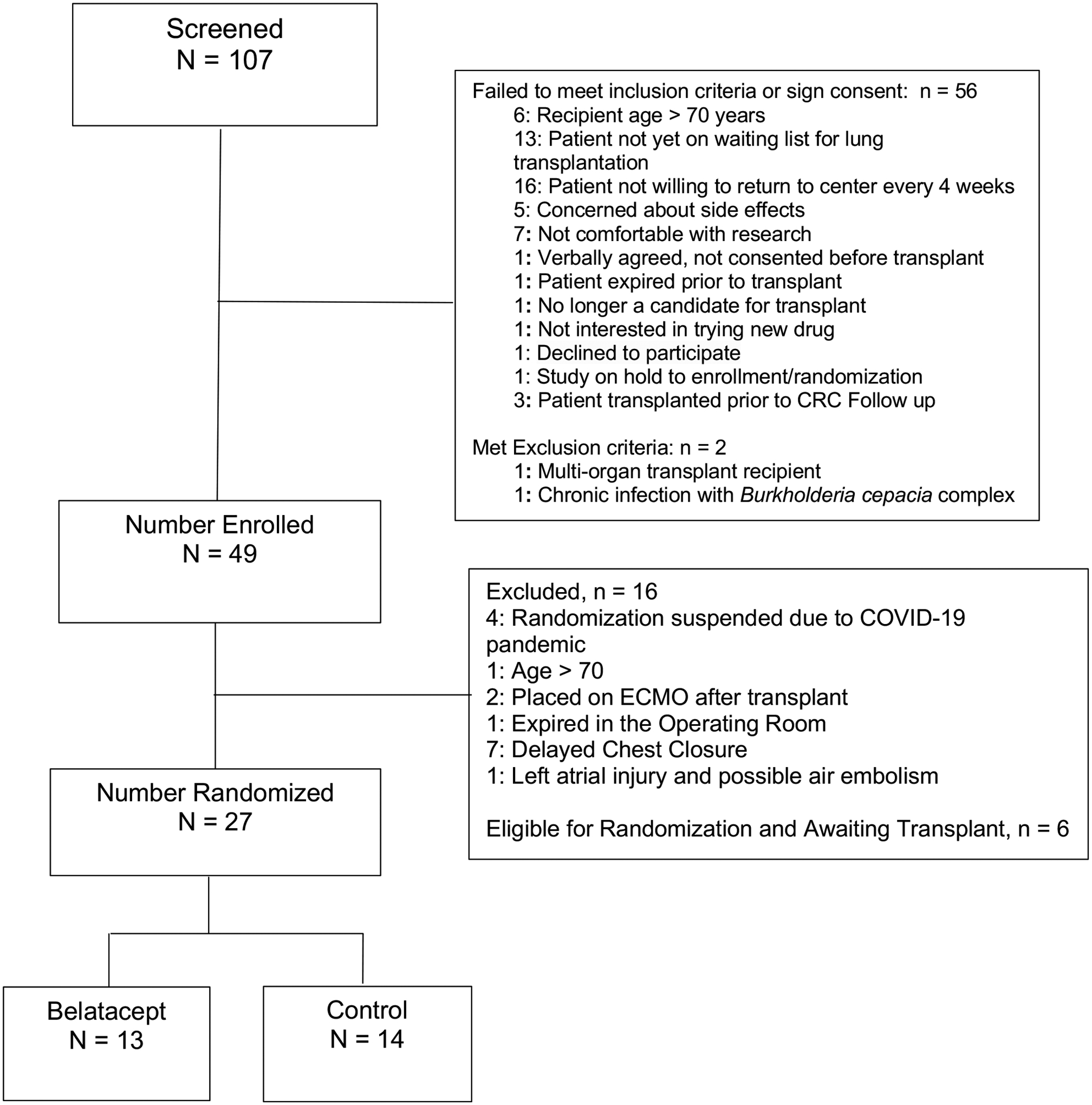
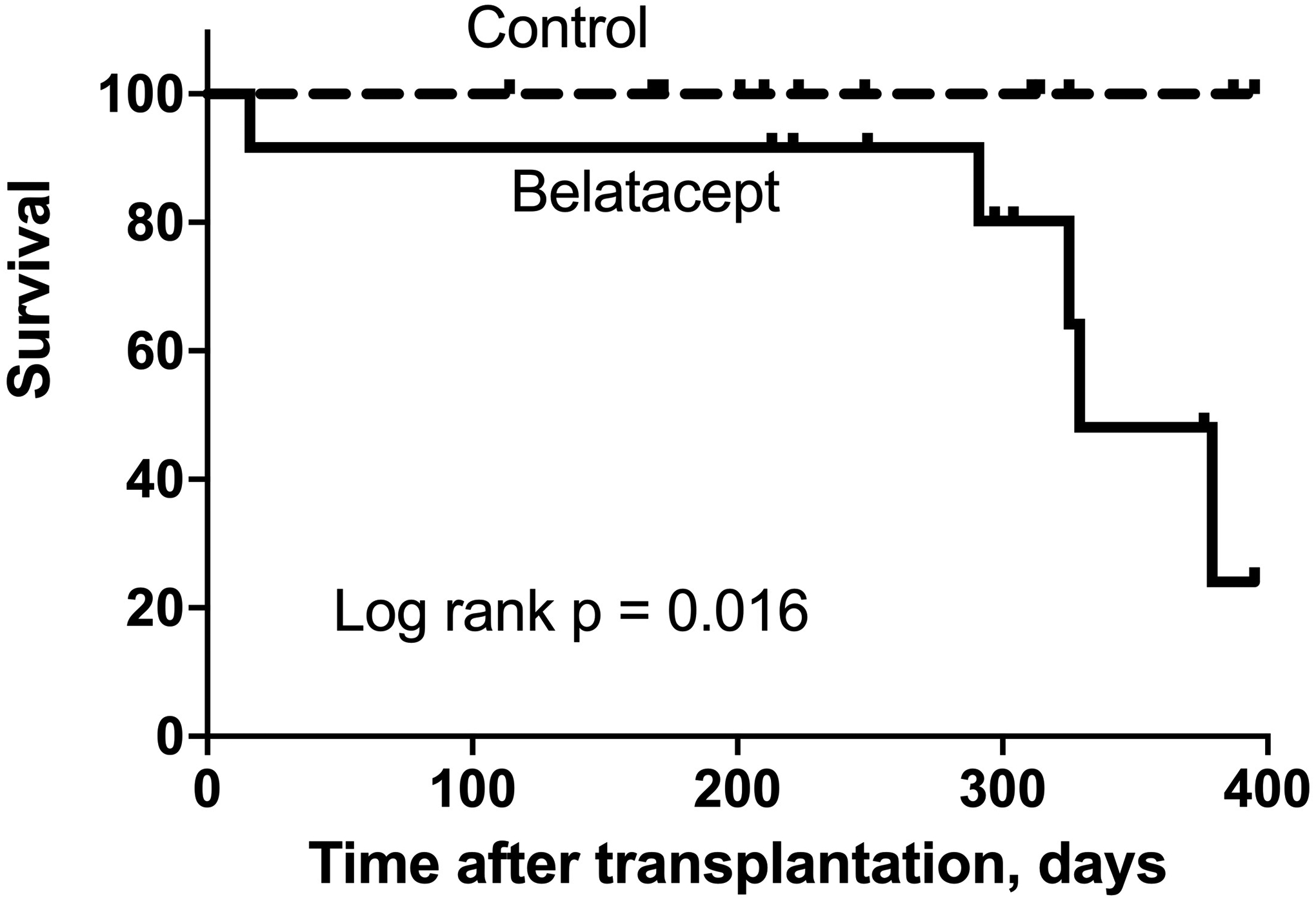
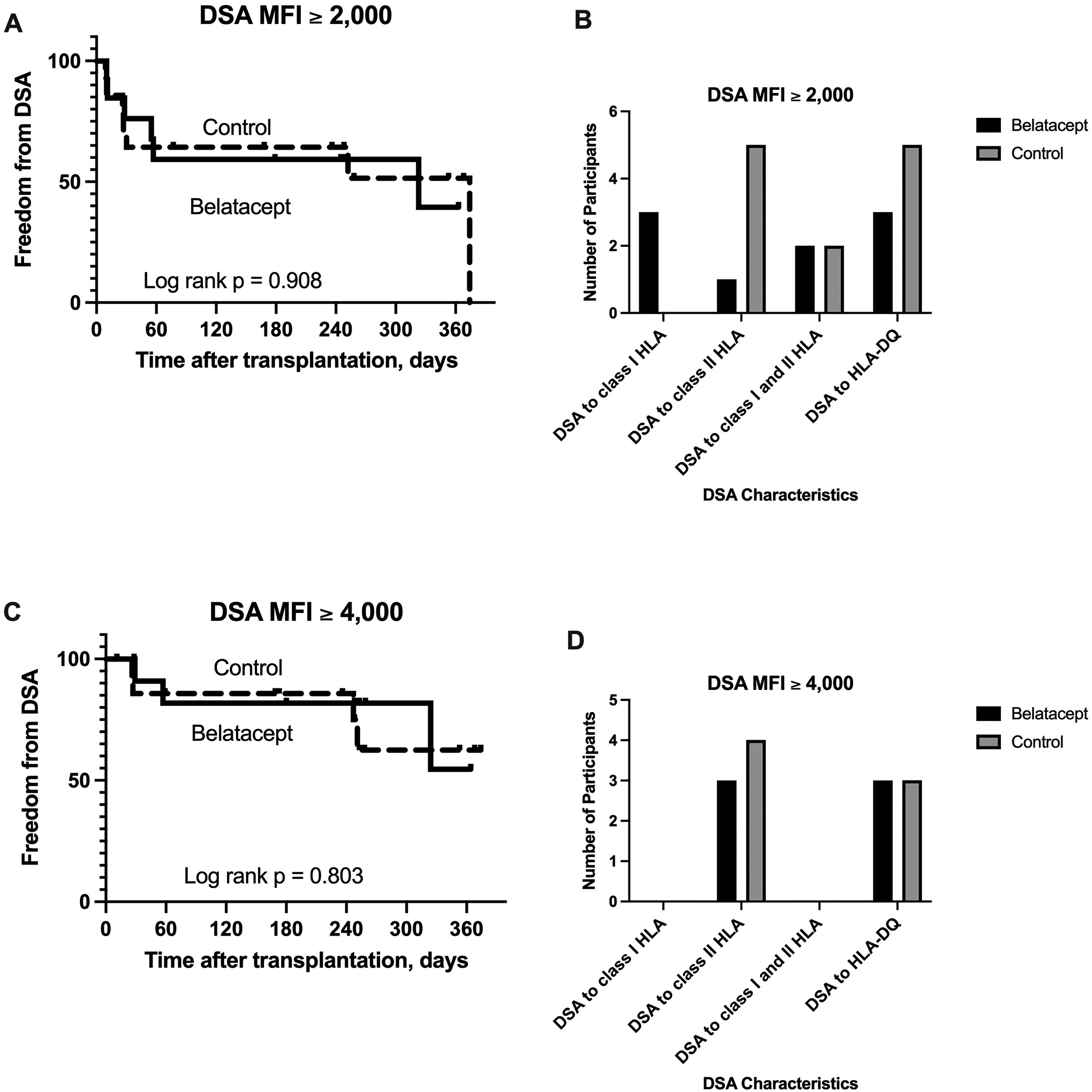
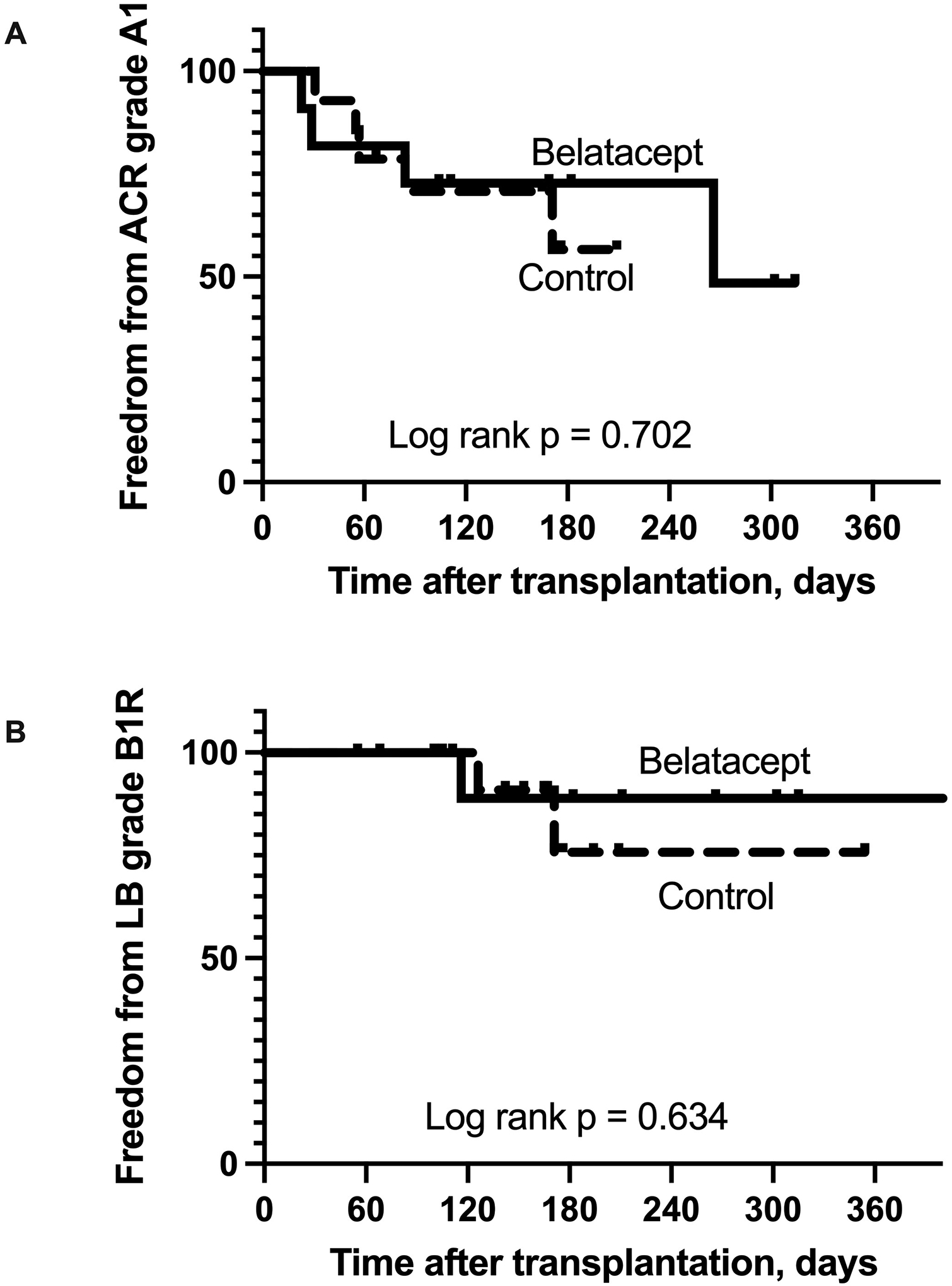
The development of donor-specific antibodies (DSA) after lung transplantation is common and results in adverse outcomes. In kidney transplantation, Belatacept has been associated with a lower incidence of DSA, but experience with Belatacept in lung transplantation is limited. We conducted a two-center pilot randomized controlled trial of de novo immunosuppression with Belatacept after lung transplantation to assess the feasibility of conducting a pivotal trial. Twenty-seven participants were randomized to Control (Tacrolimus, Mycophenolate Mofetil, and prednisone, n = 14) or Belatacept-based immunosuppression (Tacrolimus, Belatacept, and prednisone until day 89 followed by Belatacept, Mycophenolate Mofetil, and prednisone, n = 13). All participants were treated with rabbit anti-thymocyte globulin for induction immunosuppression. We permanently stopped randomization and treatment with Belatacept after three participants in the Belatacept arm died compared to none in the Control arm. Subsequently, two additional participants in the Belatacept arm died for a total of five deaths compared to none in the Control arm (log rank p = .016). We did not detect a significant difference in DSA development, acute cellular rejection, or infection between the two groups. We conclude that the investigational regimen used in this study is associated with increased mortality after lung transplantation.
Keywords: alloantibody; clinical research/practice; clinical trial; immunosuppressant - fusion proteins and monoclonal antibodies: belatacept; immunosuppression/immune modulation; lung transplantation/pulmonology.
© 2022 The American Society of Transplantation and the American Society of Transplant Surgeons.
Figures
Comment in
-
Great expectations.Am J Transplant. 2022 Jul;22(7):1735-1736. doi: 10.1111/ajt.17048. Epub 2022 May 11. Am J Transplant. 2022. PMID: 35543181 No abstract available.
References
-
- Chambers DC, Cherikh WS, Harhay MO, et al. The International Thoracic Organ Transplant Registry of the International Society for Heart and Lung Transplantation: Thirty-sixth adult lung and heart-lung transplantation report – 2019; Focus theme: Donor and recipient size match. J Heart Lung Transplant 2019; 38: 1042–55. - PMC - PubMed
-
- Burton CM, Iversen M, Carlsen J, et al. Acute cellular rejection is a risk factor for bronchiolitis obliterans syndrome independent of post-transplant baseline FEV1. J Heart Lung Transplant 2009; 28: 888–93. - PubMed
-
- Glanville AR, Aboyoun CL, Havryk A, et al. Severity of lymphocytic bronchiolitis predicts long-term outcome after lung transplantation. Am J Respir Crit Care Med 2008; 177: 1033–40. - PubMed
-
- Girnita AL, Duquesnoy R, Yousem SA, et al. HLA-specific antibodies are risk factors for lymphocytic bronchiolitis and chronic lung allograft dysfunction. Am J Transplant 2005; 5: 131–8. - PubMed
Publication types
MeSH terms
Substances
Grants and funding
LinkOut - more resources
Full Text Sources
Medical
