


CAR-T cell therapy for lung cancer: Potential and perspective
- PMID: 35289077
- PMCID: PMC8977151
- DOI: 10.1111/1759-7714.14375
CAR-T cell therapy for lung cancer: Potential and perspective
Abstract
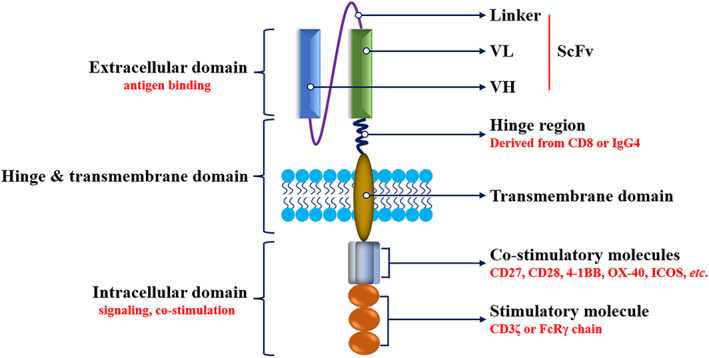
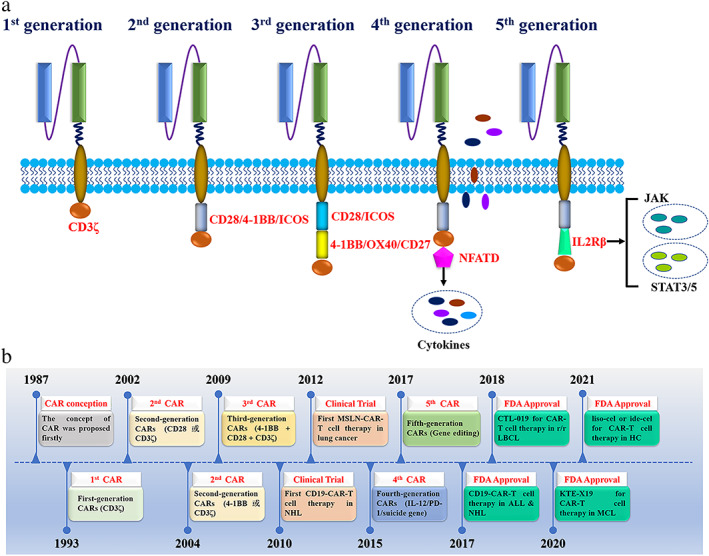
Lung cancer is the highest incidence and mortality of all cancers around the world. In the present immunotherapy era, an increasing number of immunotherapeutic agents including monoclonal antibody-targeted drugs have been used in the clinical treatment of malignancy, but it still has many limitations. Chimeric antigen receptor-modified T (CAR-T) cells, a novel adoptive immunotherapy strategy, have not only been used successfully against hematological tumors, but have also opened up new avenues for immunotherapy of solid tumors, including lung cancer. However, targeting lung cancer-specific antigens using engineered CAR-T cells is complicated by the lack of proper tumor-specific antigens, an immunosuppressive tumor microenvironment, a low level of CAR-T cell infiltration into tumor tissues, along with off-target effect, etc. Simultaneously, the clinical application of CAR-T cells remains limited because of many challenges such as tumor lysis syndrome, neurotoxicity syndrome, and cytokine release syndrome. In this review, we outline the basic structure and generation characteristic of CAR-T cells and summarize the common tumor-associated antigens in clinical trials of CAR-T cell therapy for lung cancer, and point out the current challenges and new strategies, aiming to provide new ideas and approaches for the pre-clinical experiments and clinical trials of CAR-T cell therapy in lung cancer.
Keywords: chimeric antigen receptor-modified T cellsimmunotherapylung cancersolid tumortargeting specific antigens.
© 2022 The Authors. Thoracic Cancer published by China Lung Oncology Group and John Wiley & Sons Australia, Ltd.
Figures
References
-
- Siegel RL, Miller KD, Jemal A. Cancer statistics, 2020. CA Cancer J Clin. 2020;70:7–30. - PubMed
-
- Hirsch FR, Scagliotti GV, Mulshine JL, Kwon R, Curran WJ Jr, Wu YL, et al. Lung cancer: current therapies and new targeted treatments. Lancet. 2017;389:299–311. - PubMed
-
- Sung H, Ferlay J, Siegel RL, Laversanne M, Soerjomataram I, Jemal A, et al. Global cancer statistics 2020: GLOBOCAN estimates of incidence and mortality worldwide for 36 cancers in 185 countries. CA Cancer J Clin. 2021;71:209–49. - PubMed
-
- Rahib L, Smith BD, Aizenberg R, Rosenzweig AB, Fleshman JM, Matrisian LM. Projecting cancer incidence and deaths to 2030: the unexpected burden of thyroid, liver, and pancreas cancers in the United States. Cancer Res. 2014;74:2913–21. - PubMed
-
- Allemani C, Matsuda T, Di Carlo V, Harewood R, Matz M, Nikšić M, et al. Global surveillance of trends in cancer survival 2000‐14 (CONCORD‐3): analysis of individual records for 37 513 025 patients diagnosed with one of 18 cancers from 322 population‐based registries in 71 countries. Lancet. 2018;391:1023–75. - PMC - PubMed
Publication types
MeSH terms
Substances
LinkOut - more resources
Full Text Sources
Other Literature Sources
Medical
