


Genetically programmed alternative splicing of NEMO mediates an autoinflammatory disease phenotype
- PMID: 35289316
- PMCID: PMC8920334
- DOI: 10.1172/JCI128808
Genetically programmed alternative splicing of NEMO mediates an autoinflammatory disease phenotype
Abstract
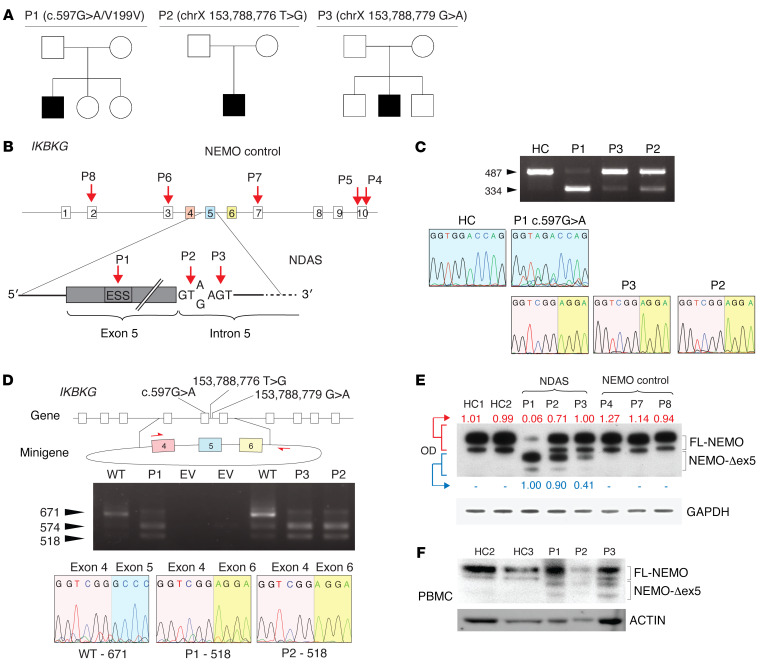
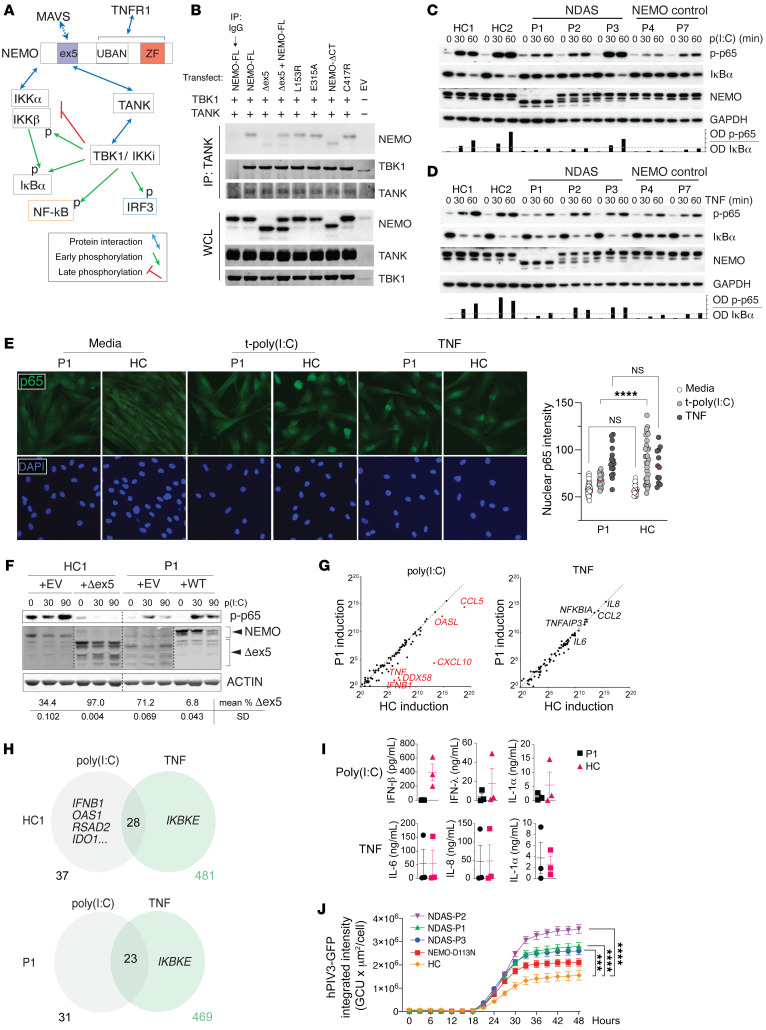
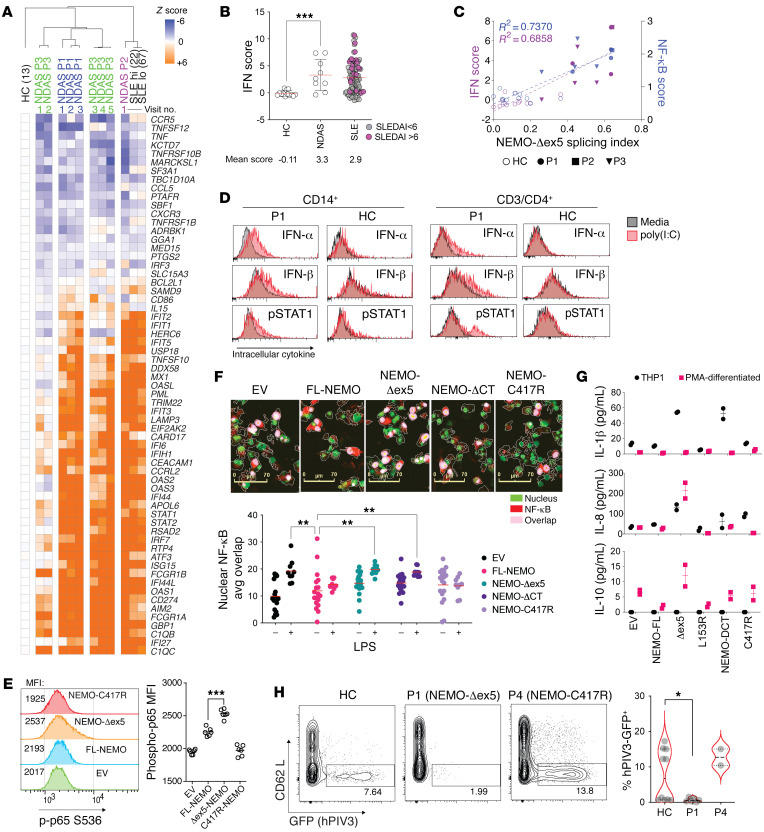
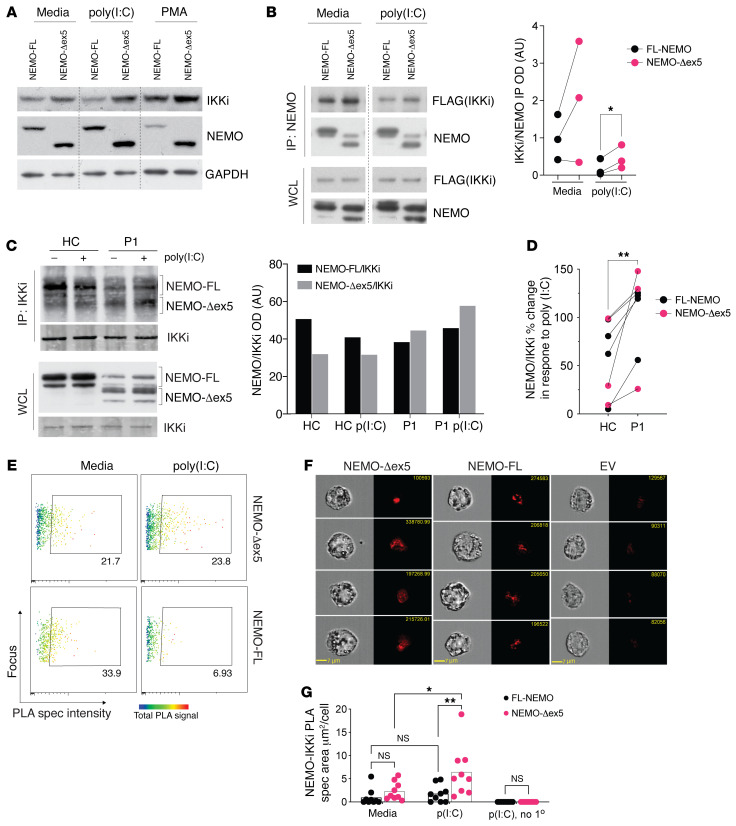
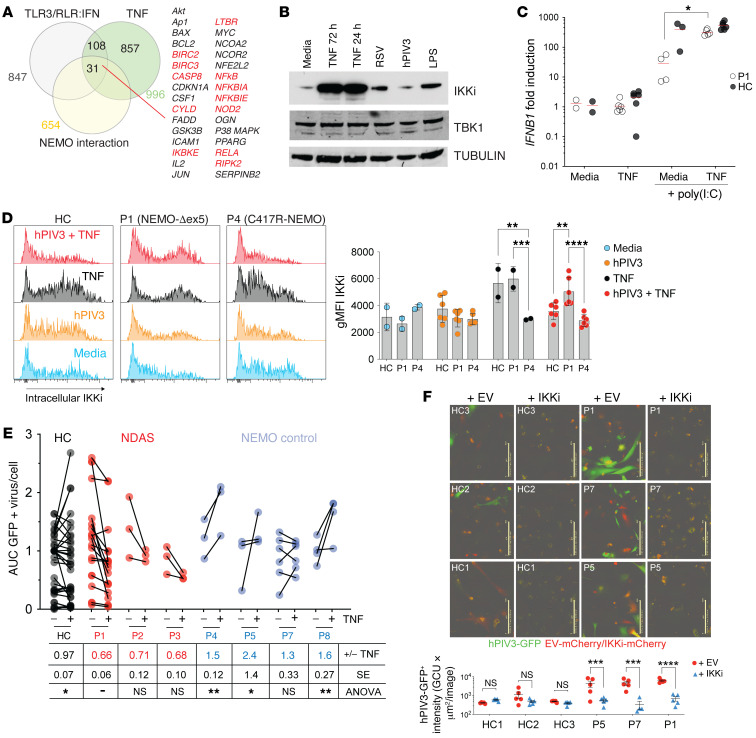
Host defense and inflammation are regulated by the NF-κB essential modulator (NEMO), a scaffolding protein with a broad immune cell and tissue expression profile. Hypomorphic mutations in inhibitor of NF-κB kinase regulatory subunit gamma (IKBKG) encoding NEMO typically present with immunodeficiency. Here, we characterized a pediatric autoinflammatory syndrome in 3 unrelated male patients with distinct X-linked IKBKG germline mutations that led to overexpression of a NEMO protein isoform lacking the domain encoded by exon 5 (NEMO-Δex5). This isoform failed to associate with TANK binding kinase 1 (TBK1), and dermal fibroblasts from affected patients activated NF-κB in response to TNF but not TLR3 or RIG-I-like receptor (RLR) stimulation when isoform levels were high. By contrast, T cells, monocytes, and macrophages that expressed NEMO-Δex5 exhibited increased NF-κB activation and IFN production, and blood cells from these patients expressed a strong IFN and NF-κB transcriptional signature. Immune cells and TNF-stimulated dermal fibroblasts upregulated the inducible IKK protein (IKKi) that was stabilized by NEMO-Δex5, promoting type I IFN induction and antiviral responses. These data revealed how IKBKG mutations that lead to alternative splicing of skipping exon 5 cause a clinical phenotype we have named NEMO deleted exon 5 autoinflammatory syndrome (NDAS), distinct from the immune deficiency syndrome resulting from loss-of-function IKBKG mutations.
Trial registration: ClinicalTrials.gov NCT00001788 NCT00001372 NCT02974595.
Keywords: Genetic diseases; Genetics; Immunology; Inflammation; Innate immunity; Signal transduction.
Conflict of interest statement
Figures
Comment in
-
NEMO splice variant causes distinct autoinflammatory syndrome.Nat Rev Rheumatol. 2022 May;18(5):245. doi: 10.1038/s41584-022-00782-8. Nat Rev Rheumatol. 2022. PMID: 35383315 No abstract available.
References
Publication types
MeSH terms
Substances
Associated data
Grants and funding
LinkOut - more resources
Full Text Sources
Medical
Molecular Biology Databases
Miscellaneous
