


Breast Arterial Calcification: a Novel Cardiovascular Risk Enhancer Among Postmenopausal Women
- PMID: 35290077
- PMCID: PMC8931858
- DOI: 10.1161/CIRCIMAGING.121.013526
Breast Arterial Calcification: a Novel Cardiovascular Risk Enhancer Among Postmenopausal Women
Abstract
Background: Breast arterial calcification (BAC), a common incidental finding in mammography, has been shown to be associated with angiographic coronary artery disease and cardiovascular disease (CVD) outcomes. We aimed to (1) examine the association of BAC presence and quantity with hard atherosclerotic CVD (ASCVD) and global CVD; (2) ascertain model calibration, discrimination and reclassification of ASCVD risk; (3) assess the joint effect of BAC presence and 10-year pooled cohorts equations risk on ASCVD.
Methods: A cohort study of 5059 women aged 60-79 years recruited after attending mammography screening between October 2012 and February 2015 was conducted in a large health plan in Northern California, United States. BAC status (presence versus absence) and quantity (calcium mass mg) was determined using digital mammograms. Prespecified end points were incident hard ASCVD and a composite of global CVD.
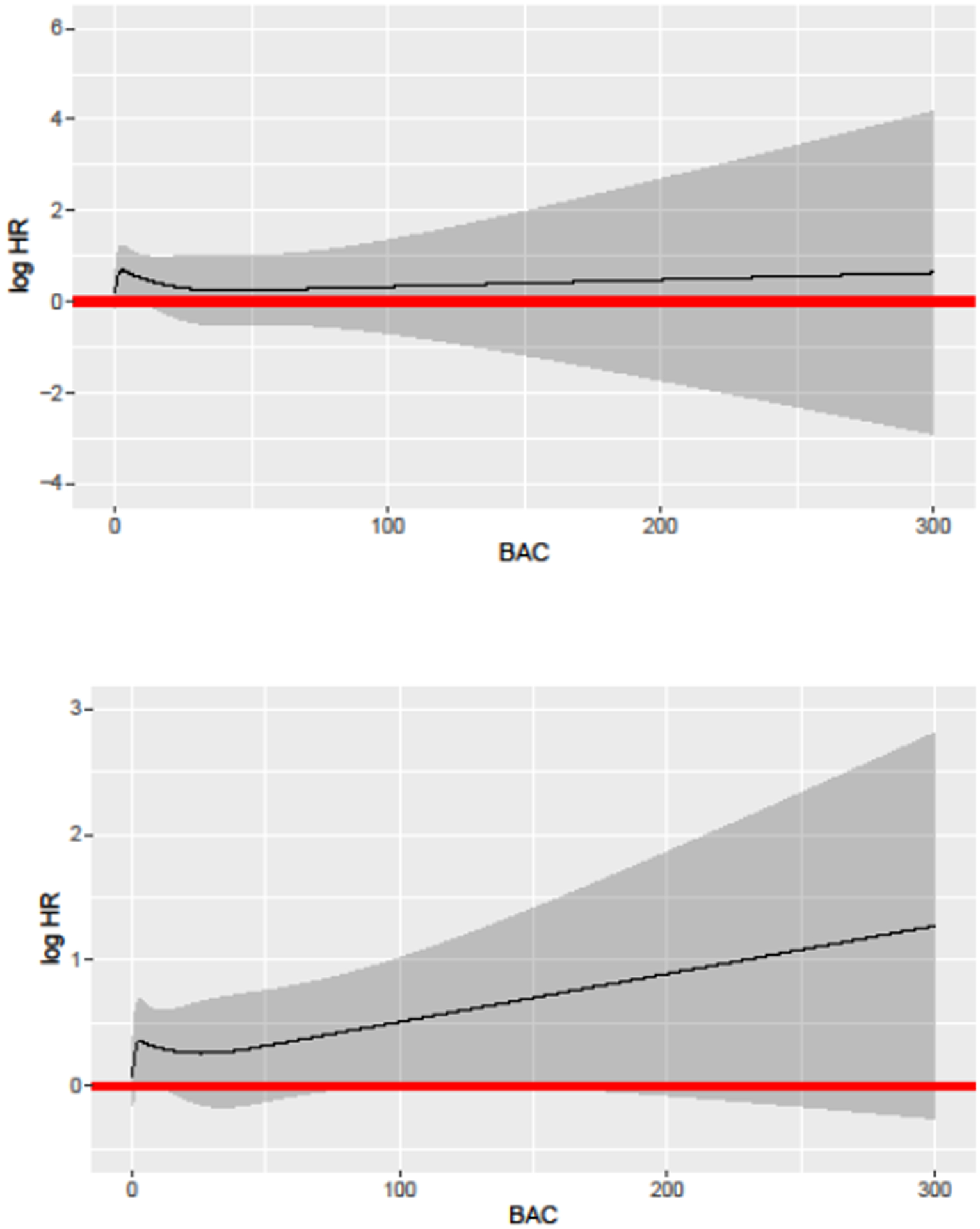
Results: Twenty-six percent of women had BAC >0 mg. After a mean (SD) follow-up of 6.5 (1.6) years, we ascertained 155 (3.0%) ASCVD events and 427 (8.4%) global CVD events. In Cox regression adjusted for traditional CVD risk factors, BAC presence was associated with a 1.51 (95% CI, 1.08-2.11; P=0.02) increased hazard of ASCVD and a 1.23 (95% CI, 1.002-1.52; P=0.04) increased hazard of global CVD. While there was no evidence of dose-response association with ASCVD, a threshold effect was found for global CVD at very high BAC burden (95th percentile when BAC present). BAC status provided additional risk stratification of the pooled cohorts equations risk. We noted improvements in model calibration and reclassification of ASCVD: the overall net reclassification improvement was 0.12 (95% CI, 0.03-0.14; P=0.01) and the bias-corrected clinical-net reclassification improvement was 0.11 (95% CI, 0.01-0.22; P=0.04) after adding BAC status.
Conclusions: Our results indicate that BAC has potential utility for primary CVD prevention and, therefore, support the notion that BAC ought to be considered a risk-enhancing factor for ASCVD among postmenopausal women.
Keywords: blood pressure; calibration; cardiovascular disease; coronary artery disease; mammography.
Figures
Comment in
-
Leveraging Mammography as a Unique Opportunity for Cardiovascular Health Promotion.Circ Cardiovasc Imaging. 2022 Mar;15(3):e013977. doi: 10.1161/CIRCIMAGING.122.013977. Epub 2022 Mar 15. Circ Cardiovasc Imaging. 2022. PMID: 35290076 Free PMC article. No abstract available.
References
-
- Virani SS, Alonso A, Aparicio HJ, Benjamin EJ, Bittencourt MS, Callaway CW, Carson AP, Chamberlain AM, Cheng S, Delling FN et al. American Heart Association Council on Epidemiology and Prevention Heart Disease and Stroke Statistics-2021 Update: A Report From the American Heart Association. Circulation. 2021;143:e254–e743. - PubMed
-
- Reis SE, Holubkov R, Conrad Smith AJ, Kelsey SF, Sharaf BL, Reichek N, Rogers WJ, Merz CN, Sopko G, Pepine CJ. Coronary microvascular dysfunction is highly prevalent in women with chest pain in the absence of coronary artery disease: results from the NHLBI WISE study. Am Heart J. 2001;141:735–41. - PubMed
-
- Rosenkrantz AB, Fleming M, Duszak R Jr. Variation in Screening Mammography Rates Among Medicare Advantage Plans. J Am Coll Radiol. 2017;14:1013–1019. - PubMed
-
- Kelly BS, Scanl OE, Heneghan H, Redmond CE, Healy GM, Mc Dermott E, Heffernan EJ, Prichard R, Mc Nally S. Breast Arterial Calcification on screening mammography can predict significant Coronary Artery Disease in women. Clin Imaging. 2018;49:48–53. - PubMed
Publication types
MeSH terms
Grants and funding
LinkOut - more resources
Full Text Sources
Other Literature Sources
Medical
