Effect of magnification factor by Galilean loupes on working posture of dental students in simulated clinical procedures: associations between direct and observational measurements
- PMID: 35291489
- PMCID: PMC8918149
- DOI: 10.7717/peerj.13021
Effect of magnification factor by Galilean loupes on working posture of dental students in simulated clinical procedures: associations between direct and observational measurements
Abstract
Objectives: To determine the effect of different levels of Galilean loupe magnification on working posture as measured by compliance with ergonomic posture positions, angular deviation from the neutral position of the neck, and muscle activation in the neck and upper back region during simulated clinical conditions.
Methods: An experimental laboratory study was performed in which the dependent variables were compliance with ergonomic posture requirements while performing simulated restorative procedures in Restorative Dentistry, angular deviation from the neutral position of the neck, and muscle activation in the neck and upper back. The independent variable was the level of Galilean loupe magnification, which was tested at four levels (naked eye, 2.5× magnification, 3.0× magnification, and 3.5× magnification). The cavity preparations and Class I composite resin restorations were performed on artificial first molars on a mannequin in a dental chair. The Compliance Assessment of Dental Ergonomic Posture Requirements (CADEP) was used for the postural analysis; as was an analysis of the angular deviation from the neutral position of the neck and surface electromyography. Working posture was recorded on video over the course of the procedure. Participants were filmed from three different angles. The Compliance Assessment of Dental Ergonomic Posture Requirements (CADEP) assessed compliance with ergonomic posture requirements. A locally produced posture assessment software analyzed angular deviation. Surface electromyography bilaterally assessed activation of the sternocleidomastoid, descending trapezius and ascending trapezius muscles. Two-factor analysis of variance (ANOVA) and either Tukey's post-hoc test or the Games-Howell post-hoc test were performed (α = 0.05).
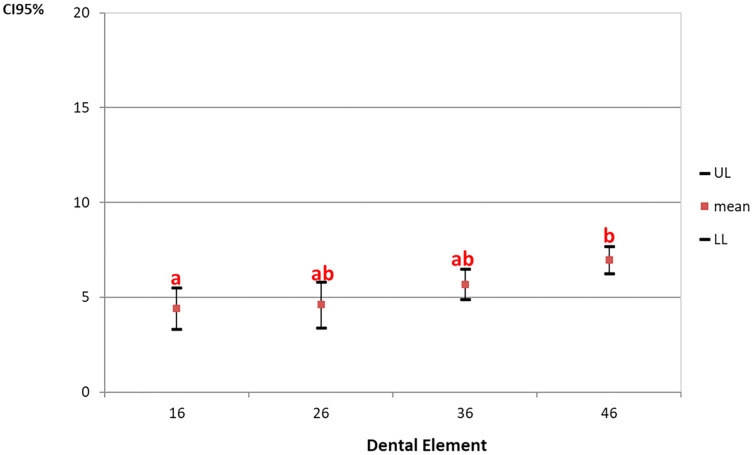
Results: During the cavity preparations and restorations, the use of Galilean loupes at all magnifications positively influenced working posture as measured by participants' compliance with ergonomic posture positions (p < 0.01) and neck angulation (p < 0.01); the use of these loupes did not affect muscle activation in the regions evaluated (p > 0.05).
Conclusion: The use of Galilean loupes had a positive effect on dental students' working posture during the restoration procedures performed.
Keywords: Dentistry; Ergonomics; Galilean loupe; Magnification; Occupational health; Visual acuity.
© 2022 Pazos et al.
Conflict of interest statement
The authors declare that they have no competing interests.
Figures
References
-
- Alhazzazi TY, Alzebiani NA, Alotaibi SK, Bogari DF, Bakalka GT, Hazzazi LW, Jan AM, McDonald NJ. Awareness and attitude toward using dental magnification among dental students and residents at King Abdulaziz University, Faculty of Dentistry. BMC Oral Health. 2016;17(1):21. doi: 10.1186/s12903-016-0254-4. - DOI - PMC - PubMed
-
- Biswas R, Sachdev V, Jindal V, Ralhan S. Musculoskeletal disorders and ergonomic risk factors in dental practice. Indian Journal of Dental Sciences. 2012;4:70–74. doi: 10.1111/j.1875-595x.2007.tb00117.x. - DOI
Publication types
MeSH terms
LinkOut - more resources
Full Text Sources