


RETurn to work After stroKE (RETAKE) Trial: protocol for a mixed-methods process evaluation using normalisation process theory
- PMID: 35292493
- PMCID: PMC8928258
- DOI: 10.1136/bmjopen-2021-053111
RETurn to work After stroKE (RETAKE) Trial: protocol for a mixed-methods process evaluation using normalisation process theory
Abstract
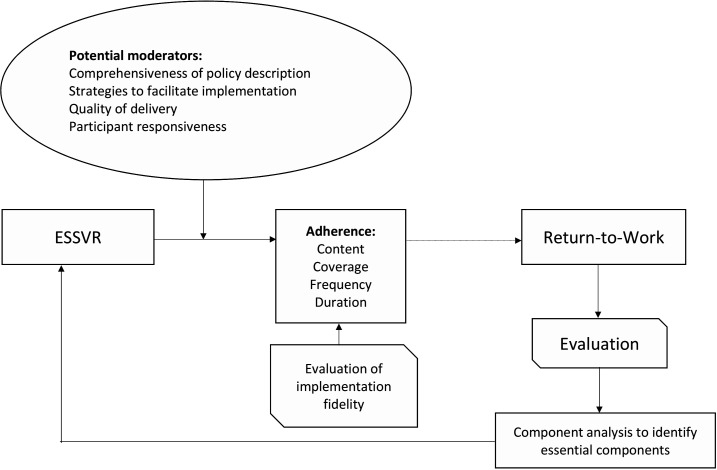
Objectives: This mixed-method process evaluation underpinned by normalisation process theory aims to measure fidelity to the intervention, understand the social and structural context in which the intervention is delivered and identify barriers and facilitators to intervention implementation.
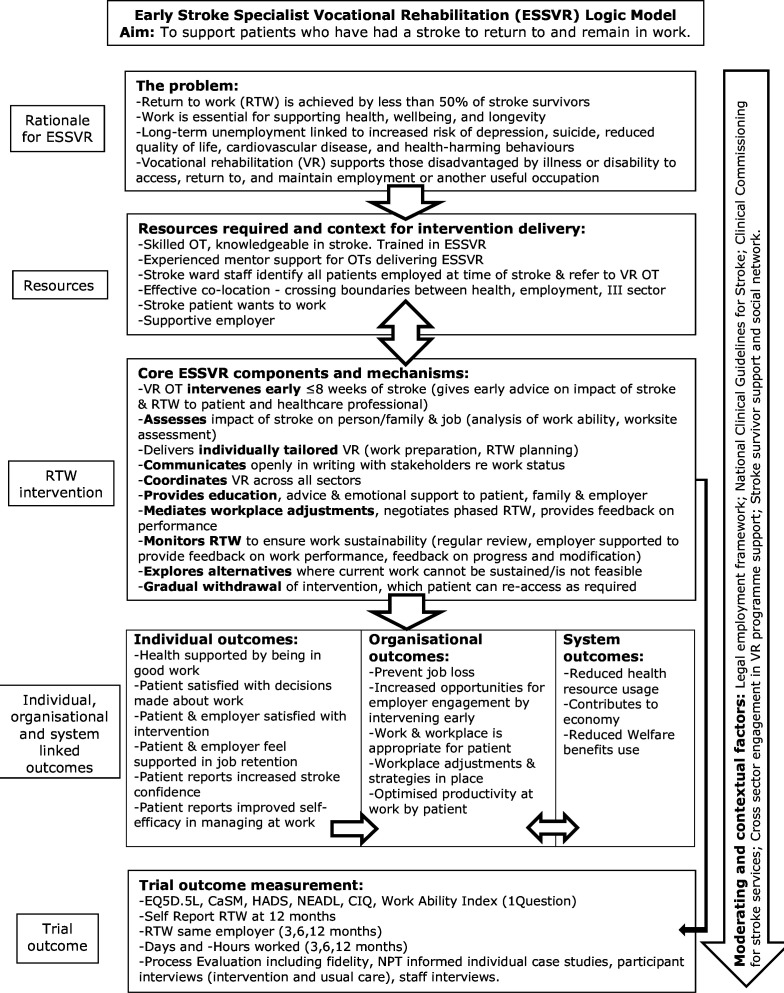
Setting: RETurn to work After stroKE (RETAKE) is a multicentre individual patient randomised controlled trial to determine whether Early Stroke Specialist Vocational Rehabilitation (ESSVR) plus usual care is a clinically and cost-effective therapy to facilitate return to work after stroke, compared with usual care alone. This protocol paper describes the embedded process evaluation.
Participants and outcome measures: Intervention training for therapists will be observed and use of remote mentor support reviewed through documentary analysis. Fidelity will be assessed through participant questionnaires and analysis of therapy records, examining frequency, duration and content of ESSVR sessions. To understand the influence of social and structural contexts, the process evaluation will explore therapists' attitudes towards evidence-based practice, competency to deliver the intervention and evaluate potential sources of contamination. Longitudinal case studies incorporating non-participant observations will be conducted with a proportion of intervention and usual care participants. Semistructured interviews with stroke survivors, carers, occupational therapists, mentors, service managers and employers will explore their experiences as RETAKE participants. Analysis of qualitative data will draw on thematic and framework approaches. Quantitative data analysis will include regression models and descriptive statistics. Qualitative and quantitative data will be independently analysed by process evaluation and Clinical Trials Research Unit teams, respectively. Linked data, for example, fidelity and describing usual care will be synthesised by comparing and integrating quantitative descriptive data with the qualitative findings.
Ethics and dissemination: Approval obtained through the East Midlands-Nottingham 2 Research Ethics Committee (Ref: 18/EM/0019) and the National Health ServiceResearch Authority. Dissemination via journal publications, stroke conferences, social media and meetings with national Stroke clinical leads.
Trial registration number: ISRCTN12464275.
Keywords: clinical trials; stroke; stroke medicine.
© Author(s) (or their employer(s)) 2022. Re-use permitted under CC BY. Published by BMJ.
Conflict of interest statement
Competing interests: None declared.
Figures
References
-
- Stroke Association . State of the nation: stroke statistics. stroke association, 2018. Available: https://www.stroke.org.uk/resources/state-nation-stroke-statistics [Accessed 27 Apr 2021].
-
- Corr S, Wilmer S. Returning to work after a stroke: an important but neglected area. Br J Occup Ther 2003;66:186–92. 10.1177/030802260306600502 - DOI
-
- Frank AO, Thurgood J. Vocational rehabilitation in the UK: opportunities for health-care professionals. Int J Ther Rehabil 2006;13:126–34. 10.12968/ijtr.2006.13.3.21364 - DOI
Publication types
MeSH terms
Grants and funding
LinkOut - more resources
Full Text Sources
Medical
