


A national survey of physical activity after spinal cord injury
- PMID: 35292668
- PMCID: PMC8924215
- DOI: 10.1038/s41598-022-07927-5
A national survey of physical activity after spinal cord injury
Abstract
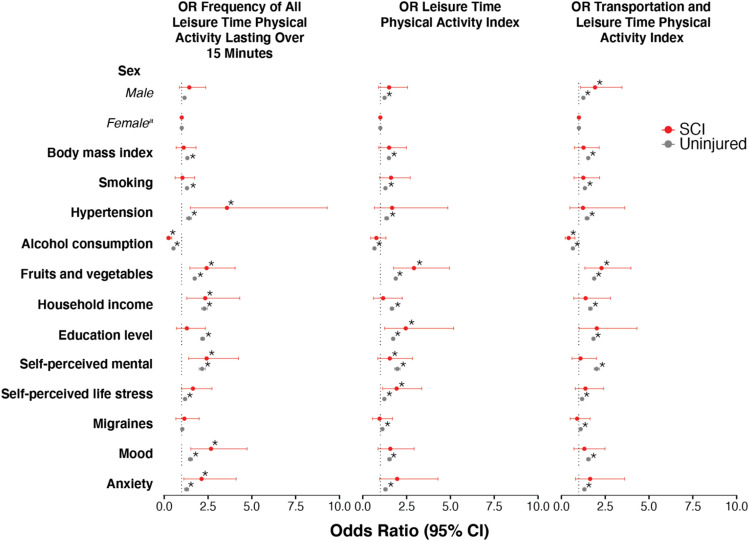
Physical activity is a powerful modifiable risk factor for disease and mortality. Physical activity levels in people with spinal cord injury (SCI) have not been quantified relative to uninjured individuals in a large population-based sample. We aimed to quantify and compare physical activity in people with and without SCI, and to examine the associations between physical activity, lifestyle, and socioeconomic factors. The 2010 Canadian Community Health Survey (n > 57,000) was used, which includes three measures that assess physical activity levels (i.e., leisure time activity frequency, leisure time activity intensity, and transportation time activity intensity). Bivariable and multivariable logistic regressions were performed and odds ratios (ORs) with corresponding 95% confidence intervals (CIs) were estimated. The odds of physical activity in people with SCI were 0.43 (95% CI 0.3-0.61), 0.53 (95% CI 0.36-0.75), and 0.42 (95% CI 0.28-0.61), across the three measures of physical activity, respectively. These differences persisted after adjustment for lifestyle, comorbidities, and socioeconomic factors. Physical activity is reduced in the SCI population compared with the general population. This knowledge is important to direct future research and guide the allocation of health care resources.
© 2022. The Author(s).
Conflict of interest statement
The authors declare no competing interests.
Figures
References
Publication types
MeSH terms
Grants and funding
LinkOut - more resources
Full Text Sources
Medical
