Randomized Controlled Trial
. 2022 May 9;186(6):687-700.
doi: 10.1530/EJE-21-0972.

Randomized controlled trial of Tesomet for weight loss in hypothalamic obesity

Affiliations
Randomized Controlled Trial

Randomized controlled trial of Tesomet for weight loss in hypothalamic obesity

Kim Huynh et al. Eur J Endocrinol. .

Abstract

Context: Hypothalamic injury often leads to rapid, intractable weight gain causing hypothalamic obesity, which is associated with increased risk of cardiovascular and metabolic morbidity and mortality. There are no approved or effective pharmacological treatments for hypothalamic obesity, and conventional lifestyle management remains ineffective.

Objective: To investigate the safety and efficacy of Tesomet (0.5 mg tesofensine/50 mg metoprolol) in adults with hypothalamic obesity.

Methods: Twenty-one adults with hypothalamic obesity (16 females) were randomized to Tesomet (0.5 mg/50 mg) or placebo for 24 weeks. Patients also received diet/lifestyle counselling. The primary endpoint was safety; secondary endpoints included measures of body weight, appetite scores, quality of life, and metabolic profile.

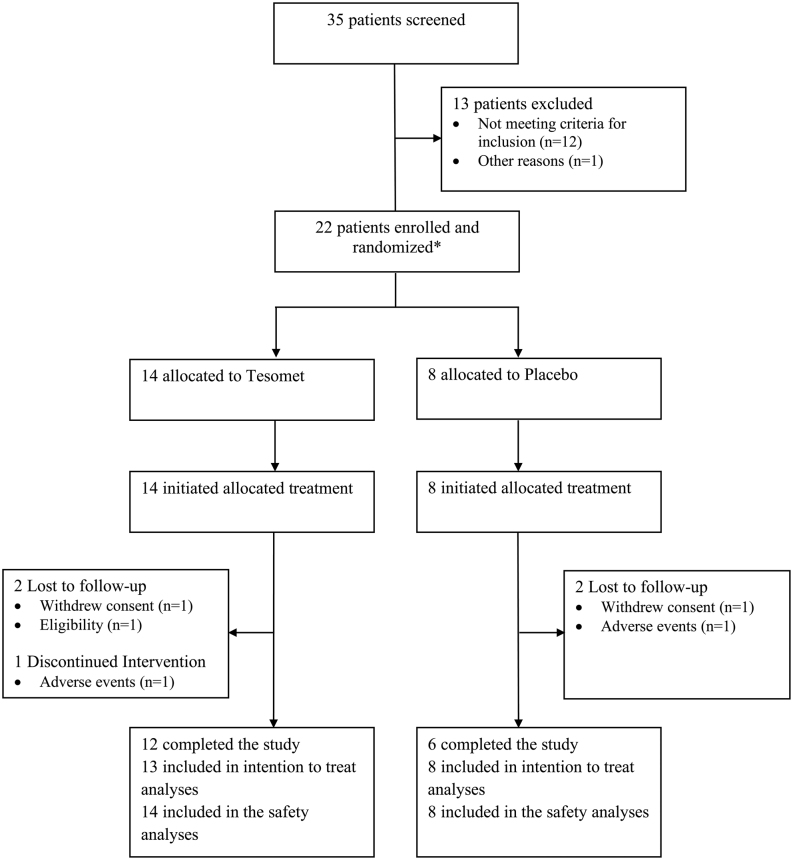
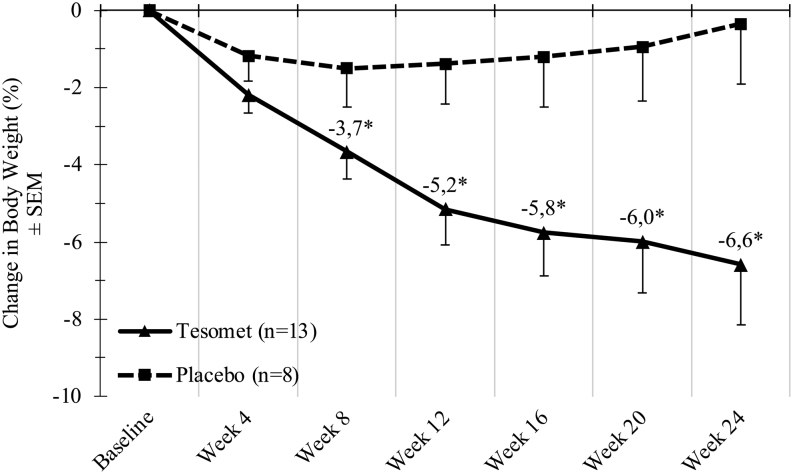
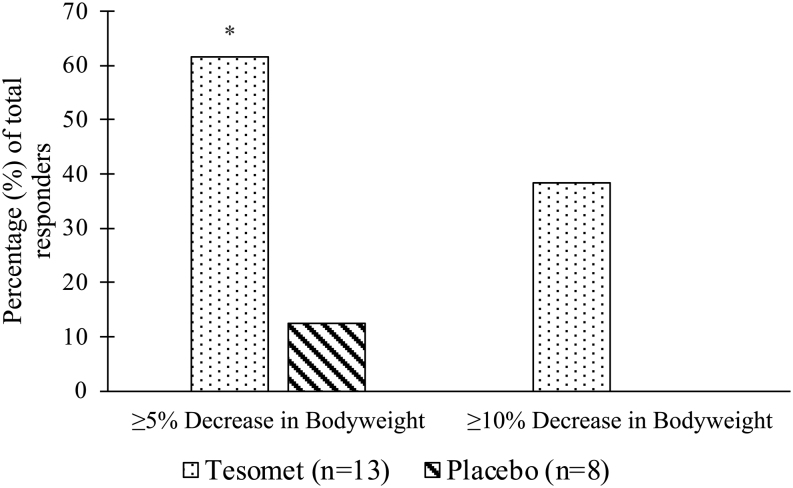
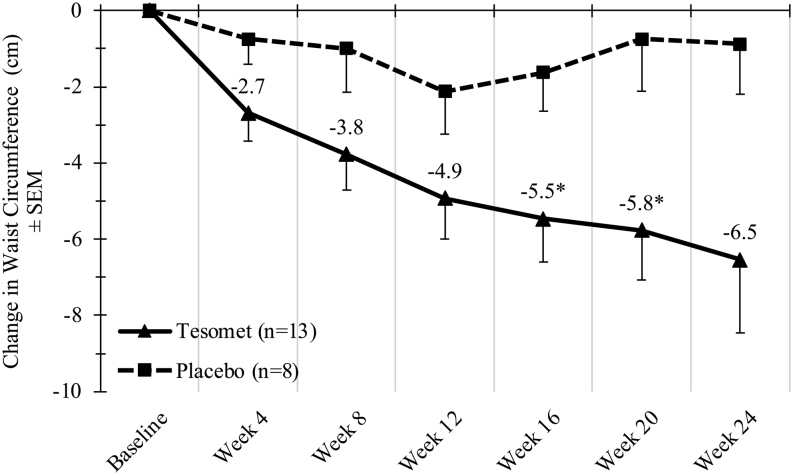
Results: Eighteen patients completed 24 weeks. Consent withdrawal, eligibility, and serious adverse events (SAE) unrelated to treatment resulted in dropouts. One patient experienced a Tesomet-related SAE of exacerbated pre-existing anxiety leading to treatment discontinuation. Tesomet-related adverse events were otherwise mostly mild and included sleep disturbances (Tesomet 50%, placebo 13%), dry mouth (Tesomet 43%, placebo 0%), and headache (Tesomet 36%, placebo 0%). No significant differences in heart rate or blood pressure were observed between groups. Compared to placebo, Tesomet resulted in additional mean (95% CI) weight change of -6.3% ((-11.3; -1.3); P = 0.017), increased the number of patients achieving ≥5% weight loss (Tesomet 8/13, placebo 1/8; P = 0.046), and tended to augment the reduction in waist circumference by 5.7 cm ((-0.1; 11.5); P = 0.054).

Conclusion: Tesomet was welltolerated, did not affect heart rate or blood pressure, and resulted in significant reductions in body weight compared to placebo in adults with hypothalamic obesity.


Figures
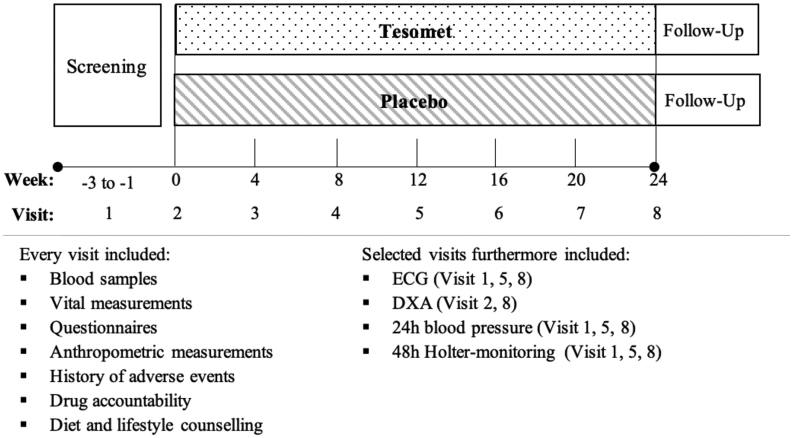
Figure 1
Figure 1
Trial timeline of a randomized controlled trial of Tesomet for weight loss in with hypothalamic obesity. Outline of the trial procedures. Telephone consultations were performed between each on-site visit. Follow-up to address adverse events after end of treatment was performed 45 ± 3 days after the last dose of investigational product. DXA, dual-energy X-ray absorptiometry.
Figure 2
Figure 2
Consort diagram of a randomized controlled trial of Tesomet for weight loss in with hypothalamic obesity. Consort flowchart illustrating the process of recruitment, allocation, follow-up, and analyses. *Including one patient who was randomized twice in error (see ‘Participants’ section in ‘Results’ section).
Figure 3
Figure 3
Change in body weight over time in a randomized controlled trial of Tesomet for weight loss in with hypothalamic obesity. Data are mean change from baseline in body weight (%) for each treatment group at each scheduled visit (weeks from baseline). Last observation carried forward imputation was used for missing data. Error bars represent s.e.m. *P  < 0.05 in a baseline adjusted ANCOVA model with treatment as factor.
Figure 4
Figure 4
Bar diagram of relative (%) change in a randomized controlled trial of Tesomet for weight loss in with hypothalamic obesity. Relative percentage (%) of patients randomized to Tesomet (n = 13) or placebo (n = 8) achieving 5% or 10% weight loss from baseline at week 24. *P  < 0.05 in a logistic regression model with treatment as factor.
Figure 5
Figure 5
Change in waist circumference over time in a randomized controlled trial of Tesomet for weight loss in with hypothalamic obesity. Data are mean change from baseline in waist circumference (cm) for each treatment group at each scheduled visit (weeks from baseline). Last observation carried forward imputation was used for missing data. Error bars represent s.e.m. *P  < 0.05 in a baseline adjusted ANCOVA model with treatment as factor.
Figure 6
Figure 6
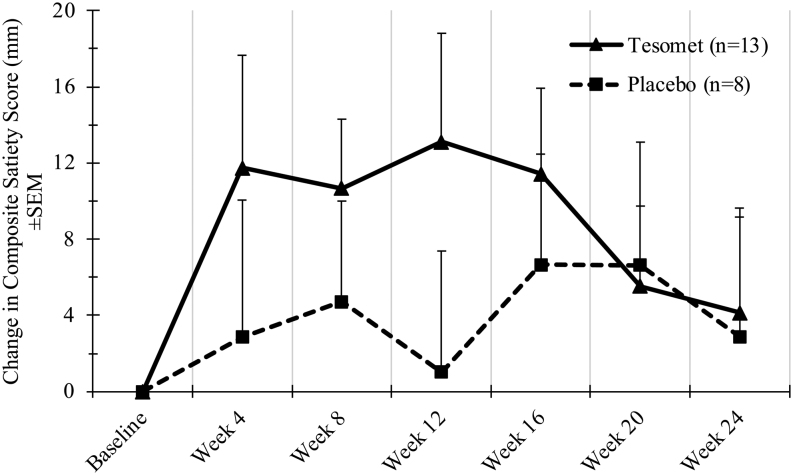
Change in composite satiety score over time in a randomized controlled trial of Tesomet for weight loss in with hypothalamic obesity. Data are mean change from baseline in composite satiety score (mm) for each treatment group at each scheduled visit (weeks from baseline). Last observation carried forward imputation was used for missing data. Error bars represent s.e.m.
Figure 7
Figure 7
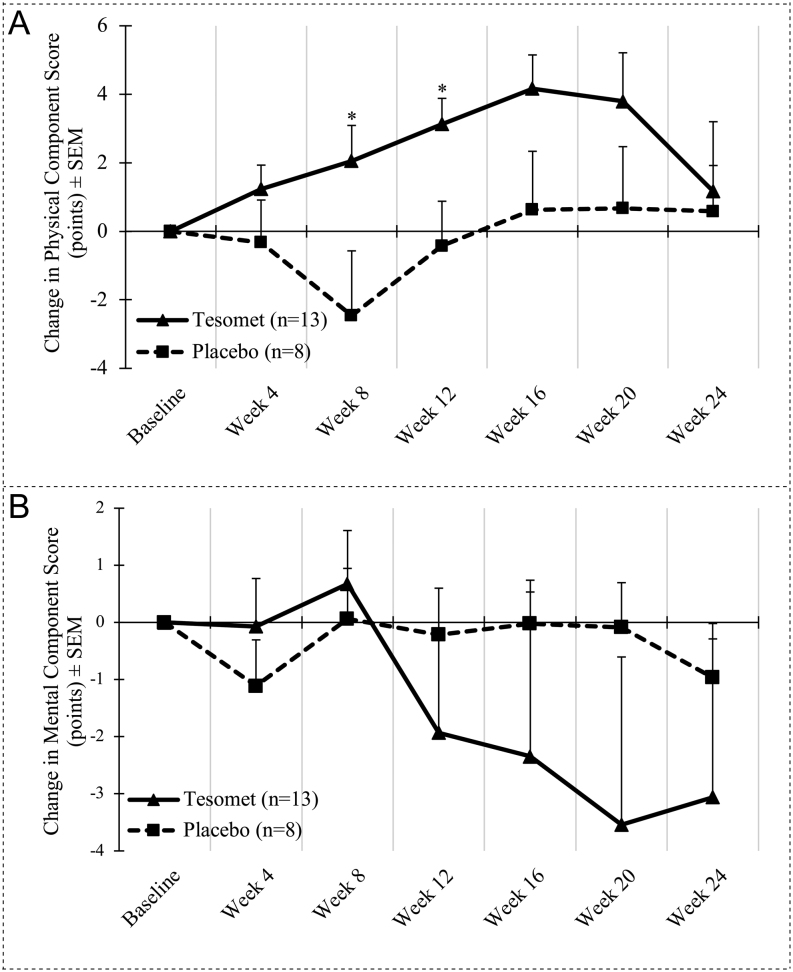
Change in quality of life over time in a randomized controlled trial of Tesomet for weight loss in with hypothalamic obesity. Data are mean change from baseline in physical (A) and mental (B) component scores of SF36 v2 for each treatment group at each scheduled visit (weeks from baseline). Last observation carried forward imputation was used for missing data. Error bars are s.e.m. *P  < 0.05 in a baseline adjusted ANCOVA model with treatment as factor and baseline value as covariate.

References

    1. Müller HL, Bueb K, Bartels U, Roth C, Harz K, Graf N, Korinthenberg R, Bettendorf M, Kühl J, Gutjahr Pet al.Obesity after childhood craniopharyngioma – German multicenter study on pre-operative risk factors and quality of life. Klinische Padiatrie 2001213244–249. (10.1055/s-2001-16855) - DOI - PubMed
    1. Hoffmann A, Bootsveld K, Gebhardt U, Daubenbüchel AMM, Sterkenburg AS, Müller HL. Nonalcoholic fatty liver disease and fatigue in long-term survivors of childhood-onset craniopharyngioma. European Journal of Endocrinology 2015173389–397. (10.1530/EJE-15-0422) - DOI - PubMed
    1. Haliloglu B, Atay Z, Guran T, Abalı S, Bas S, Turan S, Bereket A. Risk factors for mortality caused by hypothalamic obesity in children with hypothalamic tumours. Pediatric Obesity 201611383–388. (10.1111/ijpo.12076) - DOI - PubMed
    1. Erfurth EM, Holmer H, Fjalldal SB. Mortality and morbidity in adult craniopharyngioma. Pituitary 20131646–55. (10.1007/s11102-012-0428-2) - DOI - PubMed
    1. Bülow B, Attewell R, Hagmar L, Malmström P, Nordström CH, Erfurth EM. Postoperative prognosis in craniopharyngioma with respect to cardiovascular mortality, survival, and tumor recurrence. Journal of Clinical Endocrinology and Metabolism 1998833897–3904. (10.1210/jcem.83.11.5240) - DOI - PubMed

Publication types

Substances