. 2022 Mar 16;18(3):e1009178.
doi: 10.1371/journal.pcbi.1009178. eCollection 2022 Mar.

RosettaSurf-A surface-centric computational design approach

Affiliations

RosettaSurf-A surface-centric computational design approach

Andreas Scheck et al. PLoS Comput Biol. .

Abstract

Proteins are typically represented by discrete atomic coordinates providing an accessible framework to describe different conformations. However, in some fields proteins are more accurately represented as near-continuous surfaces, as these are imprinted with geometric (shape) and chemical (electrostatics) features of the underlying protein structure. Protein surfaces are dependent on their chemical composition and, ultimately determine protein function, acting as the interface that engages in interactions with other molecules. In the past, such representations were utilized to compare protein structures on global and local scales and have shed light on functional properties of proteins. Here we describe RosettaSurf, a surface-centric computational design protocol, that focuses on the molecular surface shape and electrostatic properties as means for protein engineering, offering a unique approach for the design of proteins and their functions. The RosettaSurf protocol combines the explicit optimization of molecular surface features with a global scoring function during the sequence design process, diverging from the typical design approaches that rely solely on an energy scoring function. With this computational approach, we attempt to address a fundamental problem in protein design related to the design of functional sites in proteins, even when structurally similar templates are absent in the characterized structural repertoire. Surface-centric design exploits the premise that molecular surfaces are, to a certain extent, independent of the underlying sequence and backbone configuration, meaning that different sequences in different proteins may present similar surfaces. We benchmarked RosettaSurf on various sequence recovery datasets and showcased its design capabilities by generating epitope mimics that were biochemically validated. Overall, our results indicate that the explicit optimization of surface features may lead to new routes for the design of functional proteins.


Conflict of interest statement

The authors have declared that no competing interests exist.

Figures
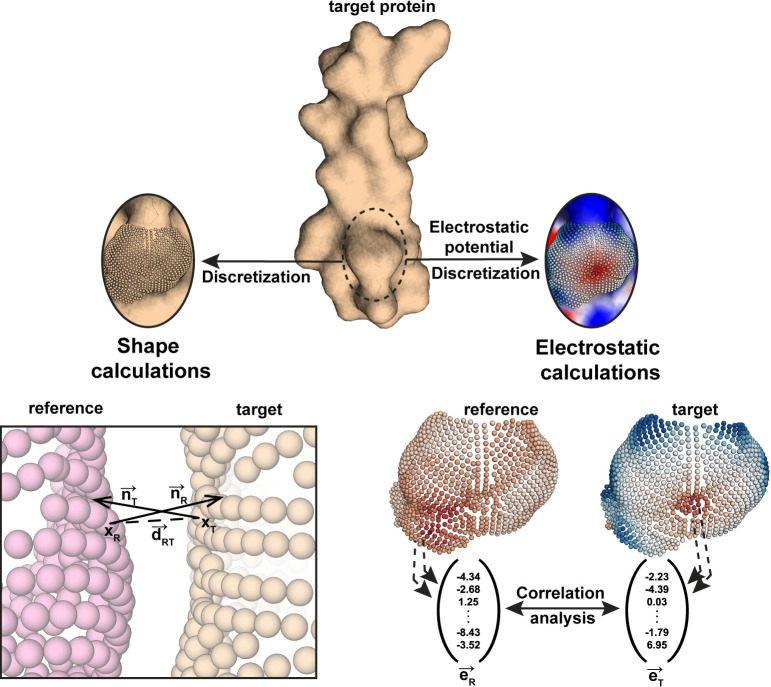
Fig 1
Fig 1. Computation of the surface similarity score (SurfS).
Protein surface is converted into a point cloud where each point is used to compute shape and electrostatic features. To compute the SurfS score, all individual points of the point clouds are compared and the shape similarity value is derived from closest points of the two surfaces in space while electrostatic similarity is evaluated by correlation analysis of the electrostatic potentials of both surfaces.
Fig 2
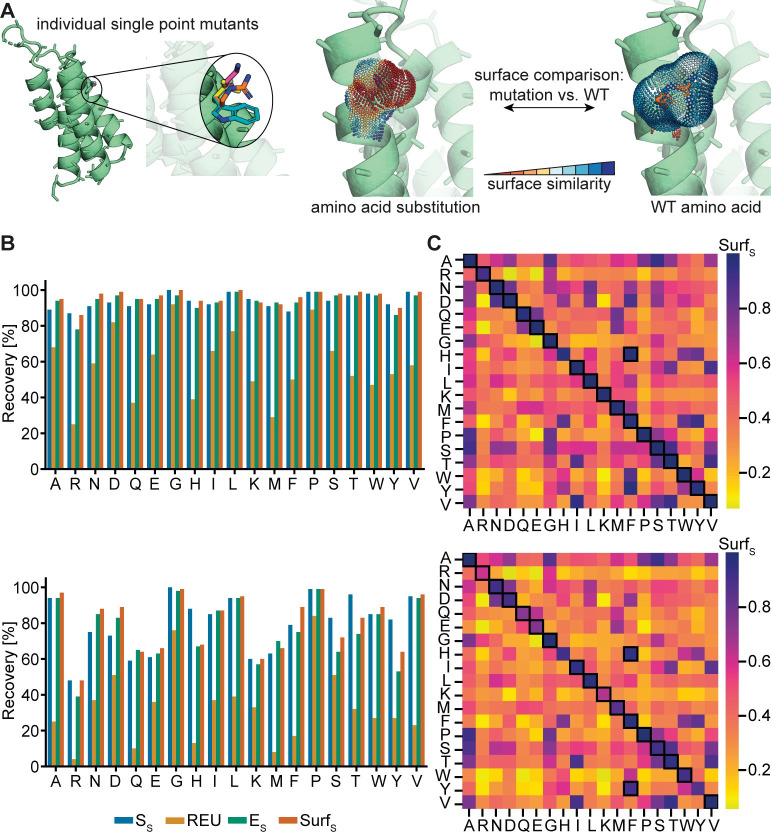
Fig 2. Single mutant discrimination using surface similarity score in protein-protein complexes.
A) Surface similarity evaluation protocol for single amino acids. B) Recovery for all 19 considered amino acid types in bound (top) and unbound (bottom) complex states, evaluated with four different metrics: SS (shape similarity), REU (Rosetta energy unit), ES (electrostatic similarity), and SurfS (surface similarity). C) Average surface similarity score when performing all-against-all amino acid comparison for bound (top) and unbound (bottom) complex states. The highest mean SurfS score for every amino acid is highlighted.
Fig 3
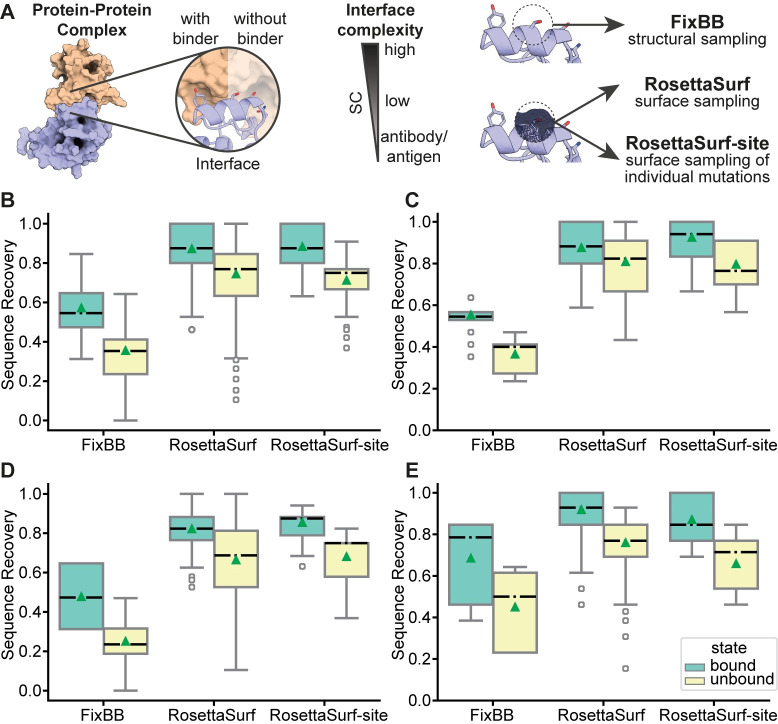
Fig 3. Sequence recovery of protein interfaces.
A) Sequence recovery benchmark pipeline. Sequences in the interfaces of protein-protein complexes are evaluated in the presence and absence of the binding partner. The tested complexes were grouped into interfaces with low and high shape complementarity, and antibody-antigen complexes. Surface-centric design (RosettaSurf and RosettaSurf-site) is compared to a standard structural protein design protocol (FixBB). B) Interface sequence recovery of the complete dataset. C) Sequence recovery of low shape complementarity interfaces. D) Sequence recovery of high shape complementarity interfaces. E) Sequence recovery of antigen-antibody complexes. Dashed lines represent median and triangles represent mean recovery values.
Fig 4
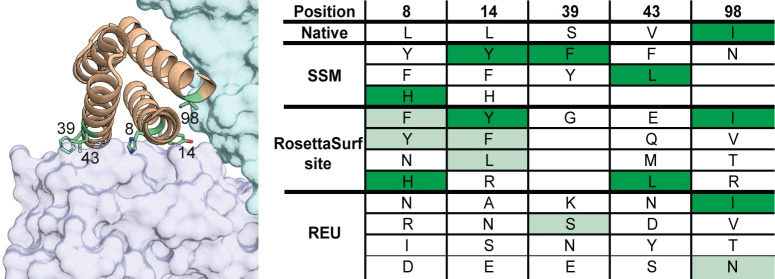
Fig 4. Comparison of SSM data obtained for the designed interleukin-2/15 antagonists in comparison to RosettaSurf-site predictions.
The structure highlights the five selected positions of the interleukin design that were computationally and experimentally sampled. Different sampling results of the experimental SSM, RosettaSurf-site with SC, and Rosetta’s energy function are reported in the table. Mutations resulting in the experimentally reported best binding design are highlighted in dark green. RosettaSurf-site was able to recover four out of five key binding mutations (dark green) while evaluating mutations with Rosetta’s energy function could only retrieve one binding mutation at position 98. Additionally, RosettaSurf-site was able to recover four affinity improving mutations not present in the best binding design, whereas Rosetta’s energy function could identify only two of these mutations (light green).
Fig 5
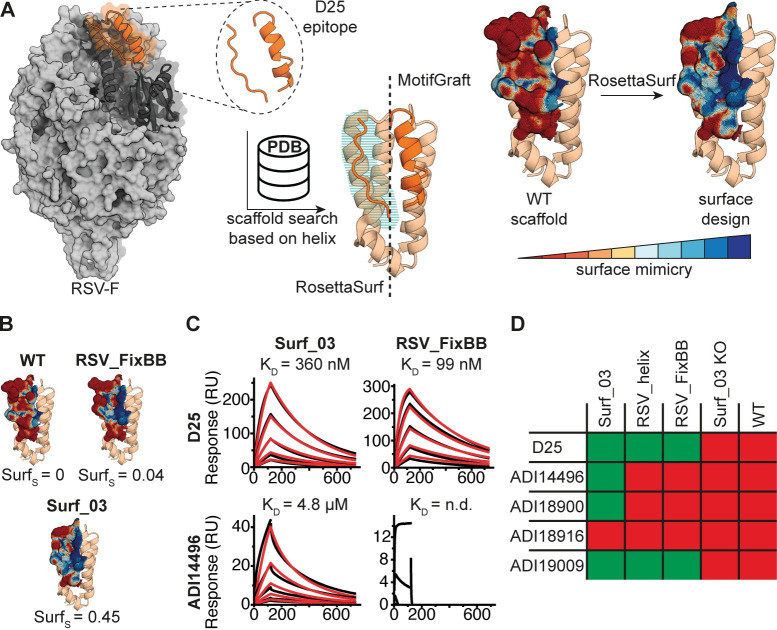
Fig 5. Surface centric design of a viral antigenic site present the in RSVF.
A) Design process of site 0-mimicking protein scaffolds. Starting scaffolds are selected from the PDB based on structural alignments with the epitope helix. The surface mimicking designs are generated by grafting the side chains of the helix segment of the epitope onto the scaffold and surface-centric design is employed to optimize the loop region. Before and after design of the surface compared to native site 0. Blue areas indicate high similarity. B) Mimicry of surface geometry of WT scaffold, RSV_FixBB, and Surf_03 designs compared to native site 0. C) Representative SPR measurements of Surf_03 and RSV_FixBB against site 0-specific antibodies D25 and ADI14496. D) Binding profiles of Surf_03, a FixBB designed protein, and a helix-only design against a panel of site-specific antibodies with green indicating binding and red cells corresponding to non-binding. A knockout mutant of Surf_03 and the WT protein binding profiles are listed as reference.

References

    1. Shulman-Peleg A, Nussinov R, Wolfson HJ. Recognition of functional sites in protein structures. Journal of molecular biology. 2004;339(3):607–33. doi: 10.1016/j.jmb.2004.04.012 - DOI - PMC - PubMed
    1. Lee B, Richards FM. The interpretation of protein structures: estimation of static accessibility. Journal of molecular biology. 1971;55(3):379–IN4. doi: 10.1016/0022-2836(71)90324-x - DOI - PubMed
    1. Connolly ML. Analytical molecular surface calculation. Journal of applied crystallography. 1983;16(5):548–58.
    1. Connolly ML. Solvent-accessible surfaces of proteins and nucleic acids. Science. 1983;221(4612):709–13. doi: 10.1126/science.6879170 - DOI - PubMed
    1. Richards FM. Areas, Volumes, Packing, and Protein Structure. Annu Rev Biophys Bioeng. 1977. Jun;6(1):151–76. - PubMed

Publication types