


Prevalence and drug resistance patterns of Gram-negative enteric bacterial pathogens from diarrheic patients in Ethiopia: A systematic review and meta-analysis
- PMID: 35294487
- PMCID: PMC8926281
- DOI: 10.1371/journal.pone.0265271
Prevalence and drug resistance patterns of Gram-negative enteric bacterial pathogens from diarrheic patients in Ethiopia: A systematic review and meta-analysis
Abstract
Background: Diarrhoea is the leading cause of morbidity and mortality in the world particularly in developing countries and among vulnerable groups of the population. Gram-negative enteric bacterial pathogens (GNEBPs) are a group of organisms that reside mainly in the intestine and induce diarrhoea. Antimicrobial agents are usually the part of their treatment regimen. The therapeutic effect of antimicrobials is hindered by the emergence and spread of drug-resistant strains. The information regarding the prevalence and antimicrobial resistance patterns of GNEBPs in Ethiopia is limited and found in a scattered form.
Objectives: This study was designed to determine the pooled prevalence and drug resistance patterns of GNEBPs by meta-analysis of data from diarrhoeic patients in Ethiopia.
Method: A comprehensive literature search was conducted through internet searches using Google Scholar, PubMed, Science Direct, HINARI databases, and reference lists of previous studies. Published articles were included in the study based on priorly set inclusion and exclusion criteria. Results were presented in the forest plot, tables, and figures with a 95% confidence interval (CI). The inconsistency index (I2) test statistics was used to assess heterogeneity across studies. The pooled prevalence estimate of GNEBPs and their drug resistance patterns were computed by a random-effects model. Software for Statistics and Data Science (STATA) version 14 statistical software was used for the analysis.
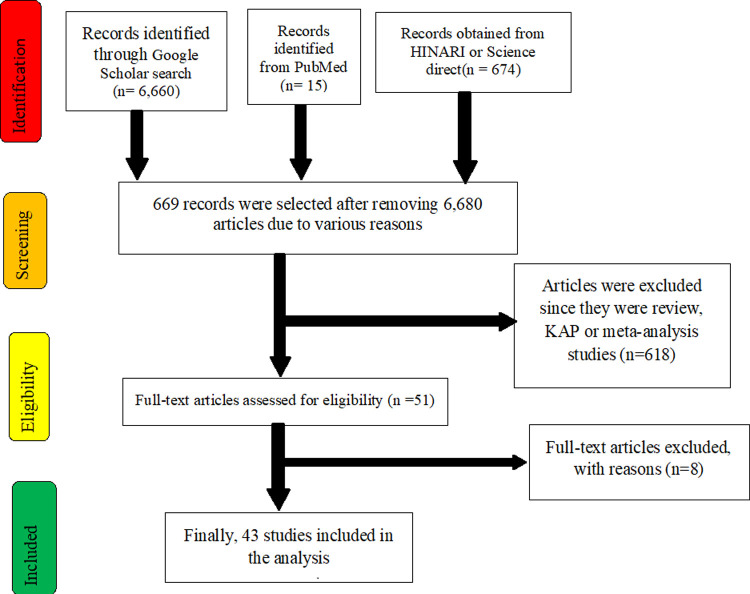
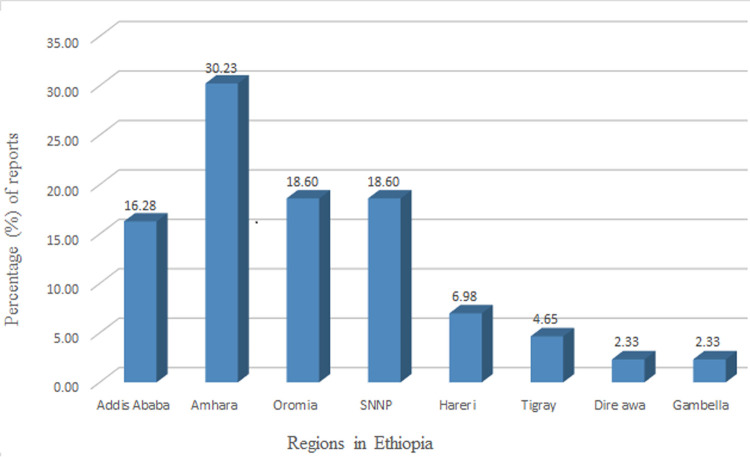
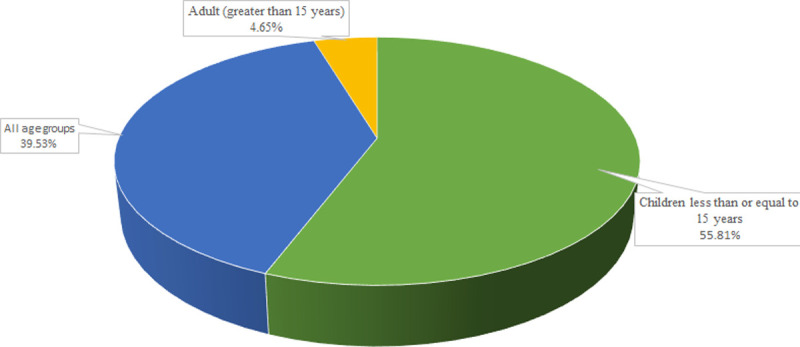
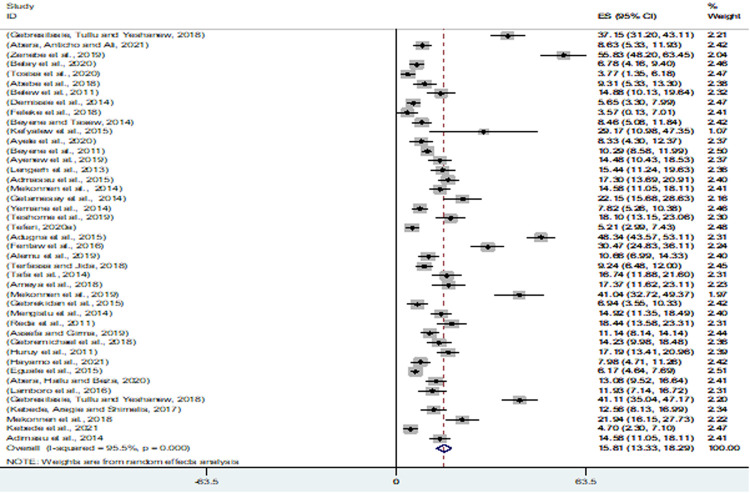
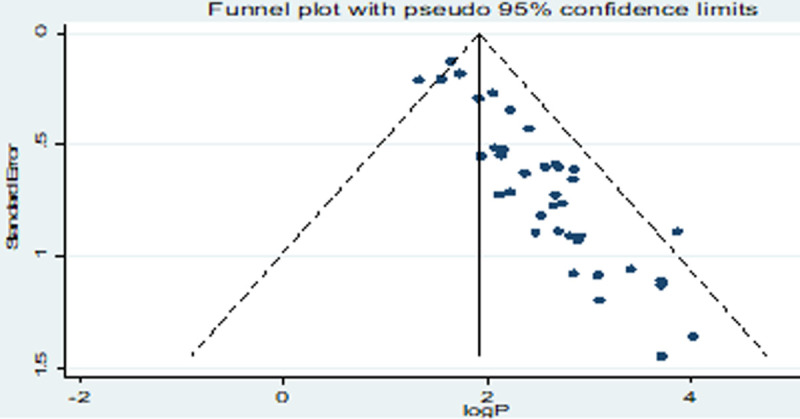
Result: After removing those articles which did not fulfil the inclusion criteria, 43 studies were included in the analysis. Studies were conducted in 8 regions of the country and most of the published articles were from the Amhara region (30.23%) followed by Oromia (18.60%) and Southern Nations, Nationalities, and Peoples' region (SNNP) (18.60%). The pooled prevalence of GNEBPs was 15.81% (CI = 13.33-18.29). The funnel plot indicated the presence of publication bias. The pooled prevalence of GNEBPs in Addis Ababa, Amhara, SNNP, and Oromia regions were 20.08, 16.67, 12.12, and 11.61%, respectively. The pooled prevalence was 14.91, 18.03, and 13.46% among studies conducted from 2006-2010, 2011-2015, and 2016-2021, respectively and it was the highest (20.35%) in children having age less than or equal to 15 years. The pooled prevalence of Escherichia coli, Campylobacter spp., Shigella spp., and Salmonella enterica were 19.79, 10.76, 6.24, and 5.06%, respectively. Large proportions (60-90%) of the isolates were resistant to ampicillin, amoxicillin, tetracycline, and trimethoprim-sulphamethoxazole. The pooled prevalence of multidrug resistance (MDR) was 70.56% (CI = 64.56-76.77%) and MDR in Campylobacter spp., Shigella spp., E. coli, and S. enterica. were 80.78, 79.08, 78.20, and 59.46%, respectively.
Conclusion: The pooled estimate showed a high burden of GNEBPs infections and a high proportion of drug resistance characters to commonly used antimicrobial agents in Ethiopia. Therefore, performing drug susceptibility tests, establishing an antimicrobial surveillance system and confirmation by molecular techniques are needed.
Conflict of interest statement
The authors have declared that no competing interests exist.
Figures
References
-
- Caramia G, Silvi S, Verdenelli MC, Magdalena M. Treatment of acute diarrhoea: past and now. Int J Enteric Pathog. 2015; 3: e28612. doi: 10.17795/ijep28612 - DOI
-
- WHO. WHO estimates of the global burden of foodborne diseases: foodborne disease burden epidemiology reference group 2007–2015. 2015. Available from: https://apps.who.int/iris/bitstream/handle/10665/199350/9789241565165_en....
-
- Troeger C, Blacker BF, Khalil IA, Rao PC, Cao S, Zimsen SR, et al. Estimates of the global, regional, and national morbidity, mortality, and aetiologies of diarrhoea in 195 countries: A systematic analysis for the global burden of disease study 2016. Lancet Infect Dis. 2018; 18:1211–1228. doi: 10.1016/S1473-3099(18)30362-1 - DOI - PMC - PubMed
Publication types
MeSH terms
Substances
LinkOut - more resources
Full Text Sources
Miscellaneous
