


Palatability Assessment of Carbocysteine Oral Solution Strawberry Taste Versus Carbocysteine Oral Solution Mint Taste: A Blinded Randomized Study
- PMID: 35295331
- PMCID: PMC8919395
- DOI: 10.3389/fphar.2022.822086
Palatability Assessment of Carbocysteine Oral Solution Strawberry Taste Versus Carbocysteine Oral Solution Mint Taste: A Blinded Randomized Study
Abstract
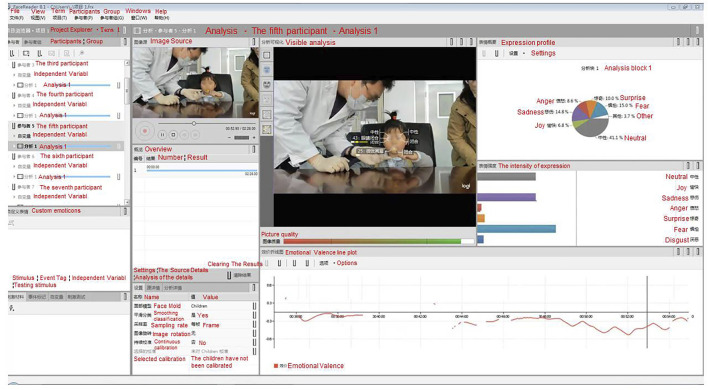
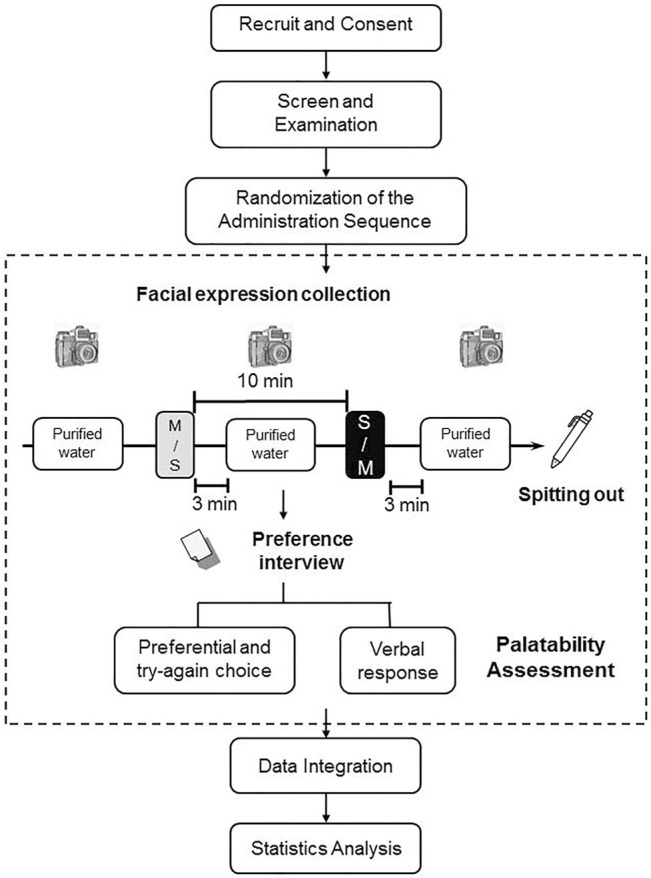
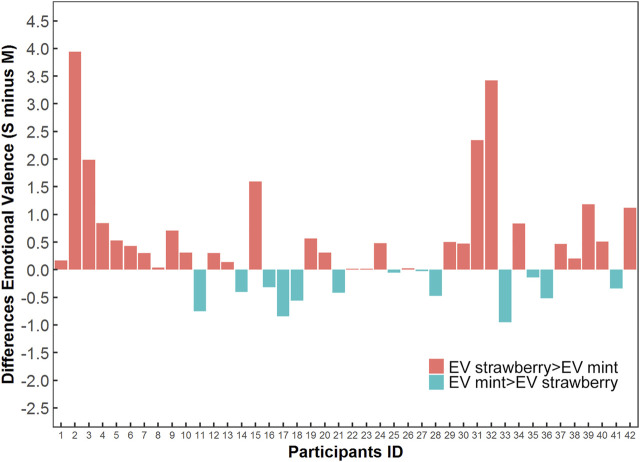
Objective: To compare and evaluate the palatability of two carbocysteine oral solutions (strawberry vs. mint taste) among healthy children aged 2-12 years. Methods: A randomized, triple-blind, crossover, palatability trial in 42 children aged 2-12 years. All subjects received two preparations of carbocysteine oral solutions (strawberry vs. mint) according to randomized administration sequences, and the administration process was recorded by video. The palatability assessed by emotional valences was performed using a facial action coding system by FaceReader™, which reflected the quantification degree of emotion; a positive value represents positive emotion, and a negative value represents negative emotion. At the same time, a face-to-face interview was conducted for 5- to 12-year-old participants. Then, the taste preferential rates were compared to assess the palatability of two carbocysteine oral solutions. Results: Forty-two children were enrolled in this study. Twenty children first tasted the carbocysteine oral solution mint taste and then the strawberry taste preparation (M-S sequence), while 22 children tasted the strawberry preparation first and then the mint one (S-M sequence). The emotional valence of mint preparation (-0.9 in M-S and -1.2 in S-M) was both relatively lower than that of strawberry taste (both -0.7 in M-S and S-M) in two sequences; 69.0% (29/42) of participants' emotional valences for strawberry preparation were higher than those for mint preparation. Among 27 participants aged ≥5 years, the taste preference rate was 88.5% (23/26) for the strawberry preparation (one missing value for the taste preference), and 77.8% of participants (21/27) chose the strawberry preparation if they had to take the medicine one more time. Conclusion: The carbocysteine oral solution with strawberry taste is an appealing preparation since it was better received by children. The facial action coding system could be an effective alternative for palatability assessment of pediatric pharmaceutical products.
Keywords: carbocysteine; crossover; palatability; pediatric pharmaceutical products; taste assessment.
Copyright © 2022 Peng, Zhang, Gao, Wang and Peng.
Conflict of interest statement
The authors declare that the research was conducted in the absence of any commercial or financial relationships that could be construed as a potential conflict of interest.
Figures
References
-
- Anand V., Kharb V., Kataria M., Kukka V., Choudhury P. K. (2008). Taste Assessment Trials for Sensory Analysis of Oral Pharmaceutical Products. Pak J. Pharm. Sci. 21 (4), 438–450. - PubMed
-
- Cohen H. A., Hoshen M., Gur S., Bahir A., Laks Y., Blau H. (2017). Efficacy and Tolerability of a Polysaccharide-Resin-Honey Based Cough Syrup as Compared to Carbocysteine Syrup for Children with Colds: a Randomized, Single-Blinded, Multicenter Study. World J. Pediatr. 13 (1), 27–33. 10.1007/s12519-016-0048-4 - DOI - PubMed
LinkOut - more resources
Full Text Sources
