


Trans-coronary pacing via Rota wire prevents bradycardia during rotational atherectomy: a case report
- PMID: 35295733
- PMCID: PMC8922706
- DOI: 10.1093/ehjcr/ytac013
Trans-coronary pacing via Rota wire prevents bradycardia during rotational atherectomy: a case report
Abstract
Back ground: Rotational atherectomy (RA) is used for plaque modification in patients with heavily calcified coronary lesions. Rotational atherectomy can induce significant bradycardia or atrioventricular block requiring for temporary pacemaker insertion. In this report, we present a case of trans-coronary pacing via a Rota wire to prevent bradycardia during RA in the proximal right coronary artery (RCA).
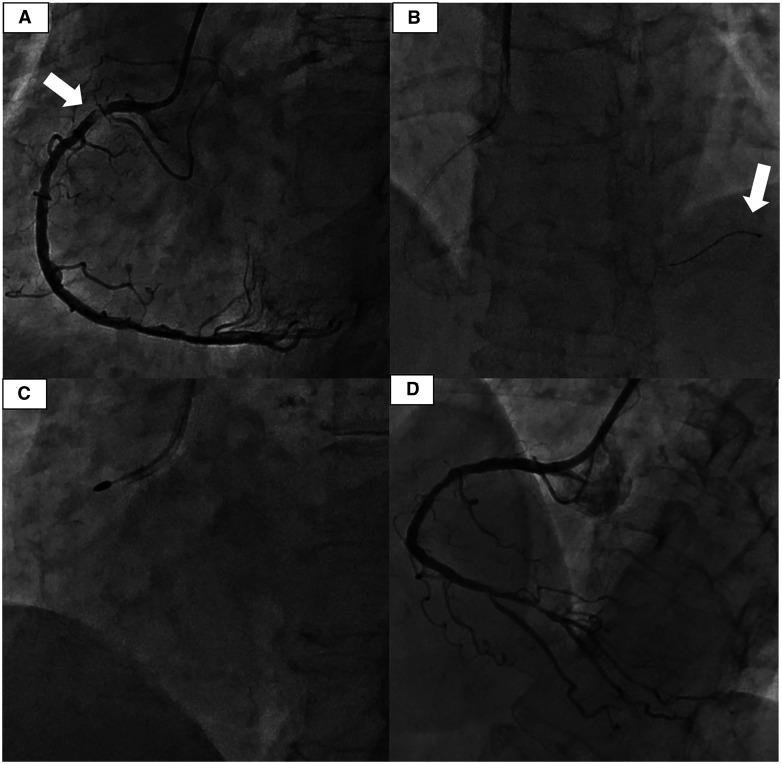
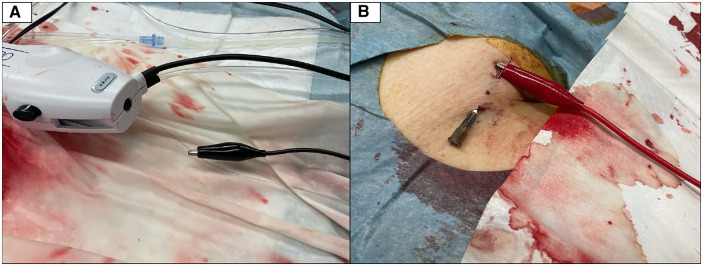
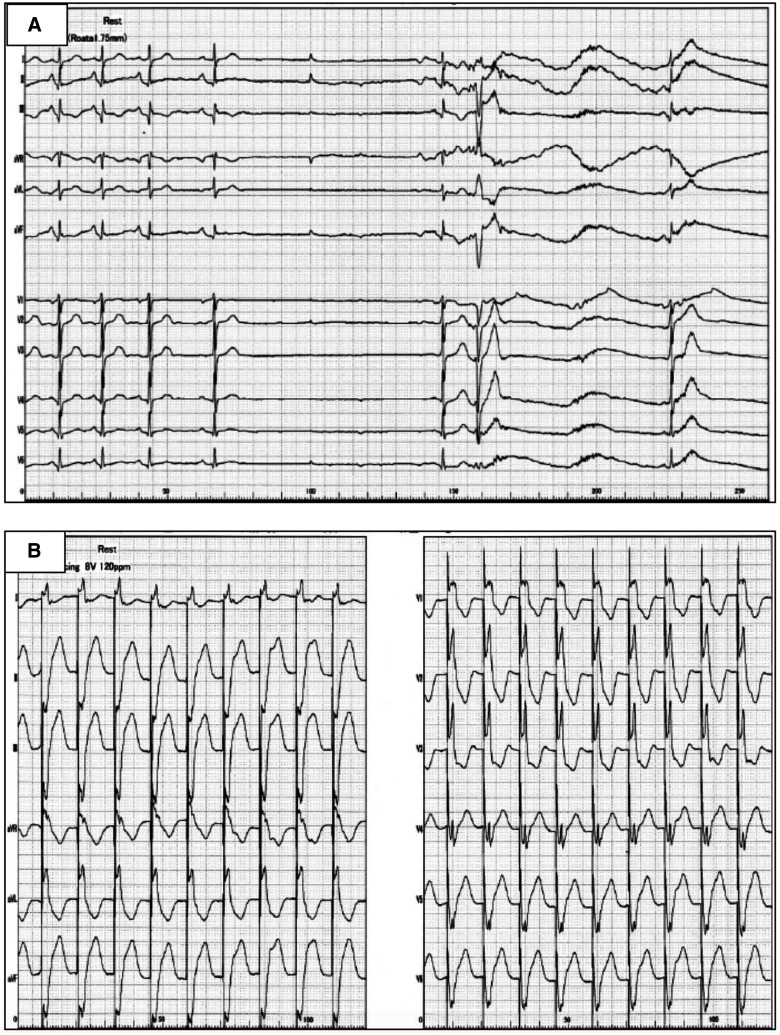
Case summary: A 72-year-old woman with a 1 month history of worsening effort angina was admitted to our hospital. Computed tomography coronary angiography disclosed significant coronary stenosis with severe calcification in proximal RCA. Coronary angiography revealed significant coronary stenosis with severe calcification in the proximal RCA. Subsequently, percutaneous coronary artery intervention was performed under the guidance of intravascular ultrasound (IVUS). The pull-back IVUS showed a circumferential calcified lesion in the proximal RCA that was treated using RA, which induced significant bradycardia requiring temporary pacemaker insertion. Immediately, trans-coronary pacing was provided via a Rota wire placed in the far distal RCA; this was used for back-up pacing during RA. Rotational atherectomy was completed by safely modifying the calcified lesion. After successful debulking of the calcified lesion, we dilated with a balloon, and a drug-eluting stent was implanted at the proximal RCA. Final IVUS and angiography showed good stent apposition and expansion. We did not observe any serious intraprocedural complications.
Discussion: Rotational atherectomy is used for plaque modification in patients with heavily calcified coronary lesions. Rotational atherectomy can induce significant bradycardia or atrioventricular block requiring for temporary pacemaker insertion via the transvenous route. This method could be an effective method to prevent bradycardia during RA.
Keywords: Calcified lesion; Case report; Percutaneous coronary artery intervention; Rotational atherectomy; Trans-coronary pacing.
© The Author(s) 2022. Published by Oxford University Press on behalf of the European Society of Cardiology.
Figures

References
-
- Mitar MD, Ratner S, Lavi S.. Heart block and tempolary pacing during rotational atherectomy. Can J Cardiol 2015;31:335–340. - PubMed
-
- Heinroth KM, Stabenow I, Moldenhauer I, Unverzagt S, Buerke M, Werdan K. et al. Temporary trans-coronary pacing by coated guidewires: a safe and reliable method during percutaneous coronary intervention. Clin Res Cardiol 2006;95:206–211. - PubMed
-
- Heinroth KM, Unverzagt S, Mahnkopf D, Horenburg C, Melnyk H, Sedding D. et al. Transcoronary pacing in an animal model: second coated guidewire versus cutaneous patch as indifferent electrodes. Med Klin Intensivmed Notfmed 2021;doi: 10.1007/s00063-021-00806-3. - PubMed
-
- Lasa G, Larman M, Gaviria K, Sanmartin JC, Sadaba M, Rumoroso JR.. Coronary stent immobilization during angioplasty by transcoronary ventricular pacing via a guidewire. Rev Esp Cardiol 2009;62:288–292. - PubMed
-
- Mallek K, Dalton RT, Pareek N, Dworakowski R.. Rapid transcoronary pacing to facilitate ostial stent placement. JACC Cardiovasc Interv 2021;14: e111–e112. - PubMed
Publication types
LinkOut - more resources
Full Text Sources