


The prevalence of dental developmental anomalies among childhood cancer survivors according to types of anticancer treatment
- PMID: 35296697
- PMCID: PMC8927608
- DOI: 10.1038/s41598-022-08266-1
The prevalence of dental developmental anomalies among childhood cancer survivors according to types of anticancer treatment
Abstract
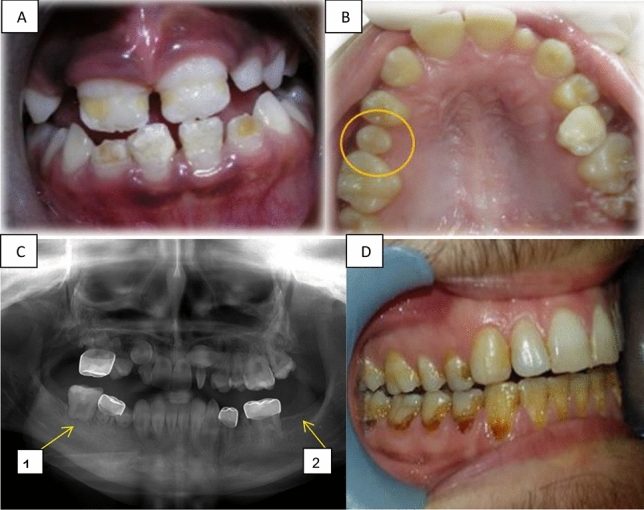
Survival following childhood cancer has increased considerably. In an observational cross-sectional study, we assessed the prevalence of dental developmental anomalies (DDA) among childhood cancer survivors according to types of anticancer treatment. Permanent teeth were examined clinically and radiographically in 121 adolescents with a history of childhood malignancies, to identify DDA, namely hypomineralization or hypoplasia, microdontia, root changes and hypodontia. DDA were observed in 56/121 individuals (46%), in 309/3388 teeth (9%). Hypomineralization or hypoplasia of enamel appeared in 21 (17%) patients. Altered root development appeared in 26 patients and hypodontia affected 13 (10%). Dental anomalies were observed in 36 (43%) individuals who received chemotherapy and not radiation, in 20 (52%) who received radiotherapy, and in 15 (60%) of those who received head and neck radiotherapy. Among patients who received only chemotherapy, young age (6 years or younger) was associated with a higher number of malformed teeth. In conclusion, antineoplastic treatment that combines chemotherapy and radiotherapy appears to increase the risk of DDA. Radiation to the head and neck area was shown to particularly increase the risk of DDA. No specific chemotherapy agent was found to be associated more than the others with DDA.
© 2022. The Author(s).
Conflict of interest statement
The authors declare no competing interests.
Figures
References
-
- Landier W, et al. Development of risk-based guidelines for pediatric cancer survivors: the children’s oncology group long-term follow-up guidelines from the children’s oncology group late effects committee and nursing discipline. J. Clin. Oncol. 2004;22:4979–4990. doi: 10.1200/JCO.2004.11.032. - DOI - PubMed
-
- Da Fonseca MA. Long-term oral and craniofacial complications following pediatric bone marrow transplantation. Pediatr. Dent. 2000;22:57–62. - PubMed
Publication types
MeSH terms
Substances
LinkOut - more resources
Full Text Sources
Medical
