


Physiological aspects of pig kidney xenotransplantation and implications for management following transplant
- PMID: 35297098
- PMCID: PMC9232961
- DOI: 10.1111/xen.12743
Physiological aspects of pig kidney xenotransplantation and implications for management following transplant
Abstract
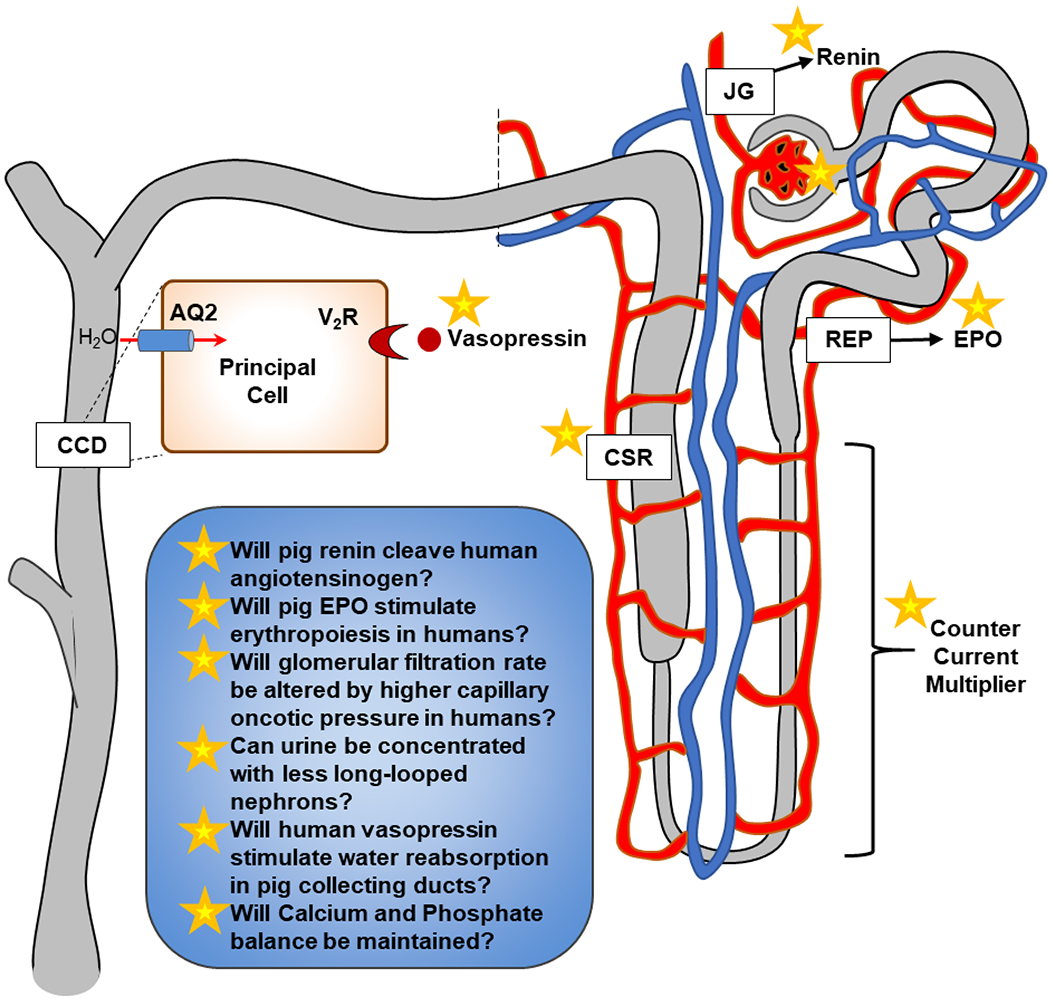
Successful organ transplantation between species is now possible, using genetic modifications. This article aims to provide a comprehensive overview of the differences and similarities in kidney function between humans, primates, and pigs, in preparation for pig-allograft to human xenotransplantation. The kidney, as the principal defender of body homeostasis, acts as a sensor, effector, and regulator of physiologic feedback systems. Considerations are made for anticipated effects on each system when a pig kidney is placed into a human recipient. Discussion topics include anatomy, global kidney function, sodium and water handling, kidney hormone production and response to circulating hormones, acid-base balance, and calcium and phosphorus handling. Based on available data, pig kidneys are anticipated to be compatible with human physiology, despite a few barriers.
Keywords: kidney; pig; renal function; xenotransplantation.
© 2022 John Wiley & Sons A/S. Published by John Wiley & Sons Ltd.
Conflict of interest statement
Conflict of interest
None of the authors has a conflict of interest.
Figures
References
-
- Gomez FA, Ballesteros LE, Estupinan HY. Morphological Characterization of the Renal Arteries in the Pig. Comparative Analysis with the Human. Int J Morphol. 2017;35(1):319–324.
Publication types
MeSH terms
Grants and funding
LinkOut - more resources
Full Text Sources
