


Prosthetic hip-associated cobalt toxicity: a systematic review of case series and case reports
- PMID: 35298414
- PMCID: PMC8965198
- DOI: 10.1530/EOR-21-0098
Prosthetic hip-associated cobalt toxicity: a systematic review of case series and case reports
Abstract
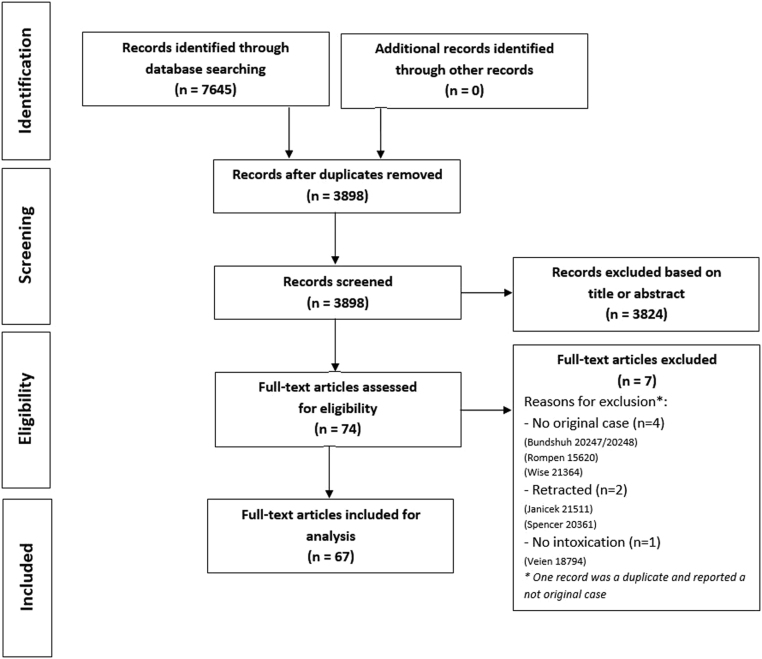
Prosthetic hip-associated cobalt toxicity (PHACT) is caused by elevated blood cobalt concentrations after hip arthroplasty. The aim of this study is to determine which symptoms are reported most frequently and in what type of bearing. We also try to determine the blood level of cobalt concentrations associated with toxicological symptoms. A systematic review was conducted on the 10th of July according to Preferred Reporting Items for Systematic Reviews and Meta-Analyses (PRISMA) guidelines. A methodological quality assessment (risk of bias (RoB)) was performed. Primary outcomes were the reported symptoms of cobalt toxicity and the level of cobalt concentrations in blood. These levels were associated with toxicological symptoms. A total of 7645 references were found of which 67 relevant reports describing 79 patients. The two most used bearings in which PHACT was described were metal-on-metal (MoM) bearings (38 cases) and revised (fractured) ceramic-on-ceramic (CoC) bearings where the former ceramic head was replaced by a metal head (32 cases). Of all reported symptoms, most were seen in the neurological system, of which 24% were in the sensory system and 19.3% were in central/peripheral system, followed by the cardiovascular (22.1%) system. The mean cobalt concentration for MoM-bearings was 123.7 ± 96.8 ppb and 1078.2 ± 1267.5 ppb for the revised fractured CoC-bearings. We recommend not to use a metal-based articulation in the revision of a fractured CoC bearing and suggest close follow-up with yearly blood cobalt concentration controls in patients with a MoM bearing or a revised fractured CoC bearing. Level of Evidence: Level V, systematic review.
Keywords: cobalt; hip arthroplasty; prosthetic hip-associated cobalt toxicity.
Figures
References
Publication types
LinkOut - more resources
Full Text Sources
