


Lipid-Lowering Efficacy of the Capsaicin in Patients With Metabolic Syndrome: A Systematic Review and Meta-Analysis of Randomized Controlled Trials
- PMID: 35299764
- PMCID: PMC8923259
- DOI: 10.3389/fnut.2022.812294
Lipid-Lowering Efficacy of the Capsaicin in Patients With Metabolic Syndrome: A Systematic Review and Meta-Analysis of Randomized Controlled Trials
Abstract
Background: Patients with metabolic syndrome (MetS) have increased cardiovascular risk. Capsaicin (CAP) has been shown to reduce lipids, but efficacy for patients with MetS is unknown.
Methods: A systematic review was performed according to PRISMA guidelines, to compare the effects of CAP against a placebo. Differences in the weight mean difference (WMD) with 95% confidence intervals (95% CI) were then pooled using a random effects model.
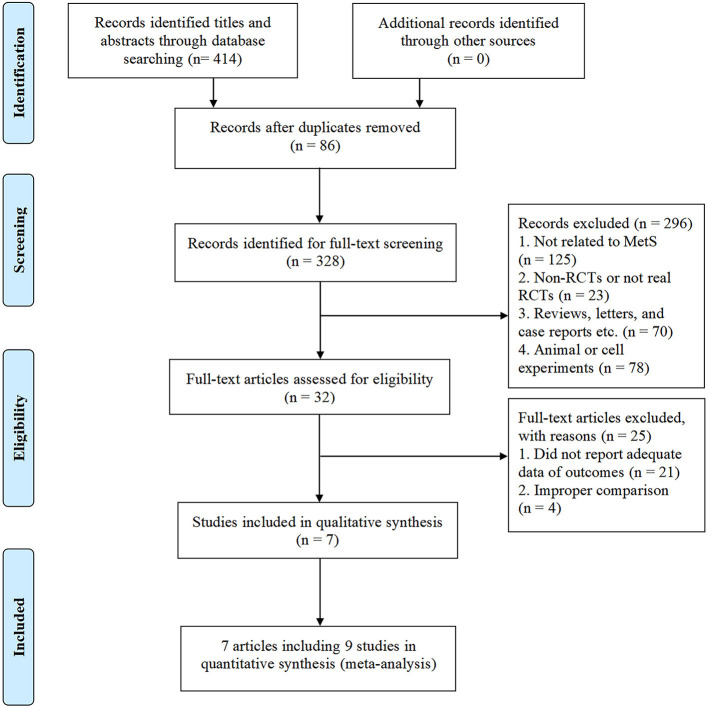
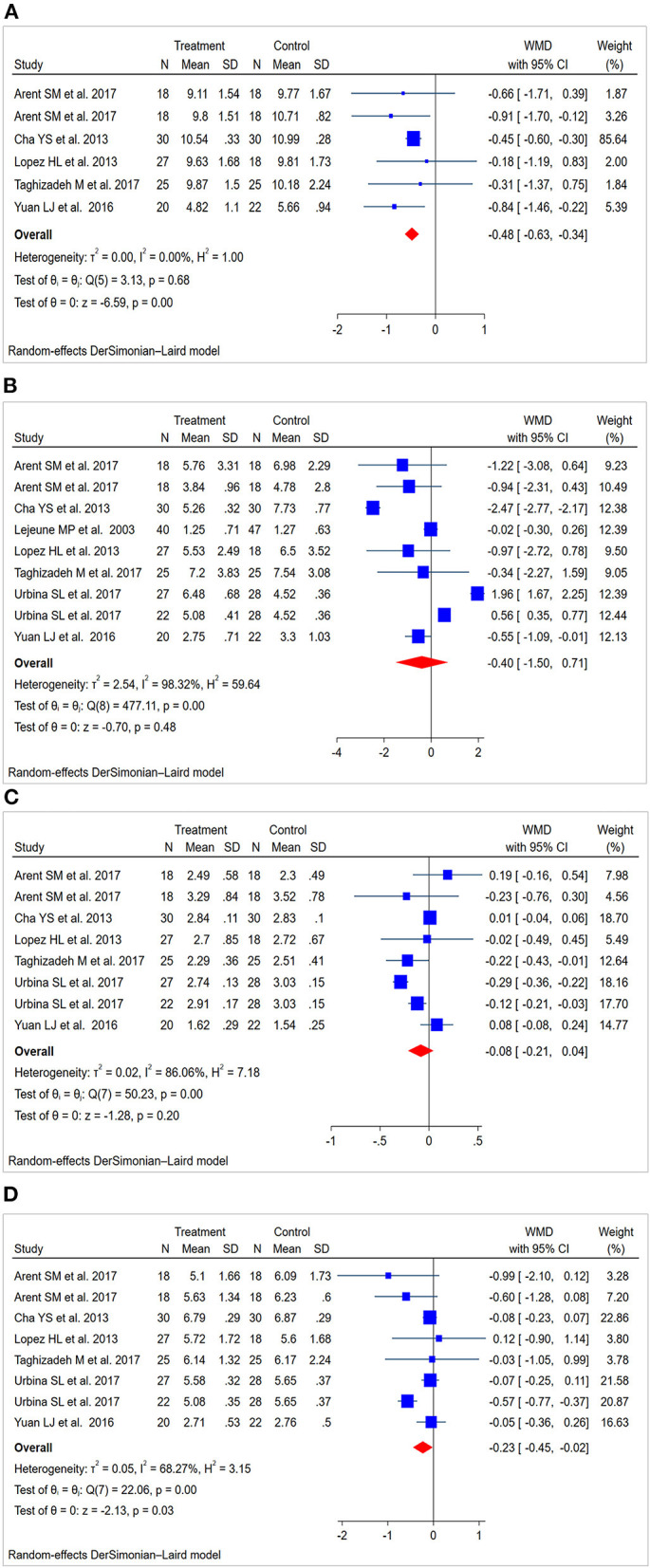
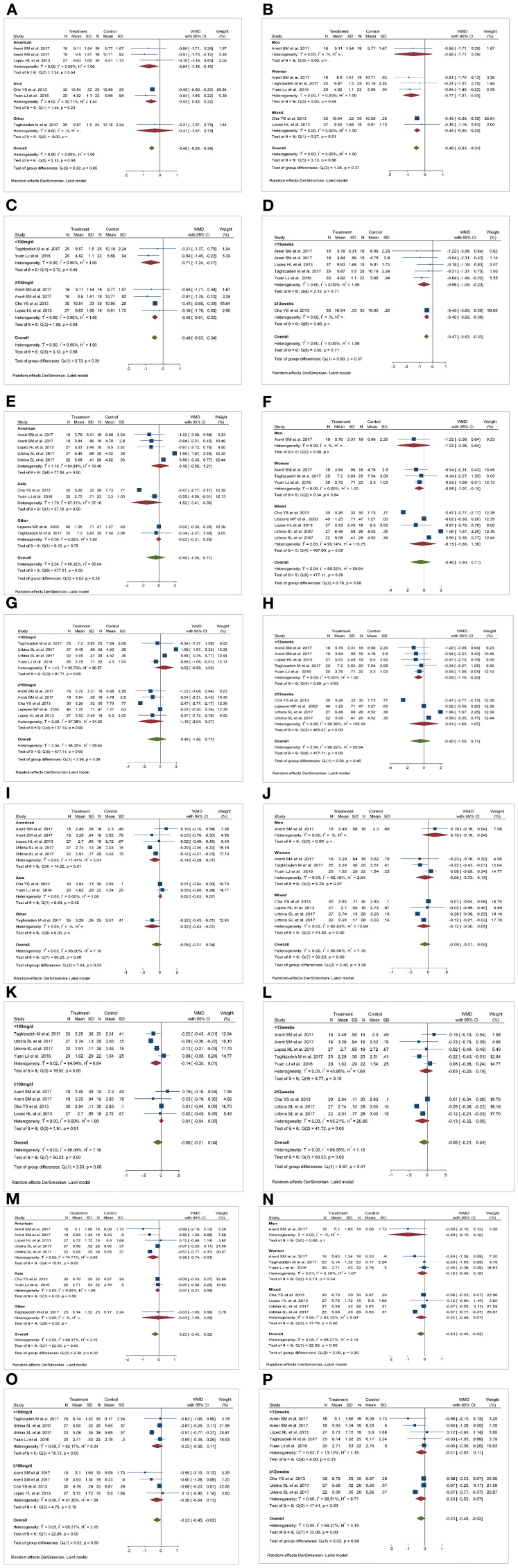
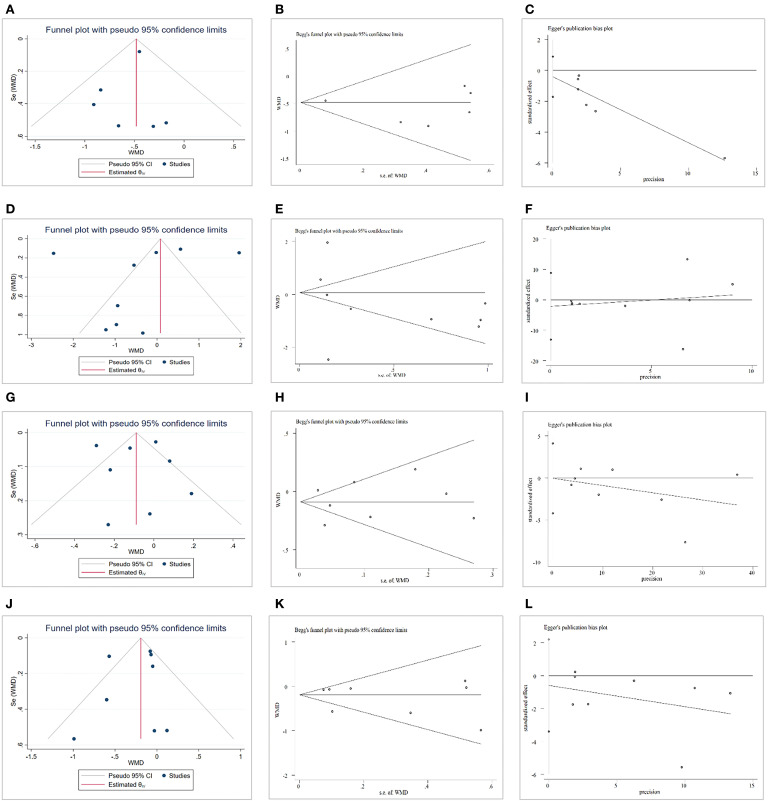
Results: Nine randomized controlled trials including 461 patients were identified in the overall analysis. CAP significantly decreased total cholesterol (TC) (WMD = -0.48, 95% CI: -0.63 to -0.34, I 2= 0.00%) and low-density lipoprotein cholesterol (LDL-C) (WMD = -0.23, 95% CI: -0.45 to -0.02, I 2 = 68.27%) among patients with MetS. No significant effects of CAP were found on triglycerides (TG) or high-density lipoprotein cholesterol (HDL-C) (WMD = -0.40, 95% CI: -1.50 to 0.71, I 2 = 98.32%; WMD = -0.08, 95% CI: -0.21 to 0.04, I 2 = 86.06%). Subgroup analyses indicated that sex and intervention period were sources of heterogeneity. The results revealed that CAP decreased TG levels in women (WMD = -0.59, 95% CI: -1.07 to -0.10) and intervention period <12 weeks (WMD = -0.65; 95% CI: -1.10 to -0.20). And there was no potential publication bias according to funnel plot, Begg' test and Egger regression test.
Conclusions: CAP supplementation is a promising approach to decreasing TC and LCL-C levels in patients with MetS. However, short-term (<12 weeks) use of CAP in women may also reduce TG levels.
Systematic review registration: Identifier: CRD42021228032.
Keywords: capsaicin; lipid levels; meta-analysis; metabolic syndrome; randomized controlled trials.
Copyright © 2022 Jiang, Qu, Lin, Shi, Chen and Gao.
Conflict of interest statement
The authors declare that the research was conducted in the absence of any commercial or financial relationships that could be construed as a potential conflict of interest.
Figures
References
-
- Alberti KG, Eckel RH, Grundy SM, Zimmet PZ, Cleeman JI, Donato KA, et al. . Harmonizing the metabolic syndrome: a joint interim statement of the International Diabetes Federation Task Force on Epidemiology and Prevention; National Heart, Lung, and Blood Institute; American Heart Association; World Heart Federation; International Atherosclerosis Society; and International Association for the Study of Obesity. Circulation. (2009) 120:1640–5. 10.1161/CIRCULATIONAHA.109.192644 - DOI - PubMed
-
- Grundy SM, Brewer HB Jr, Cleeman JI, Smith SC Jr, Lenfant C. American Heart Association, et al. Definition of metabolic syndrome: report of the National Heart, Lung, and Blood Institute/American Heart Association conference on scientific issues related to definition. Circulation. (2004) 109:433–8. 10.1161/01.CIR.0000111245.75752.C6 - DOI - PubMed
Publication types
LinkOut - more resources
Full Text Sources
Miscellaneous
