


Pooled sample testing for COVID-19 diagnosis: Evaluation of bi-directional matrix pooling strategies
- PMID: 35301022
- PMCID: PMC8920575
- DOI: 10.1016/j.jviromet.2022.114524
Pooled sample testing for COVID-19 diagnosis: Evaluation of bi-directional matrix pooling strategies
Abstract
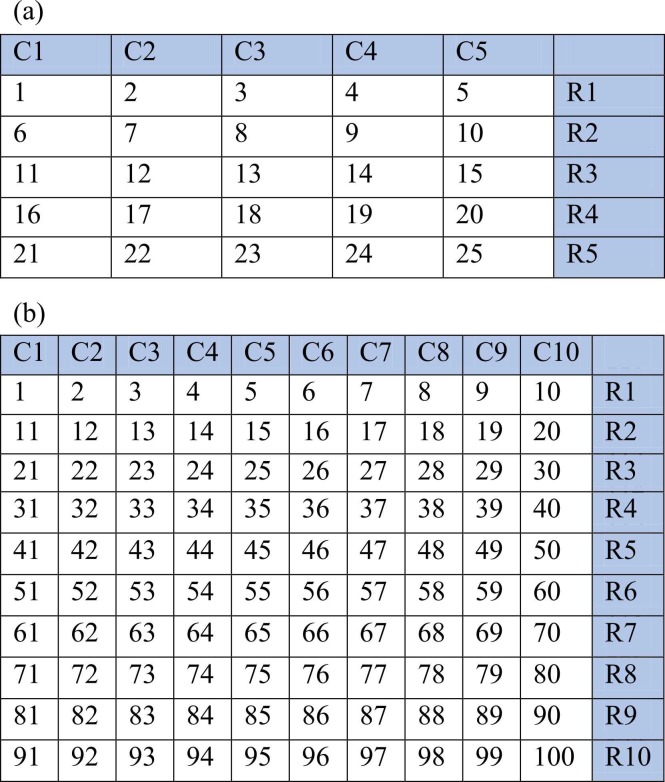
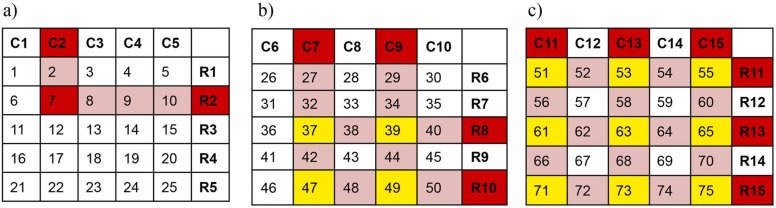
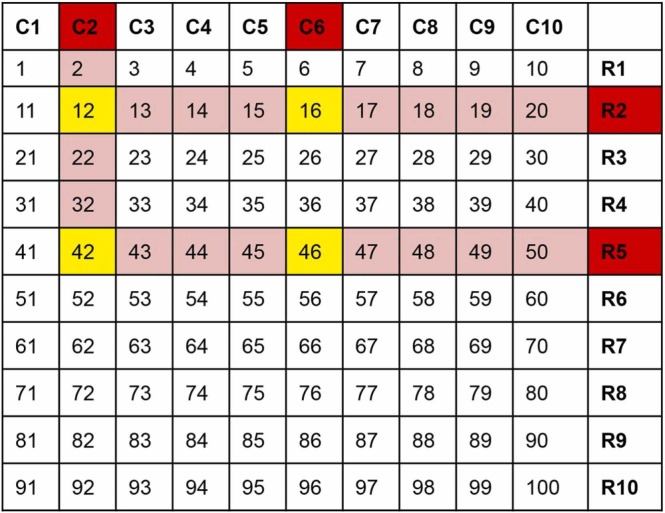
In the on-going COVID-19 pandemic, pooled testing of samples by RT-PCR has been recommended at certain scenarios to increase labs' testing capacity and reduce cost of testing. This paper describes the evaluation of bi-directional matrix pooling strategies with clinical samples in a 5 × 5 and 10 × 10 matrix. Nasopharyngeal swab samples in viral transport medium (VTM) previously tested (positive or negative) by real time RT-PCR for SARS-CoV-2 were used for these experiments. Ten sets of 5 × 5 (250 samples) and ten sets of 10 × 10 (1000 samples) pooling of samples in both directions was done with known positive samples introduced at random positions. Extracted nucleic acid was tested for SARS-CoV-2 E-gene by RT-PCR. Sensitivity or concordance and feasibility of matrix pooling were assessed in comparison to direct RT-PCR testing. In comparison to direct testing, the overall concordance was 86.6% for 5 × 5 pooling, 73.3% for 10 × 10 with 200 µL extraction volume and 86.6% for 10 × 10 with 400 µL extraction volume. Bi-directional matrix pooling can be adopted with advantage over conventional direct or pool testing for COVID-19 by RT-PCR under the following conditions: i) sample positivity rate of ≤ 5%, ii) matrix pool size of 8-10 samples, iii) use of min. 40 µL VTM from each sample and iv) utilization of automated liquid handling equipment, if available, for sample addition to avoid human errors.
Keywords: COVID-19; Diagnosis; Pooling; RT-PCR; SARS-CoV-2; Screening.
Copyright © 2022 Elsevier B.V. All rights reserved.
Conflict of interest statement
The authors declare that we have no known competing financial interests or personal relationships that could have appeared to influence the work reported in this paper.
Figures
References
-
- Abel U., Schosser R., Süss J. Estimating the prevalence of infectious agents using pooled samples: biometrical considerations. Zentralblatt Bakteriol. 1999;289(5–7):550–563. - PubMed
-
- Dorfman R. The detection of defective members of large populations. Ann. Math. Stat. 1943;14:436–440.
Publication types
MeSH terms
Substances
LinkOut - more resources
Full Text Sources
Medical
Miscellaneous
