


Investigating men's motivations to engage in genetic screening for BRCA1 and BRCA2 mutations
- PMID: 35303741
- PMCID: PMC8932559
- DOI: 10.1371/journal.pone.0265387
Investigating men's motivations to engage in genetic screening for BRCA1 and BRCA2 mutations
Abstract
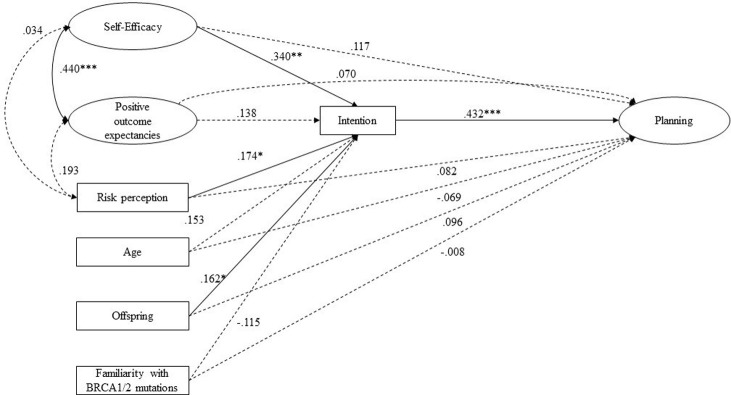
BRCA1 and BRCA2 mutations are associated with an increased risk of developing numerous cancers, including breast, ovarian, pancreatic, melanoma and prostate cancer. Men face BRCA-related cancer risks as women do. However, there is considerably less research on the psychological determinants of men engaging in BRCA1/2-related cancer prevention compared to women. The present research aimed to study the determinants of men's motivations to engage in genetic screening for BRCA1 and BRCA2 through the lens of the Health Action Process Approach. One hundred and twenty-five men (mean age = 58.53 y/o, SD = 10.37) completed an online survey. The intention to undergo genetic screening for BRCA1/2 mutations in men was significantly and positively associated with self-efficacy and risk perception. Moreover, having offspring positively affected intention as well. The relationships between intention (and planning) and positive outcome expectancies, age, and family history of breast-related cancer were not statistically significant. Most information on BRCA1 and BRCA2 mutations is tailored to women due to the availability of effective surgical risk reduction procedures for women's breast and ovarian cancer. Future research should focus on the best methods of communicating informed decision-making for men facing the risk of such mutations.
Conflict of interest statement
The authors have declared that no competing interests exist.
Figures
References
-
- Patel VV, Masyukova M, Sutton D, Horvath KJ. Social Media Use and HIV-Related Risk Behaviors in Young Black and Latino Gay and Bi Men and Transgender Individuals in New York City: Implications for Online Interventions. Journal of Urban Health-Bulletin of the New York Academy of Medicine. 2016;93: 388–399. doi: 10.1007/s11524-016-0025-1 - DOI - PMC - PubMed
-
- Petrucelli N, Daly MB, Pal P. BRCA1- and BRCA2-Associated Hereditary Breast and Ovarian Cancer. In: Adam MP, Ardinger HH, Pagon RA, et al.., eds. GeneReviews®. 2016.
MeSH terms
Substances
LinkOut - more resources
Full Text Sources
Medical
Miscellaneous
