


COVID-19 vaccine intention among young adults: Comparative results from a cross-sectional study in Canada and France
- PMID: 35305823
- PMCID: PMC8890971
- DOI: 10.1016/j.vaccine.2022.02.085
COVID-19 vaccine intention among young adults: Comparative results from a cross-sectional study in Canada and France
Abstract
Background: High rates of COVID-19 vaccination uptake are required to attain community immunity. This study aims to identify factors associated with COVID-19 vaccine uncertainty and refusal among young adults, an underexplored population with regards to vaccine intention generally, in two high-income settings: Canada and France.
Methods: A cross-sectional online survey was conducted from October to December 2020 among young adults ages 18-29 years (n = 6663) living in Canada (51.9%) and France (48.1%). Multinomial logistic regression analyses were performed to identify the sociodemographic and COVID-19-related measures (e.g., prevention behavior and perspectives, health-related concerns) associated with vaccine uncertainty and refusal. We conducted weighted analyses by age, gender and province/region of residence.
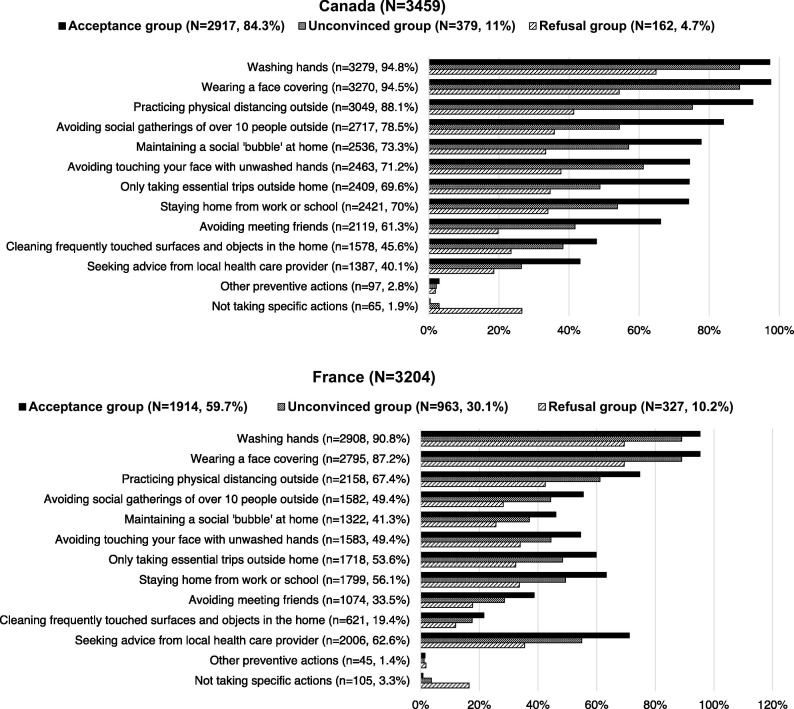
Results: Intention to accept vaccination was reported by 84.3% and 59.7% of the sample in Canada and France, respectively. Higher levels of vaccine uncertainty and refusal were observed in France compared to Canada (30.1% versus 11%, 10.2% versus 4.7%). In both countries, we found higher levels of vaccine acceptance among young adults who reported COVID-19 prevention actions. Vaccine uncertainty and refusal were associated with living in a rural area, having lower levels of educational attainment, not looking for information about COVID-19, not wearing a face mask, and reporting a lower level of concern for COVID-19's impact on family. Participants who had been tested for COVID-19 were less likely to intend to refuse a vaccine.
Conclusions: COVID-19 vaccine acceptance was high among young adults in Canada and France during a time in which vaccines were approved for use. Targeted interventions to build confidence in demographic groups with greater hesitance (e.g., rural and with less personal experience with COVID-19) may further boost acceptance and improve equity as vaccine efforts continue to unfold.
Keywords: COVID-19; Preventive measures; Vaccination; Young adults.
Copyright © 2022 Elsevier Ltd. All rights reserved.
Conflict of interest statement
Declaration of Competing Interest The authors declare that they have no known competing financial interests or personal relationships that could have appeared to influence the work reported in this paper.
Figures
References
-
- Moderna COVID-19 Vaccine | FDA [Internet]. [cited 2021 Feb 15]. Available from: https://www.fda.gov/emergency-preparedness-and-response/coronavirus-dise....
-
- Pfizer-BioNTech COVID-19 Vaccine | FDA [Internet]. [cited 2021 Feb 15]. Available from: https://www.fda.gov/emergency-preparedness-and-response/coronavirus-dise....
Publication types
MeSH terms
Substances
Grants and funding
LinkOut - more resources
Full Text Sources
Medical
