The emerging threat of multisystem inflammatory syndrome in adults (MIS-A) in COVID-19: A systematic review
- PMID: 35306376
- PMCID: PMC9754714
- DOI: 10.1016/j.hrtlng.2022.03.007
The emerging threat of multisystem inflammatory syndrome in adults (MIS-A) in COVID-19: A systematic review
Abstract
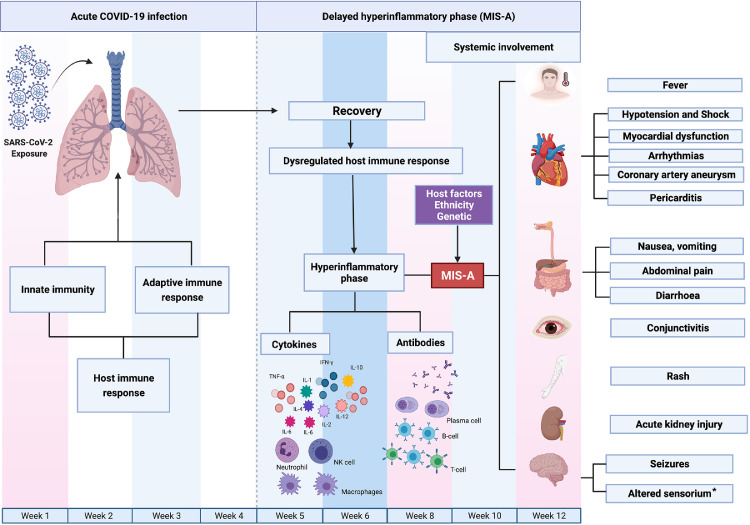
Background: The exact prevalence of Multisystem Inflammatory Syndrome in Adults (MIS-A) is largely unknown. Vague and multiple definitions and treatment options often add to the confusion on how to label the diagnosis with certainty.
Objectives: The objective of the study was to determine the demographic profile, clinical presentation, laboratory findings and outcomes of MIS-A in COVID-19.
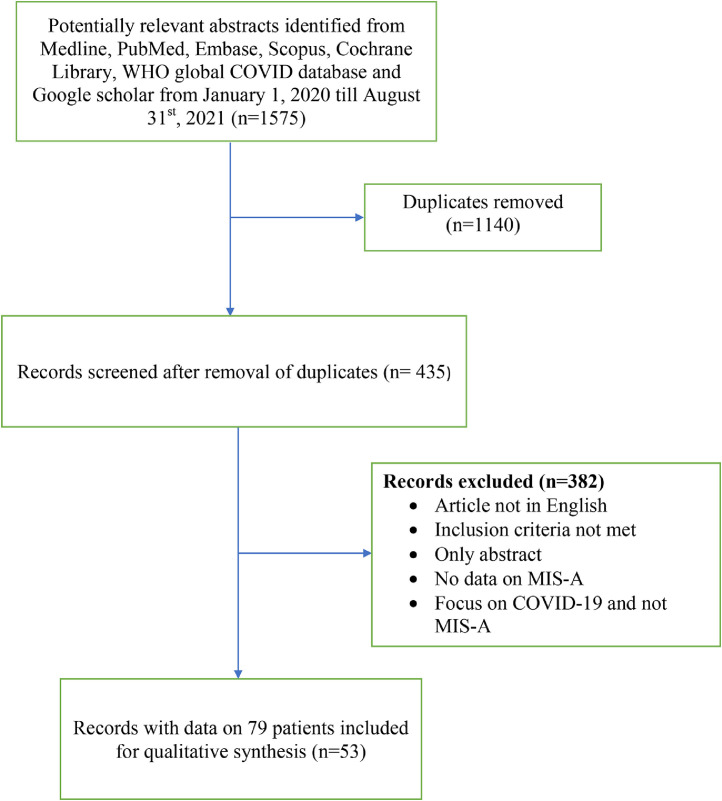
Methods: A systematic review was conducted after registering with PROSPERO. Multiple databases were systematically searched to encompass studies characterizing MIS-A from 1st January 2020 up to 31st August 2021. The inclusion criteria were- to incorporate all published or in press peer-reviewed articles reporting cases of MIS-A. We accepted the following types of studies: case reports, case-control, case series, cross-sectional studies and letters to the editors that incorporated clinical, laboratory, imaging, as well as the hospital course of MIS-A patients. The exclusion criteria for the review were- articles not in English, only abstracts published, no data on MIS-A and articles which have focus on COVID-19, and not MIS-A. Two independent authors screened the articles, extracted the data, and assessed the risk of bias.
Results: A total of 53 articles were included in this review with a sample size of 79 cases. Majority of the patients were males (73.4%) with mean age of 31.67±10.02 years. Fever (100%) and skin rash (57.8%) were the two most common presenting symptoms. Echocardiographic data was available for 73 patients of whom 41 (73.2%) had reduced left ventricular ejection fraction. Cardiovascular system was most frequently involved (81%) followed by gastrointestinal (73.4%) and mucocutaneous (51.9%) involvement. Anti-inflammatory therapies used in treatment included steroids (60.2%), intravenous immunoglobulin (37.2%) and biologics (10.2%). Mean duration of the hospital stay was 11.67±8.08 days. Data regarding the outcomes was available for all 79 subjects of whom 4 (5.1%) died during course of hospital stay.
Conclusions: Emergence of MIS-A calls for further large-scale studies to establish standard case definitions and definite treatment guidelines.
Keywords: Adult; COVID-19; Multisystem inflammatory syndrome; Steroids.
Copyright © 2022 Elsevier Inc. All rights reserved.
Figures