


Analysis of clinical characteristics and prognostic factors in 110 patients with nitrous oxide abuse
- PMID: 35307992
- PMCID: PMC9015005
- DOI: 10.1002/brb3.2533
Analysis of clinical characteristics and prognostic factors in 110 patients with nitrous oxide abuse
Abstract
Purpose: To review the clinical symptoms, auxiliary examination findings, and outcomes of patients with nitrous oxide (N2 O) abuse, and analyze the factors that affect outcomes.
Methods: Patients with N2 O abuse treated in the Department of Neurology between January 2018 and December 2020 were included. The clinical data of these patients were collected, and follow-up was conducted to determine the outcomes.
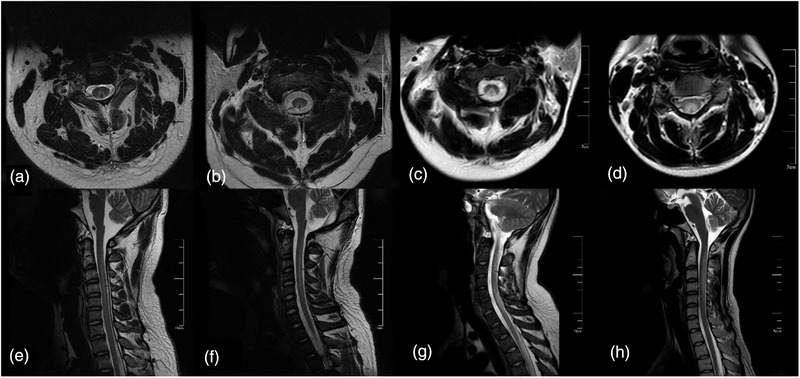
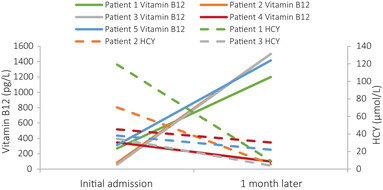
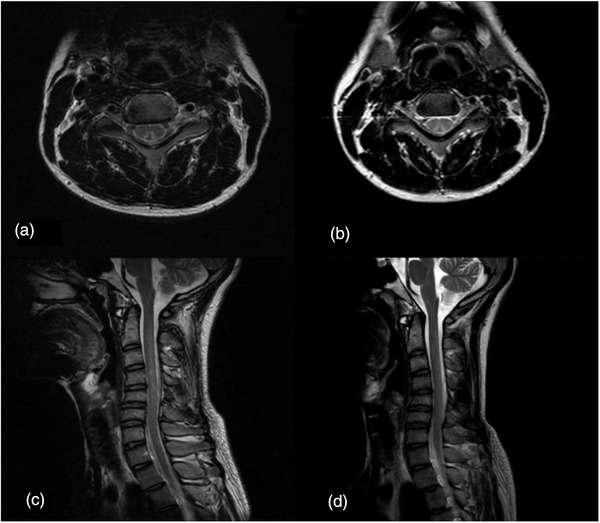
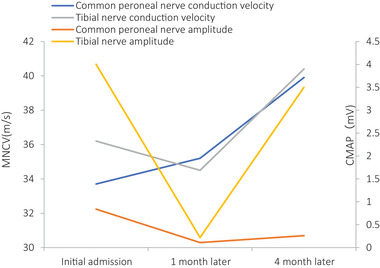
Results: The average age of the 110 patients with N2 O abuse was 21.4 ± 4.2 years (range: 14-33 years). Clinical presentation primarily included neurological symptoms, such as limb numbness and/or weakness (97%), psychiatric symptoms, changes in appetite, and skin hyperpigmentation. Laboratory test results were characterized by vitamin B12 deficiency (60%, 34 out of 57 cases) and high homocysteine level (69%, 31 out of 45 cases). Electromyography indicated mixed axonal and demyelination injury (92%, 80 out of 87 cases). Motor and sensory nerves were simultaneously involved, and injury primarily involved the lower limbs. One hundred and seven (97%) patients were clinically diagnosed with peripheral neuropathy, of whom 26 (24%) exhibited spinal abnormalities on magnetic resonance imaging, supporting a diagnosis of subacute combined degeneration. Treatment included N2 O withdrawal and vitamin B12 supplementation. Reexamination of six patients indicated that treatment was effective. Follow-up was completed for 51 patients. Thirty-four patients (67%) recovered completely, 17 patients (33%) had residual limb numbness, and only one patient experienced relapse. Sex was an independent prognostic factor; the outcomes of female patients were better than that of male patients.
Conclusion: The recreational use of N2 O has largely expanded among youth in recent decades, which has become a growing public health concern in China. It highlights the importance of the recognition of various clinical symptoms, particularly limb numbness and/or weakness related to the cases of N2 O abuse. The therapeutic administration of vitamin B12 supplementation and N2 O withdrawal can make the overall prognosis good, especially for female patients.
Keywords: clinical characteristics; nitrous oxide; outcomes; peripheral neuropathy; vitamin B12 deficiency.
© 2022 The Authors. Brain and Behavior published by Wiley Periodicals LLC.
Conflict of interest statement
The authors declare that they have no known competing financial interests or personal relationships that could have appeared to influence the work reported in this paper.
Figures
References
-
- Banks, R. G. S. , Henderson, R. J. , & Pratt, J. M. (1968) Reactions of gases in solution. Part III. Some reactions of nitrous oxide with transition‐metal complexes. Journal of the Chemical Society A: Inorganic, Physical, Theoretical, 2886–2889. 10.1039/j19680002886 - DOI
Publication types
MeSH terms
Substances
LinkOut - more resources
Full Text Sources
