Review
. 2022:20:1306-1344.
doi: 10.1016/j.csbj.2022.03.009. Epub 2022 Mar 14.

Inhibition of the main protease of SARS-CoV-2 (Mpro) by repurposing/designing drug-like substances and utilizing nature's toolbox of bioactive compounds

Affiliations
Review

Inhibition of the main protease of SARS-CoV-2 (Mpro) by repurposing/designing drug-like substances and utilizing nature's toolbox of bioactive compounds

Io Antonopoulou et al. Comput Struct Biotechnol J. 2022.

Abstract

The emergence of the Severe Acute Respiratory Syndrome Coronavirus-2 (SARS-CoV-2) has resulted in a long pandemic, with numerous cases and victims worldwide and enormous consequences on social and economic life. Although vaccinations have proceeded and provide a valuable shield against the virus, the approved drugs are limited and it is crucial that further ways to combat infection are developed, that can also act against potential mutations. The main protease (Mpro) of the virus is an appealing target for the development of inhibitors, due to its importance in the viral life cycle and its high conservation among different coronaviruses. Several compounds have shown inhibitory potential against Mpro, both in silico and in vitro, with few of them also having entered clinical trials. These candidates include: known drugs that have been repurposed, molecules specifically designed based on the natural substrate of the protease or on structural moieties that have shown high binding affinity to the protease active site, as well as naturally derived compounds, either isolated or in plant extracts. The aim of this work is to collectively present the results of research regarding Mpro inhibitors to date, focusing on the function of the compounds founded by in silico simulations and further explored by in vitro and in vivo assays. Creating an extended portfolio of promising compounds that may block viral replication by inhibiting Mpro and by understanding involved structure-activity relationships, could provide a basis for the development of effective solutions against SARS-CoV-2 and future related outbreaks.

Keywords: Coronavirus; Enzyme inhibition; Extracts; Main Protease; Natural compounds; Repurposed drugs; SARS-CoV-2.


Conflict of interest statement

The authors declare that they have no known competing financial interests or personal relationships that could have appeared to influence the work reported in this paper.

Figures
None
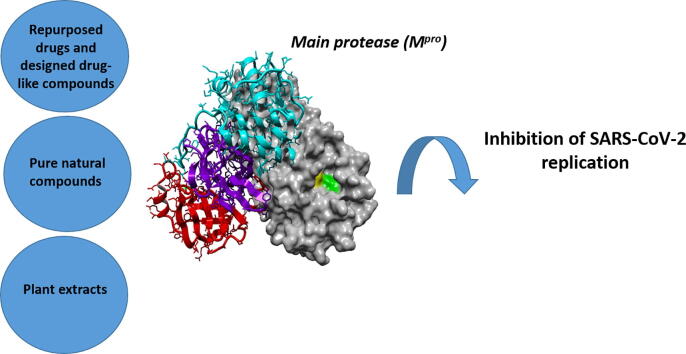
Graphical abstract
Fig. 1
Fig. 1
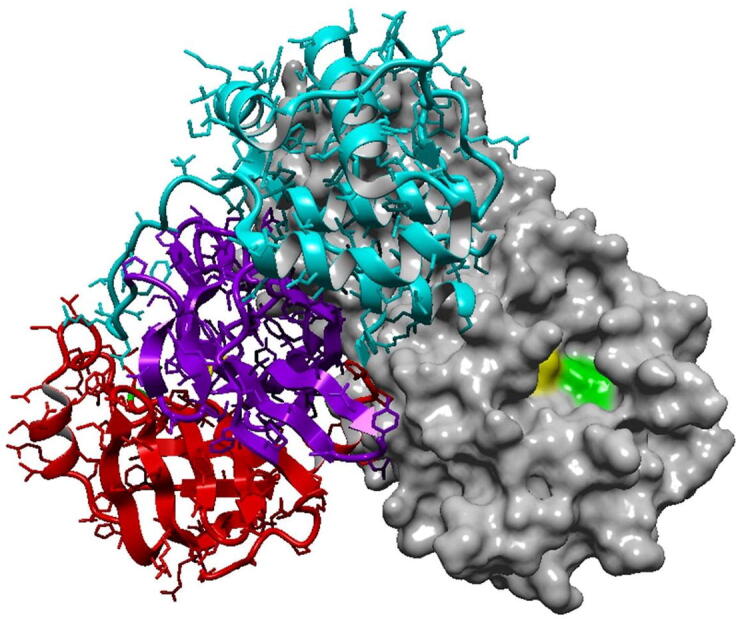
SARS-CoV-2 Mpro in the active form of a homodimer (PDB ID:7JKV). The right monomer is shown as surface while the left monomer portrays the secondary structure and the three domains of the enzyme. Domain I is in red, domain II in purple and domain III in cyan. Catalytic residues His41 and Cys145 are highlighted in yellow and green, respectively. (For interpretation of the references to colour in this figure legend, the reader is referred to the web version of this article.)
Fig. 2
Fig. 2
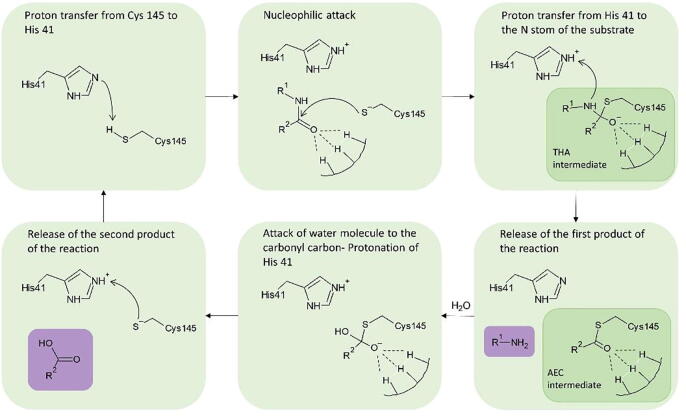
Catalytic mechanism of SARS-CoV-2 Mpro as described by (THA: thiohemiketal; AEC: acyl-enzyme complex). The two reaction products are highlighted in purple. (For interpretation of the references to colour in this figure legend, the reader is referred to the web version of this article.)
Fig. 3
Fig. 3
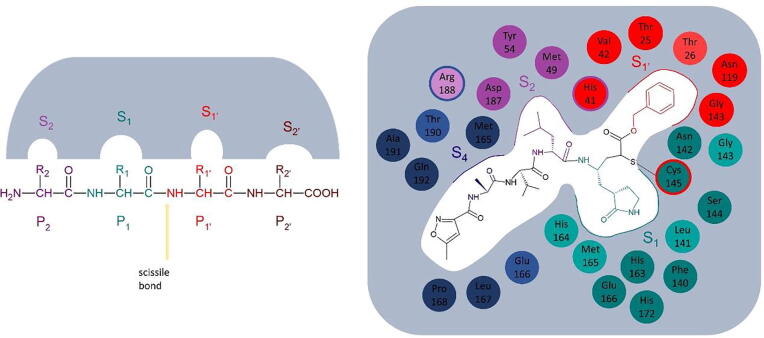
Proteolytic enzyme substrate nomenclature. S2, P2 is marked in purple, S1-P1 in green, S1́-P1́ in red and S2́-P2́ in brown (left). Example of the binding of inhibitor N3 in the active site of Mpro (right). The residues that form each subsite, as described by , are shown in the respective colors. The light colors correspond to residues that contribute with their backbone to the formation of the subsite, while the darker colors to the ones that contribute with their side chain. The residues depicted in two colors are common between the two respective subsites. (For interpretation of the references to colour in this figure legend, the reader is referred to the web version of this article.)
Fig. 4
Fig. 4
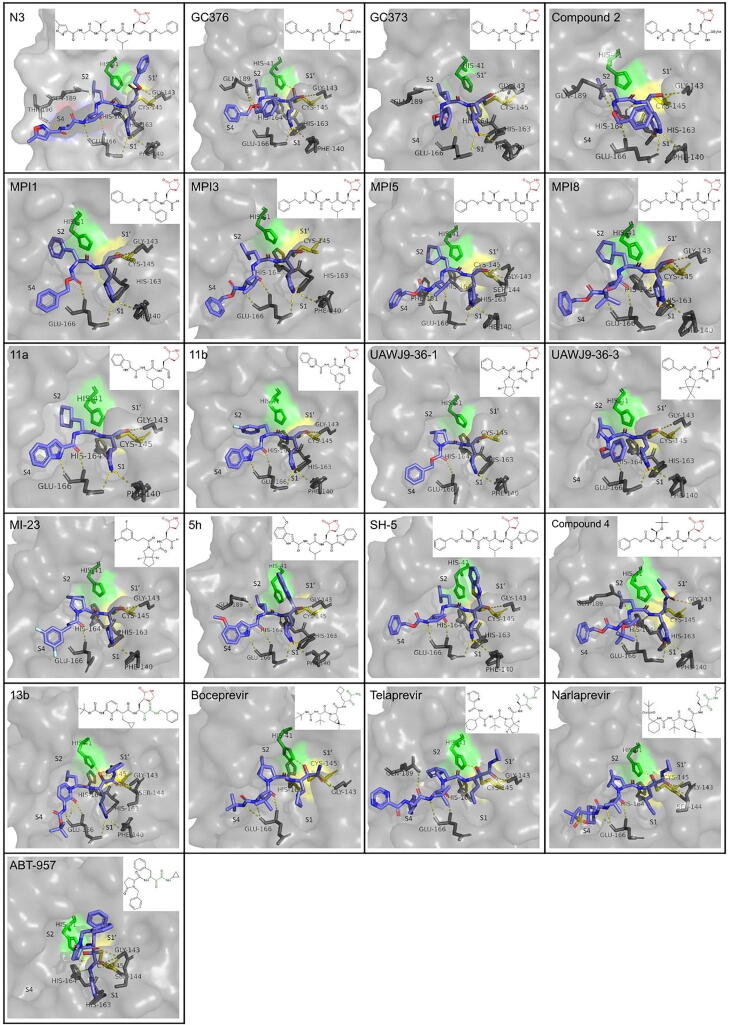
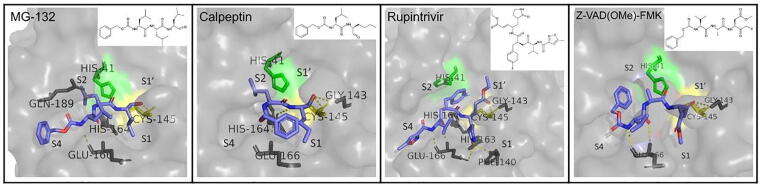
Binding mode and structure of covalent peptidomimetic inhibitors with a γ-lactam (colored red) or α-ketoamide (colored dark green) moiety, based on available co-crystallization PDB structures in the active site of SARS-CoV-2 Mpro. Catalytic residues are colored (His41: green, Cys145: yellow). Important residues for binding are shown in sticks and hydrogen bonds are depicted as yellow dashes. The PDB ID for each inhibitor is indicated in Table 1. (For interpretation of the references to colour in this figure legend, the reader is referred to the web version of this article.)
Fig. 5
Fig. 5
Binding mode and structure of other covalent peptidomimetic inhibitors with available co-crystallization PDB structures in the active site of SARS-CoV-2 Mpro. Catalytic residues are colored (His41: green, Cys145: yellow). Important residues for binding are shown in sticks and hydrogen bonds are depicted as yellow dashes. The PDB ID for each inhibitor is indicated in Table 1. (For interpretation of the references to colour in this figure legend, the reader is referred to the web version of this article.)
Fig. 6
Fig. 6
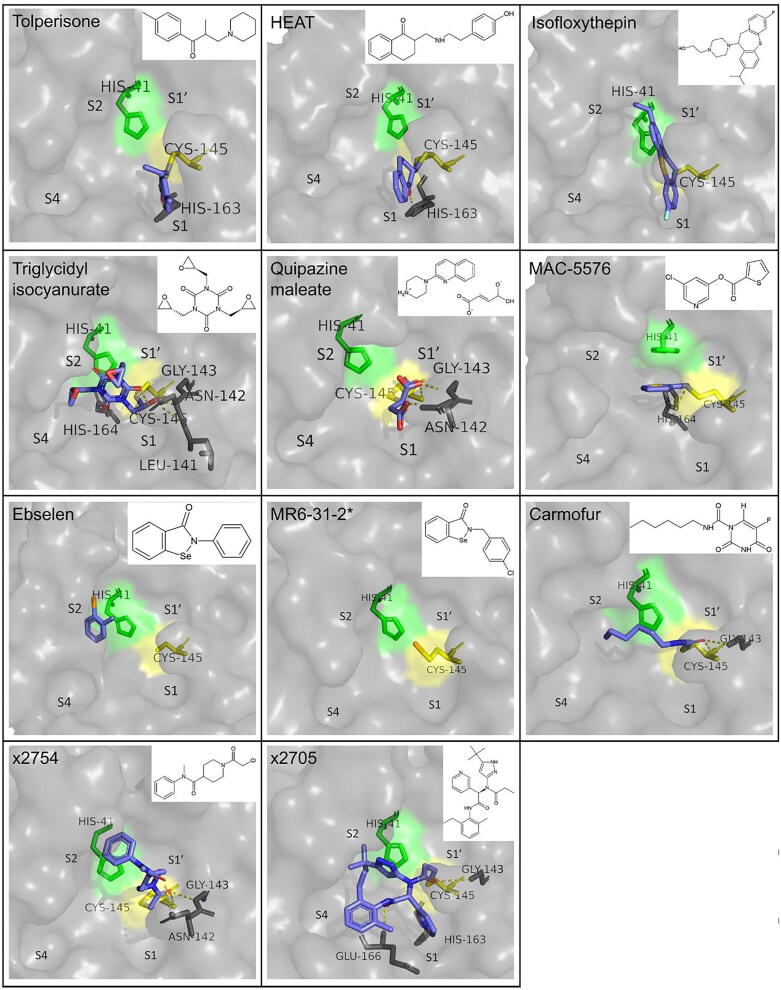
Binding mode and structure of small covalent inhibitors with available co-crystallization PDB structures in the active site of SARS-CoV-2 Mpro. Catalytic residues are colored (His41: green, Cys145: yellow). Important residues for binding are shown in sticks and hydrogen bonds are depicted as yellow dashes. The PDB ID for each inhibitor is indicated in Table 1. *In the crystal structure of MR6-31–2 with the protease, only the selenium atom appears covalently bound to the active site. (For interpretation of the references to colour in this figure legend, the reader is referred to the web version of this article.)
Fig. 7
Fig. 7
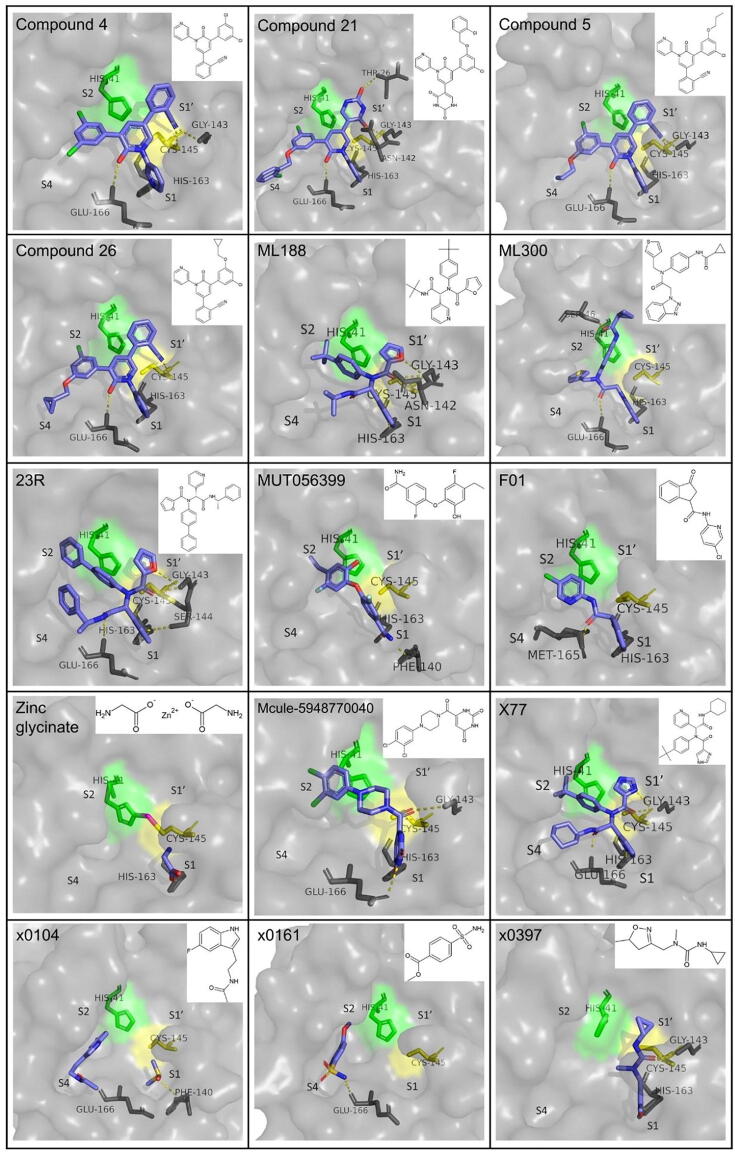
Binding mode and structure of non-covalent inhibitors with available co-crystallization PDB structures in the active site of SARS-CoV-2 Mpro. Catalytic residues are colored (His41: green, Cys145: yellow). Important residues for binding are shown in sticks and hydrogen bonds are depicted as yellow dashes. The PDB ID for each inhibitor is indicated in Table 1. (For interpretation of the references to colour in this figure legend, the reader is referred to the web version of this article.)
Fig. 8
Fig. 8
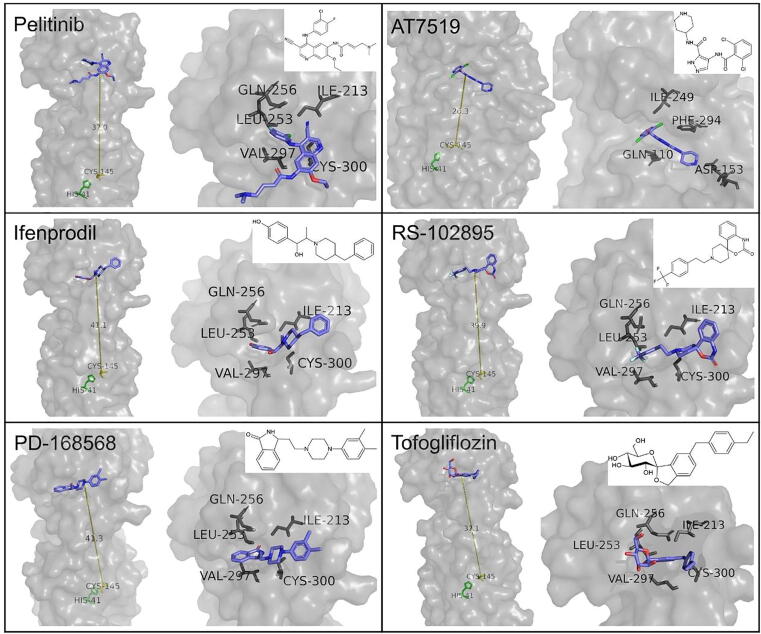
Binding mode and structure of allosteric inhibitors of Mpro. Relative position of their binding site to the active site (His41: green, Cys145: yellow) (left); Close-up view with important residues involved in binding shown as sticks (right). The PDB ID for each inhibitor is indicated in Table 1. (For interpretation of the references to colour in this figure legend, the reader is referred to the web version of this article.)
Fig. 9
Fig. 9
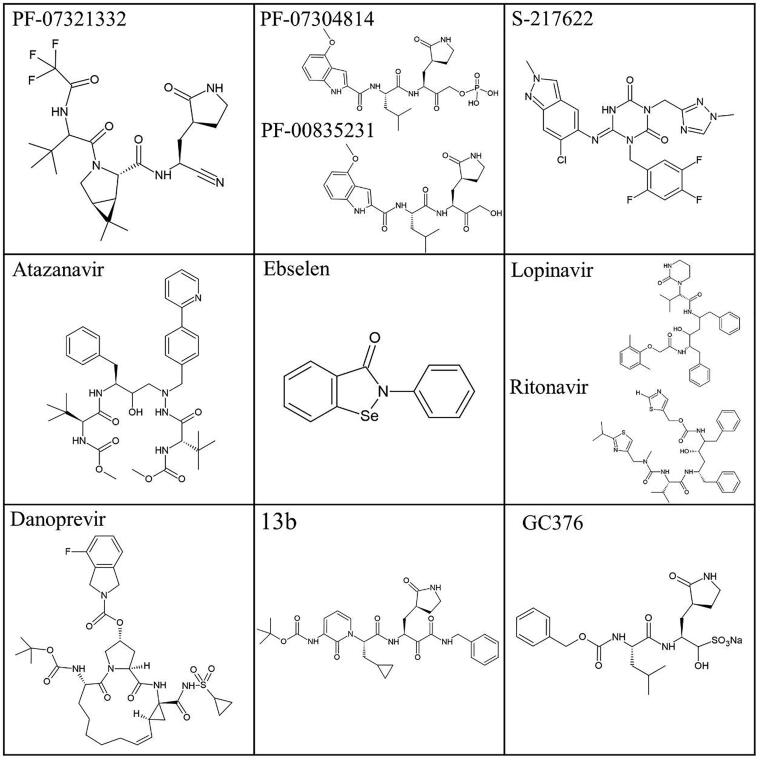
Available structures for SARS-CoV-2 Mpro inhibitors evaluated in vivo and in clinical trials.
Fig. 10
Fig. 10
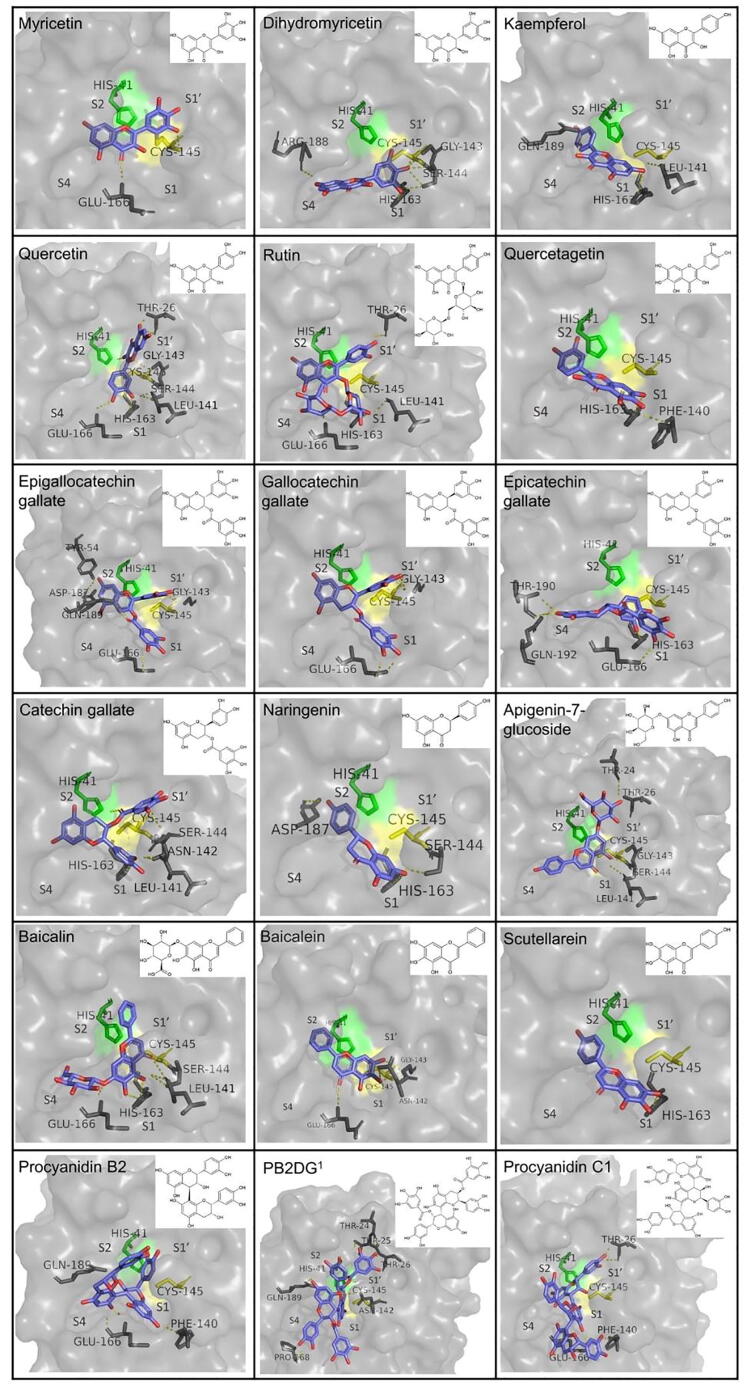
Binding mode and structure of flavonoids, flavanones and derivatives with in vitro demonstrated inhibitory activity in the active site of SARS-CoV-2 Mpro. Catalytic residues are colored (His41: Green, Cys145: yellow), residues participating in hydrogen bonds are shown in sticks and hydrogen bonds are depicted as yellow dashes.1: Procyanidin B2 3,3′-di-O-gallate. The receptor-ligand complex was produced by docking simulations using the software YARASA Structure, replicating the binding mode represented in the relevant publication (Available in Table 3). (For interpretation of the references to colour in this figure legend, the reader is referred to the web version of this article.)
Fig. 11
Fig. 11
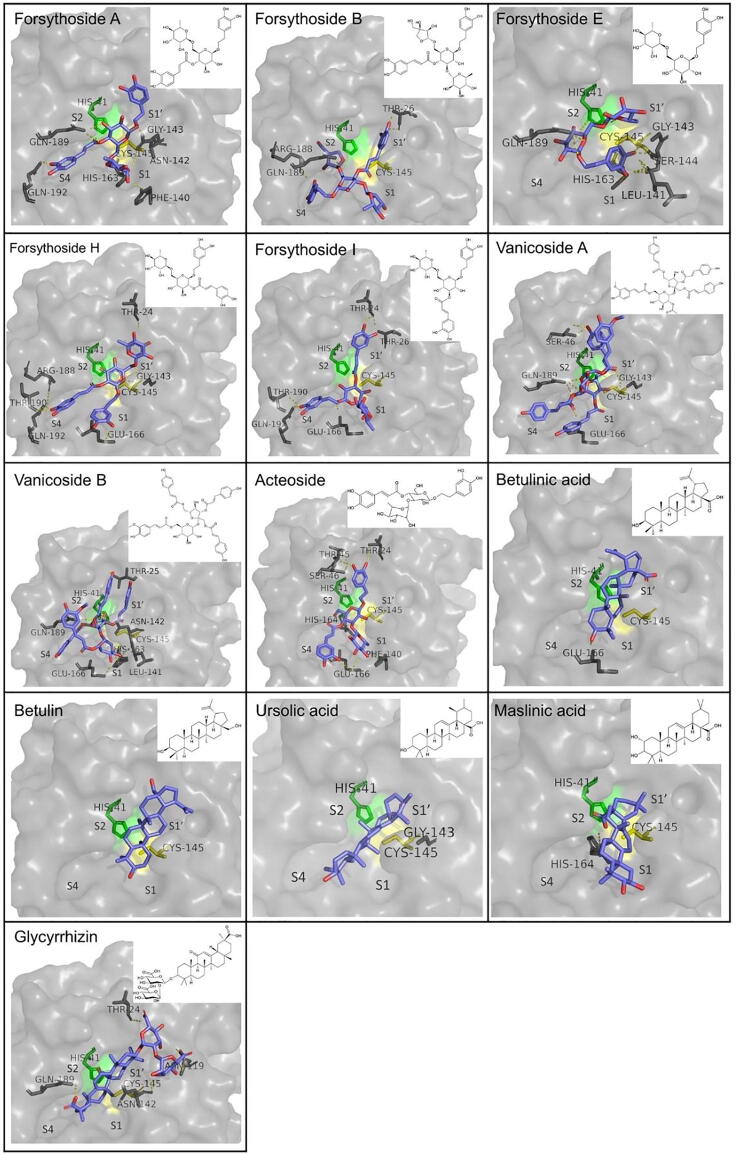
Binding mode and structure of phenylethanoid glycosides (Forsythoside A-Acteoside) and pentacyclic triterpenoids (Betulinic acid-Glycyrrhizin) with in vitro demonstrated inhibitory activity in the active site of SARS-CoV-2 Mpro. Catalytic residues are colored (His41: green, Cys145: yellow), residues participating in hydrogen bonds are depicted as yellow dashes. The receptor-ligand complex was produced by docking simulations using the software YARASA Structure, replicating the binding mode represented in the relevant publication (Available in Table 3). (For interpretation of the references to colour in this figure legend, the reader is referred to the web version of this article.)
Fig. 12
Fig. 12
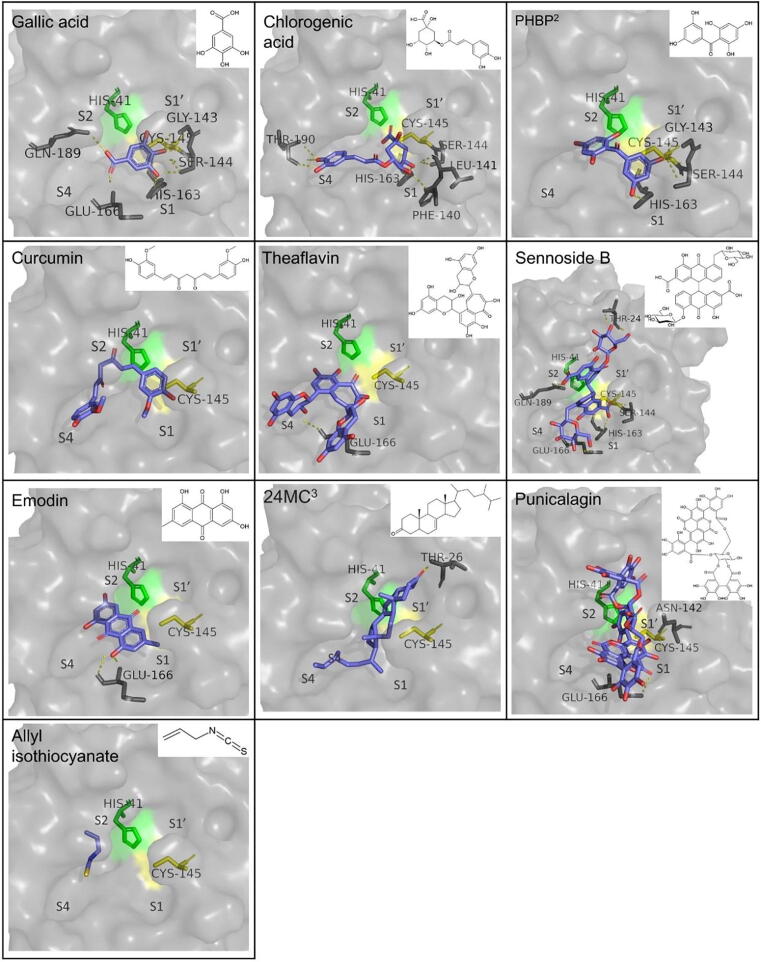
Binding mode and structure other natural compounds with in vitro demonstrated inhibitory activity in the active site of SARS-CoV-2 Mpro. Catalytic residues are colored (His41: green, Cys145: yellow), residues participating in hydrogen bonds are depicted as yellow dashes. 2: 2,3′,4,5′,6-pentahydroxybenzophenone; 3: 24-methylcholesta-7-en-3β-on. The receptor-ligand complex was produced by docking simulations using the software YARASA Structure, replicating the binding mode represented in the relevant publication (Available in Table −3). (For interpretation of the references to colour in this figure legend, the reader is referred to the web version of this article.)

References

    1. Hu Y., Ma C., Szeto T., Hurst B., Tarbet B., Wang J. Boceprevir, Calpain Inhibitors II and XII, and GC-376 Have Broad-Spectrum Antiviral Activity against Coronaviruses. ACS Infect Dis. 2021;7(3):586–597. doi: 10.1021/acsinfecdis.0c00761. - DOI - PMC - PubMed
    1. Wu C., et al. Analysis of therapeutic targets for SARS-CoV-2 and discovery of potential drugs by computational methods. Acta Pharm Sin B. 2020;10(5):766–788. doi: 10.1016/j.apsb.2020.02.008. - DOI - PMC - PubMed
    1. S. V. Stoddard et al., “Optimization rules for SARS-CoV-2 Mpro antivirals: Ensemble docking and exploration of the coronavirus protease active site,” Viruses, vol. 12, no. 9, 2020, doi: 10.3390/v12090942. - PMC - PubMed
    1. Rubin D., Chan-Tack K., Farley J., Sherwat A. FDA Approval of Remdesivir — A Step in the Right Direction. N Engl J Med. Dec. 2020;383(27):2598–2600. doi: 10.1056/NEJMp2032369. - DOI - PubMed
    1. U.S. Food and Drug administration, “Know Your Treatment Options for COVID-19,” 2021. https://www.fda.gov/consumers/consumer-updates/know-your-treatment-optio....