


Inflammation and Oxidative Stress in the Context of Extracorporeal Cardiac and Pulmonary Support
- PMID: 35309362
- PMCID: PMC8931031
- DOI: 10.3389/fimmu.2022.831930
Inflammation and Oxidative Stress in the Context of Extracorporeal Cardiac and Pulmonary Support
Abstract
Extracorporeal circulation (ECC) systems, including cardiopulmonary bypass, and extracorporeal membrane oxygenation have been an irreplaceable part of the cardiothoracic surgeries, and treatment of critically ill patients with respiratory and/or cardiac failure for more than half a century. During the recent decades, the concept of extracorporeal circulation has been extended to isolated machine perfusion of the donor organ including thoracic organs (ex-situ organ perfusion, ESOP) as a method for dynamic, semi-physiologic preservation, and potential improvement of the donor organs. The extracorporeal life support systems (ECLS) have been lifesaving and facilitating complex cardiothoracic surgeries, and the ESOP technology has the potential to increase the number of the transplantable donor organs, and to improve the outcomes of transplantation. However, these artificial circulation systems in general have been associated with activation of the inflammatory and oxidative stress responses in patients and/or in the exposed tissues and organs. The activation of these responses can negatively affect patient outcomes in ECLS, and may as well jeopardize the reliability of the organ viability assessment, and the outcomes of thoracic organ preservation and transplantation in ESOP. Both ECLS and ESOP consist of artificial circuit materials and components, which play a key role in the induction of these responses. However, while ECLS can lead to systemic inflammatory and oxidative stress responses negatively affecting various organs/systems of the body, in ESOP, the absence of the organs that play an important role in oxidant scavenging/antioxidative replenishment of the body, such as liver, may make the perfused organ more susceptible to inflammation and oxidative stress during extracorporeal circulation. In the present manuscript, we will review the activation of the inflammatory and oxidative stress responses during ECLP and ESOP, mechanisms involved, clinical implications, and the interventions for attenuating these responses in ECC.
Keywords: cardiac and pulmonary function; ex-situ organ perfusion; extracorporeal life support; inflammation; oxidative stress.
Copyright © 2022 Hatami, Hefler and Freed.
Conflict of interest statement
The authors declare that the research was conducted in the absence of any commercial or financial relationships that could be construed as a potential conflict of interest.
Figures
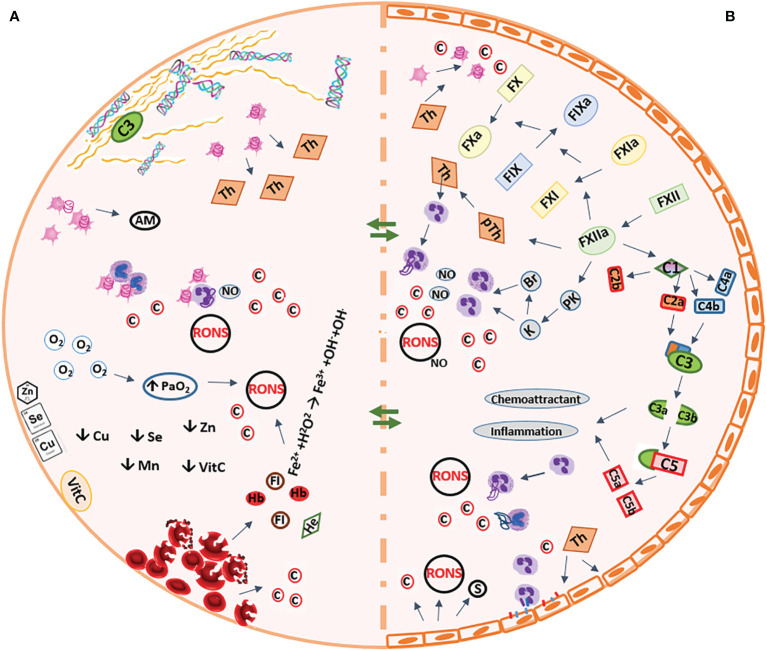
 , monocyte;
  , neutrophil;
  , red blood cell.
References
-
- Hatami S, Freed DH. Machine Perfusion of Donor Heart: State of the Art. Curr Transplant Rep (2019) 6(3):242–50. doi: 10.1007/s40472-019-00251-4 - DOI
Publication types
MeSH terms
LinkOut - more resources
Full Text Sources
