


PTPN18 Stimulates the Development of Ovarian Cancer by Activating the PI3K/AKT Signaling
- PMID: 35310041
- PMCID: PMC8933110
- DOI: 10.1155/2022/1091042
PTPN18 Stimulates the Development of Ovarian Cancer by Activating the PI3K/AKT Signaling
Retraction in
-
Retracted: PTPN18 Stimulates the Development of Ovarian Cancer by Activating the PI3K/AKT Signaling.Evid Based Complement Alternat Med. 2023 Jul 19;2023:9846528. doi: 10.1155/2023/9846528. eCollection 2023. Evid Based Complement Alternat Med. 2023. PMID: 37501832 Free PMC article.
Abstract
Objective: To illustrate the functions of protein tyrosine phosphatase nonreceptor type 18 (PTPN18) in the progression of ovarian cancer and the potential molecular mechanism.
Methods: Differential PTPN18 expression in ovarian cancer samples was determined. Following PTPN18 knockdown, changes in proliferation and migration in ovarian cancer cells were detected. Nude mice with ovarian cancer were used to uncover the effects of PTPN18 on ovarian cancer growth in vivo.
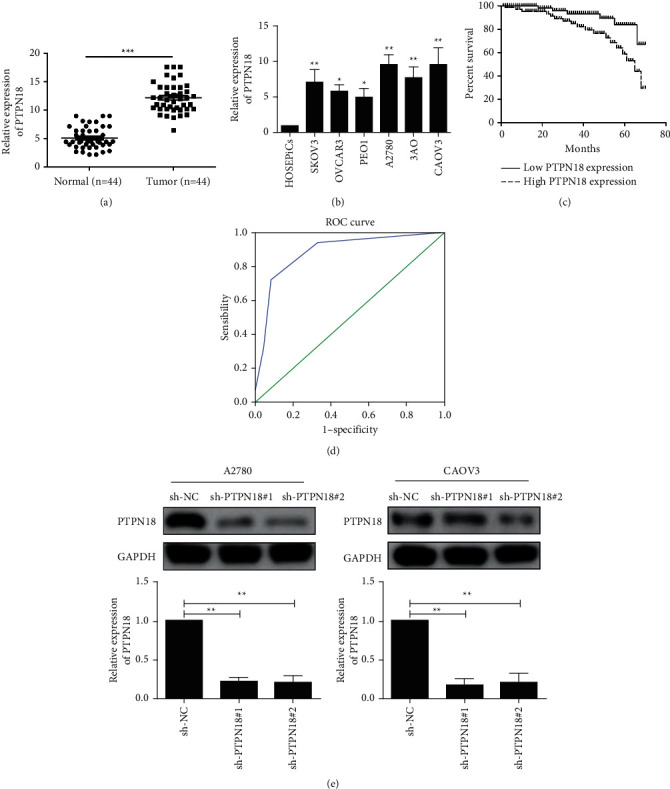
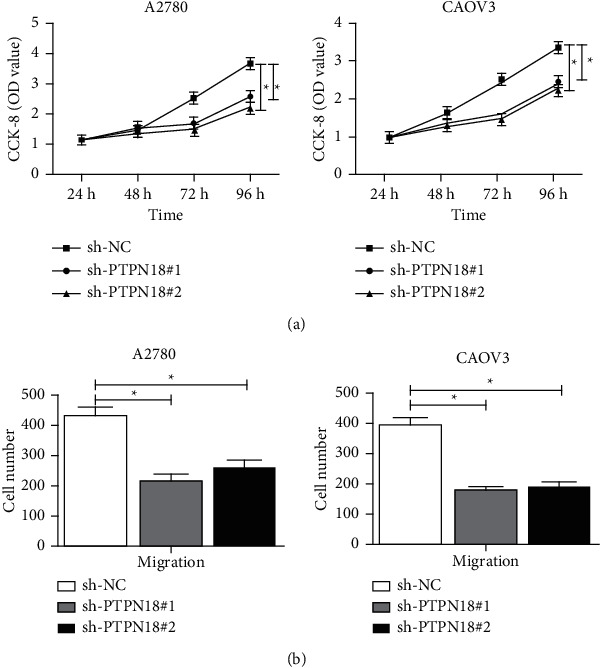
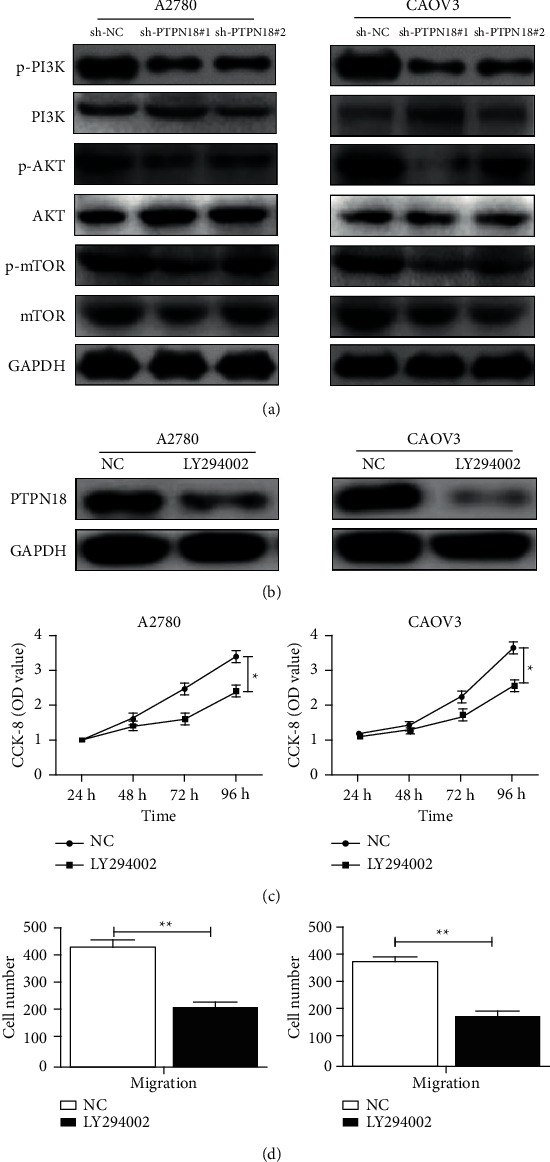
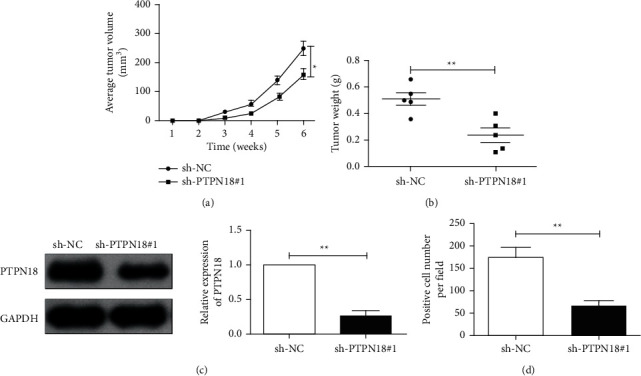
Results: PTPN18 was significantly upregulated in ovarian cancer samples and linked to pathological staging and metastasis rate. PTPN18 displayed prognostic and diagnostic potentials in ovarian cancer. Knockdown of PTPN18 and treatment of the PI3K inhibitor could inhibit proliferative and migratory abilities in ovarian cancer cells. Moreover, PTPN18 was capable of inactivating PI3K/AKT signaling. In vivo knockdown of PTPN18 suppressed ovarian cancer growth in nude mice.
Conclusions: PTPN18 is upregulated in ovarian cancer, which stimulates the malignant development by activating PI3K/AKT signaling. The PTPN18 level is also associated with pathological staging and metastasis in ovarian cancer patients, which may be utilized as a hallmark predicting the malignant level.
Copyright © 2022 Nan Mao et al.
Conflict of interest statement
The authors declare that they have no conflicts of interest.
Figures
References
-
- Wang W., Cai L., Xiao B., Huang R. Risk of hypertension associated with antivascular endothelial growth factor monoclonal antibodies: a meta-analysis from 51088 patients with cancer. Iran Red Crescent Me . 2020;22(7):p. e100785. doi: 10.5812/ircmj.100785. - DOI
-
- Wang C., Wan D., Qiao S., Xia M., Duan Y. Radiosensitizing effect of polysaccharide in Schisandrae chinensis (Turcz.) Baill. Fruit on ovarian cancer SKOV3 cells. Tropical Journal of Pharmaceutical Research . 2021;20(3):633–638.
Publication types
LinkOut - more resources
Full Text Sources
