


Perceptual coupling and decoupling of the default mode network during mind-wandering and reading
- PMID: 35311643
- PMCID: PMC8937216
- DOI: 10.7554/eLife.74011
Perceptual coupling and decoupling of the default mode network during mind-wandering and reading
Abstract
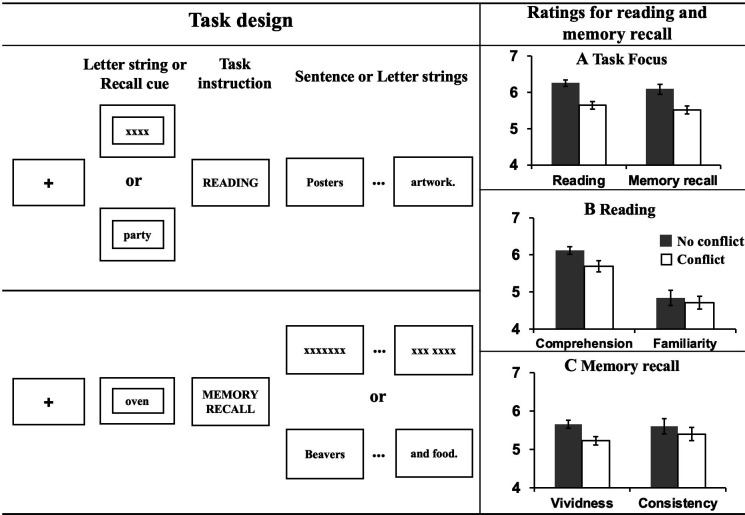
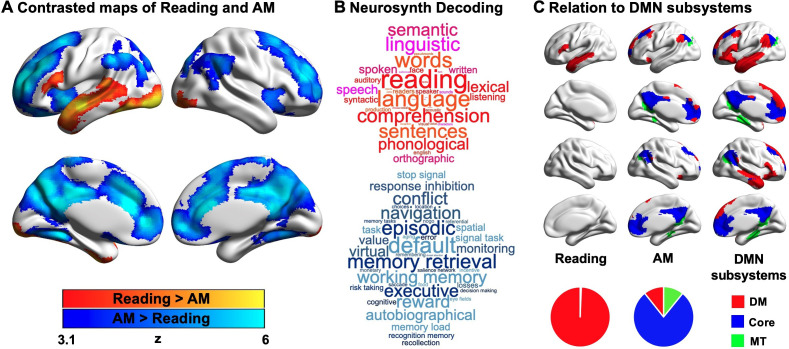
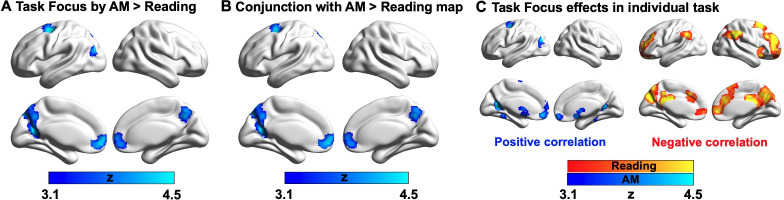
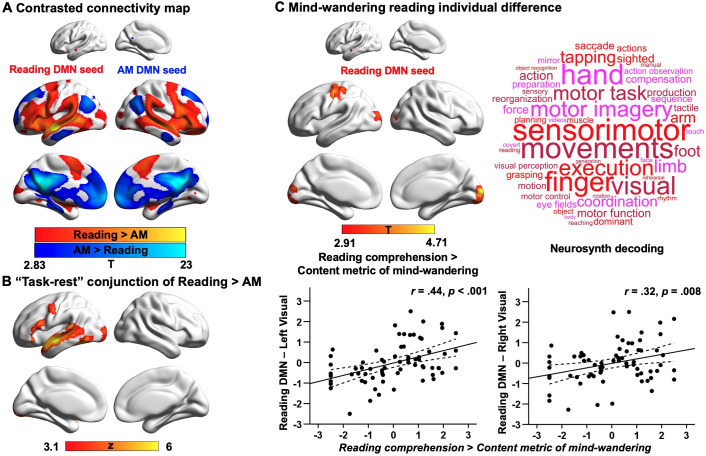
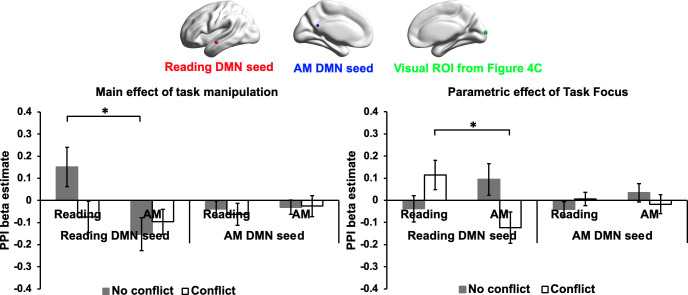
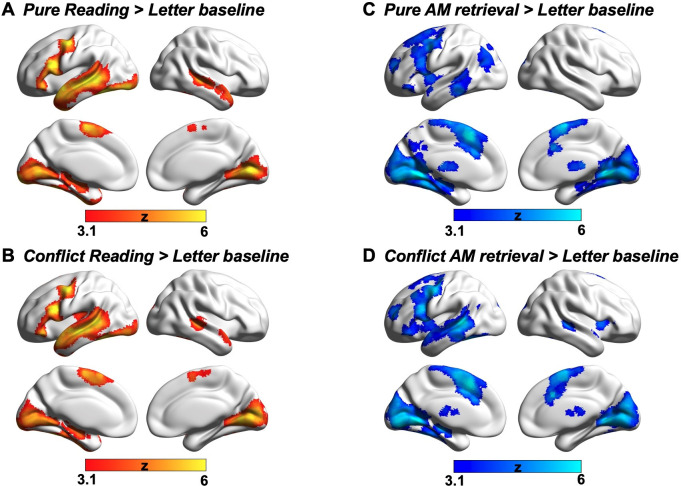
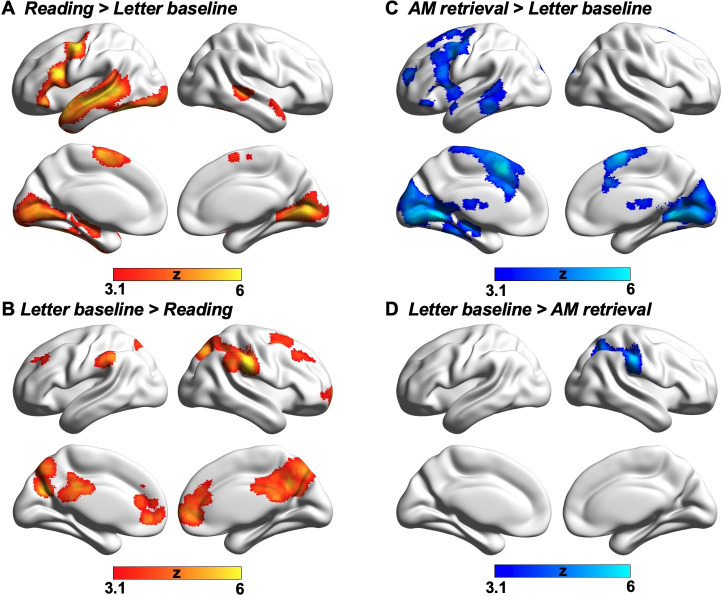
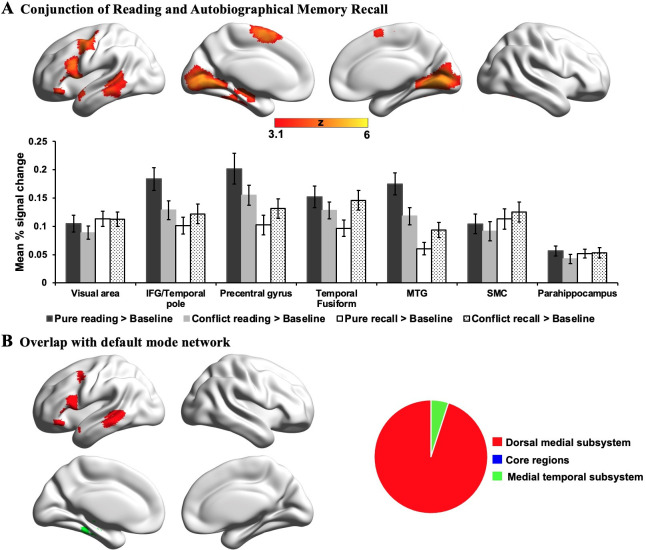
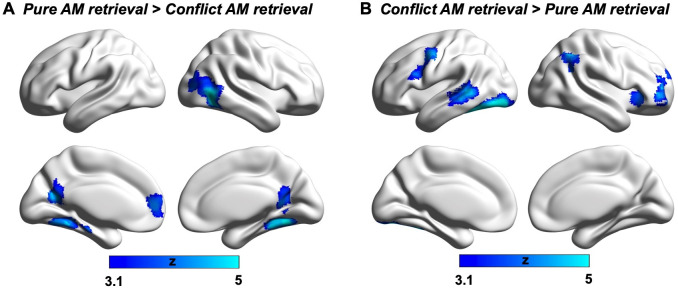
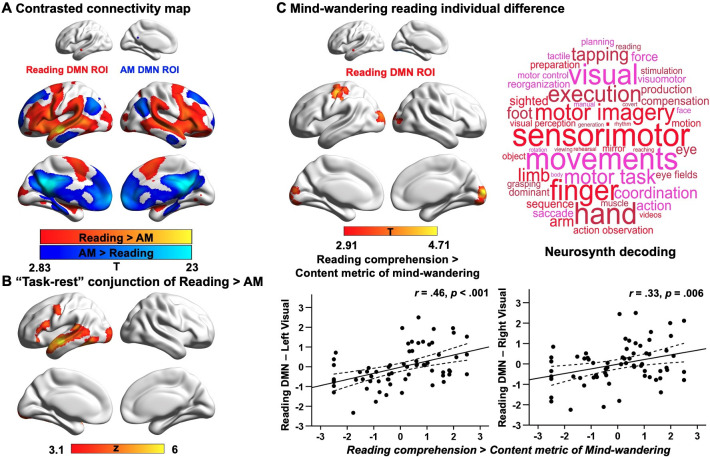
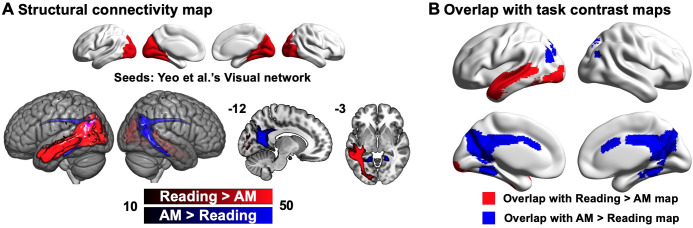
While reading, our mind can wander to unrelated autobiographical information, creating a perceptually decoupled state detrimental to narrative comprehension. To understand how this mind-wandering state emerges, we asked whether retrieving autobiographical content necessitates functional disengagement from visual input. In Experiment 1, brain activity was recorded using functional magnetic resonance imaging (fMRI) in an experimental situation mimicking naturally occurring mind-wandering, allowing us to precisely delineate neural regions involved in memory and reading. Individuals read expository texts and ignored personally relevant autobiographical memories, as well as the opposite situation. Medial regions of the default mode network (DMN) were recruited during memory retrieval. In contrast, left temporal and lateral prefrontal regions of the DMN, as well as ventral visual cortex, were recruited when reading for comprehension. Experiment two used functional connectivity both at rest and during tasks to establish that (i) DMN regions linked to memory are more functionally decoupled from regions of ventral visual cortex than regions in the same network engaged when reading; and (ii) individuals with more self-generated mental contents and poorer comprehension, while reading in the lab, showed more decoupling between visually connected DMN sites important for reading and primary visual cortex. A similar pattern of connectivity was found in Experiment 1, with greater coupling between this DMN site and visual cortex when participants reported greater focus on reading in the face of conflict from autobiographical memory cues; moreover, the retrieval of personally relevant memories increased the decoupling of these sites. These converging data suggest we lose track of the narrative when our minds wander because generating autobiographical mental content relies on cortical regions within the DMN which are functionally decoupled from ventral visual regions engaged during reading.
Keywords: autobiographical memory; default mode network; human; mind-wandering; neuroscience; reading.
Plain language summary
As your eyes scan these words, you may be thinking about what to make for dinner, how to address an unexpected hurdle at work, or how many emails are sitting, unread, in your inbox. This type of mind-wandering disrupts our focus and limits how much information we comprehend, whilst also being conducive to creative thinking and problem-solving. Despite being an everyday occurrence, exactly how our mind wanders remains elusive. One possible explanation is that the brain disengages from visual information from the external world and turns its attention inwards. A greater understanding of which neural circuits are involved in this process could reveal insights about focus, attention, and reading comprehension. Here, Zhang et al. investigated whether the brain becomes disengaged from visual input when our mind wanders while reading. Recalling personal events was used as a proxy for mind-wandering. Brain activity was recorded as participants were shown written statements; sometimes these were preceded by cues to personal memories. People were asked to focus on reading the statements or they were instructed to concentrate on their memories while ignoring the text. The analyses showed that recalling memories and reading stimulated distinct parts of the brain, which were in direct competition during mind-wandering. Further work examined how these regions were functionally connected. In individuals who remained focused on reading despite memory cues, the areas activated by reading showed strong links to the visual cortex. Conversely, these reading-related areas became ‘decoupled’ from visual processing centres in people who were focusing more on their internal thoughts. These results shed light on why we lose track of what we are reading when our mind wanders: recalling personal memories activates certain brain areas which are functionally decoupled from the regions involved in processing external information – such as the words on a page. In summary, the work by Zhang et al. builds a mechanistic understanding of mind-wandering, a natural feature of our daily brain activity. These insights may help to inform future interventions in education to improve reading, comprehension and focus.
© 2022, Zhang et al.
Conflict of interest statement
MZ, BB, XW, DV, KK, JR, RR, RV, DM, JS, EJ No competing interests declared
Figures
References
-
- Baayen RH, Piepenbrock R, Van Rijn H. The CELEX Lexical Database (CD-ROM). Linguistic Data Consortium. University of Pennsylvania; 1993.
Publication types
MeSH terms
LinkOut - more resources
Full Text Sources
Research Materials
Miscellaneous
