


Effects of Vitamin D on Respiratory Function and Immune Status for Patients with Chronic Obstructive Pulmonary Disease (COPD): A Systematic Review and Meta-Analysis
- PMID: 35313462
- PMCID: PMC8934228
- DOI: 10.1155/2022/2910782
Effects of Vitamin D on Respiratory Function and Immune Status for Patients with Chronic Obstructive Pulmonary Disease (COPD): A Systematic Review and Meta-Analysis
Retraction in
-
Retracted: Effects of Vitamin D on Respiratory Function and Immune Status for Patients with Chronic Obstructive Pulmonary Disease (COPD): A Systematic Review and Meta-Analysis.Comput Math Methods Med. 2023 Oct 18;2023:9831859. doi: 10.1155/2023/9831859. eCollection 2023. Comput Math Methods Med. 2023. PMID: 37885874 Free PMC article.
Abstract
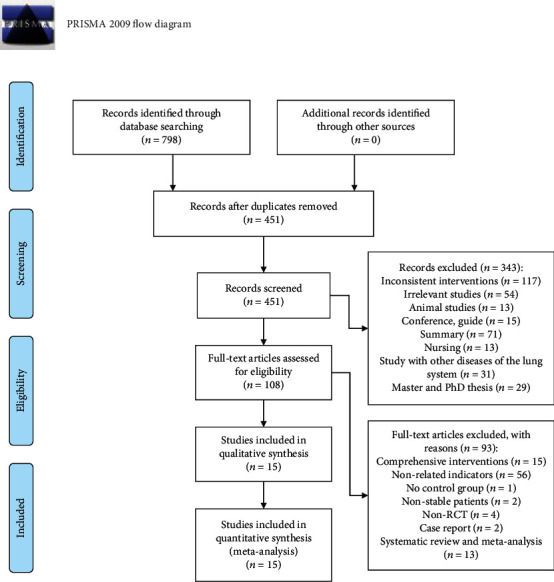
Background: Many studies have demonstrated that vitamin D has clinical benefits when used to treat patients with chronic obstructive pulmonary disease (COPD). However, most of these studies have insufficient samples or inconsistent results. The aim of this meta-analysis was to evaluate the effects of vitamin D therapy in patients with COPD.
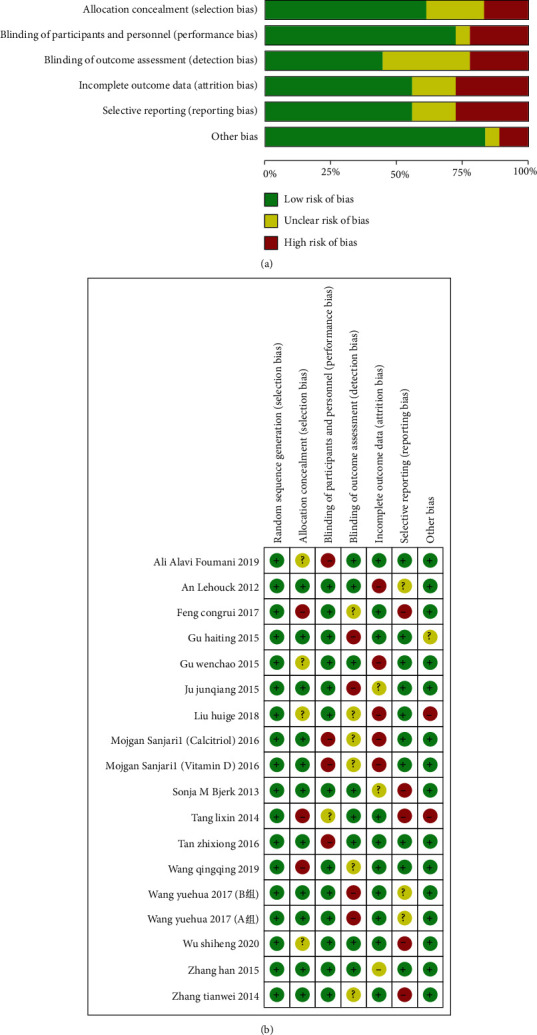
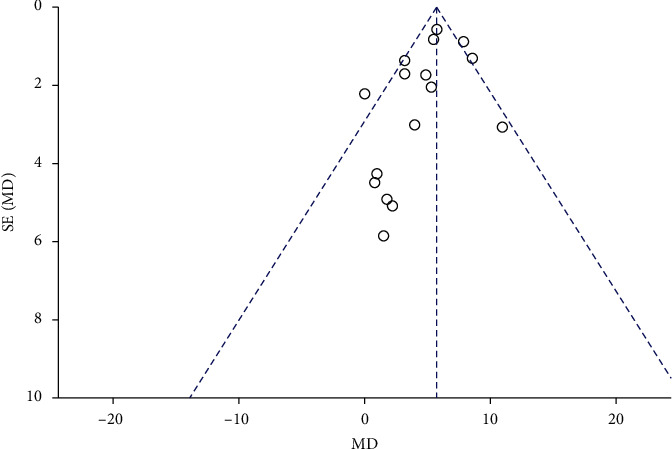
Methods: We performed a comprehensive retrieval in the following electronic databases: PubMed, Embase, Cochrane Library, China National Knowledge Infrastructure (CNKI), Wanfang Data, and Chinese Scientific Journals Database (VIP). Two trained reviewers identified relevant studies, extracted data information, and then assessed the methodical quality by the Cochrane risk of bias assessment tool, independently. Then, the meta-analyses were conducted by RevMan 5.4, binary variables were represented by risks ratio (RR), and continuous variables were represented by mean difference (MD) or standardized mean difference (SMD) to assess the efficacy of vitamin D therapy in patients with COPD. Then, publication bias assessment was conducted by funnel plot analysis. Finally, the quality of evidence was assessed by the GRADE system.
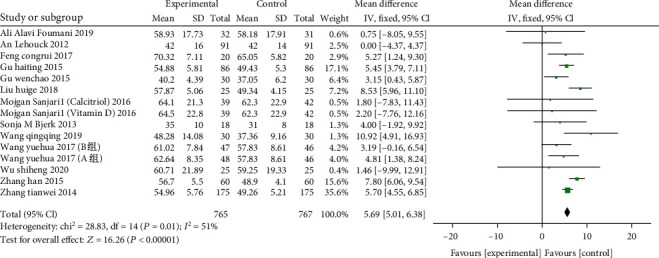
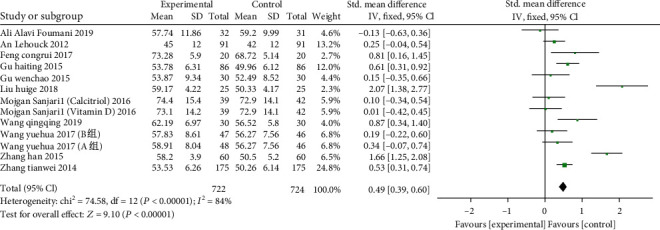
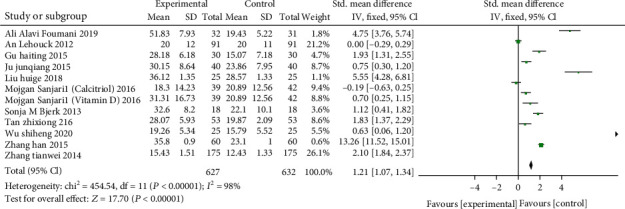
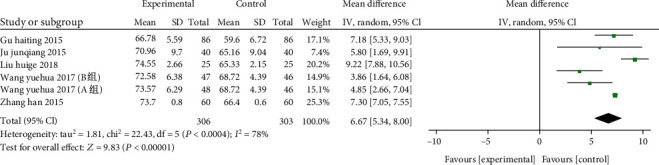
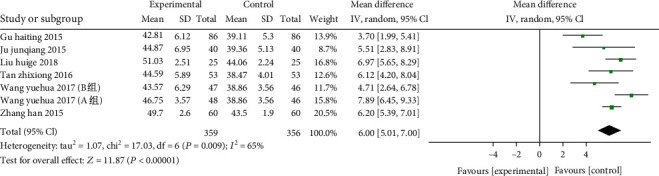
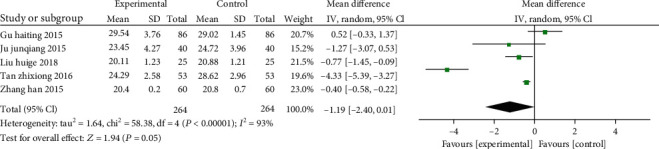
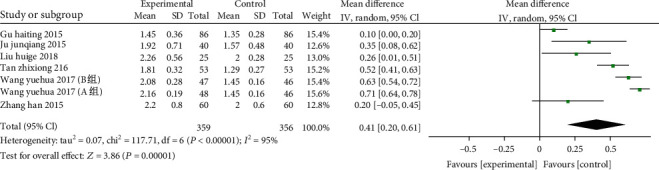
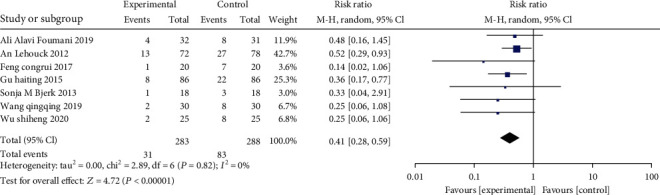
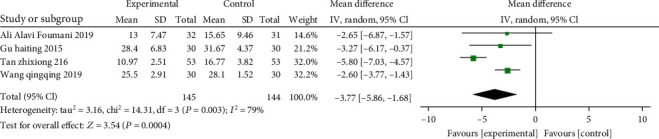
Results: A total of 15 articles involving 1598 participants were included in this study. The overall results showed a statistical significance of vitamin D therapy in patients with COPD which can significantly improve forced expiratory volume in 1 second (FEV1) (MD: 5.69, 95% CI: 5.01-6.38,P < 0.00001,I2 = 51%) and FEV1/FVC (SMD:0.49, 95% CI: 0.39-0.60,P < 0.00001,I2 = 84%); and serum 25 (OH)D (SMD:1.21, 95% CI:1.07-1.34,P < 0.00001,I2 = 98%) also increase CD3+ Tcells (MD: 6.67, 95% CI: 5.34-8.00,P < 0.00001,I2 = 78%) and CD4+ T cells (MD: 6.00, 95% CI: 5.01-7.00,P < 0.00001,I2 = 65%); and T lymphocyte CD4+/CD8+ ratio (MD: 0.41, 95% CI: 0.20-0.61,P = 0.0001,I2 = 95%) obviously decrease CD8+ Tcells(SMD: -0.83, 95% CI: -1.05- -0.06,P < 0.00001,I2 = 82%), the times of acute exacerbation (RR: 0.40, 95% CI: 0.28-0.59,P < 0.00001,I2 = 0%), and COPD assessment test (CAT) score (MD: -3.77, 95% CI: -5.86 - -1.68,P = 0.0004,I2 = 79%).
Conclusions: Our analysis indicated that vitamin D used in patients with COPD could improve the lung function (FEV1 and FEV1/FVC), the serum 25(OH)D, CD3+ T cells, CD4 + T cells, and T lymphocyte CD4+/CD8+ ratio and reduce CD8+ T cells, acute exacerbation, and CAT scores.
Copyright © 2022 Huan Yang et al.
Conflict of interest statement
The authors declare that they have no conflicts of interest.
Figures
References
-
- Pauwels R. A., Buist A. S., Calverley P. M., Jenkins C. R., Hurd S. S., GOLD Scientific Committee Global strategy for the diagnosis, management, and prevention of chronic obstructive pulmonary disease. NHLBI/WHO global initiative for chronic obstructive lung disease (GOLD) workshop summary. American Journal of Respiratory and Critical Care Medicine . 2001;163(5):1256–1276. - PubMed
-
- Lopez A. D., Shibuya K., Rao C., et al. Chronic obstructive pulmonary disease: current burden and future projections. The European Respiratory Journal . 2006;27(2):397–412. - PubMed
Publication types
MeSH terms
Substances
LinkOut - more resources
Full Text Sources
Medical
Research Materials
Miscellaneous
