


Semi-Supervised Deep Learning Semantic Segmentation for 3D Volumetric Computed Tomographic Scoring of Chronic Rhinosinusitis: Clinical Correlations and Comparison with Lund-Mackay Scoring
- PMID: 35314636
- PMCID: PMC8938792
- DOI: 10.3390/tomography8020059
Semi-Supervised Deep Learning Semantic Segmentation for 3D Volumetric Computed Tomographic Scoring of Chronic Rhinosinusitis: Clinical Correlations and Comparison with Lund-Mackay Scoring
Abstract
Background: The traditional Lund-Mackay score (TLMs) is unable to subgrade the volume of inflammatory disease. We aimed to propose an effective modification and calculated the volume-based modified LM score (VMLMs), which should correlate more strongly with clinical symptoms than the TLMs.
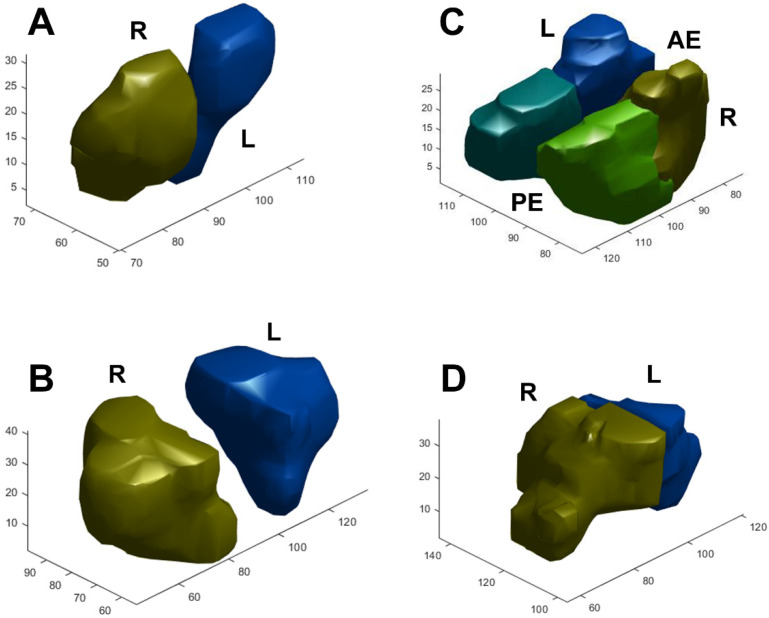
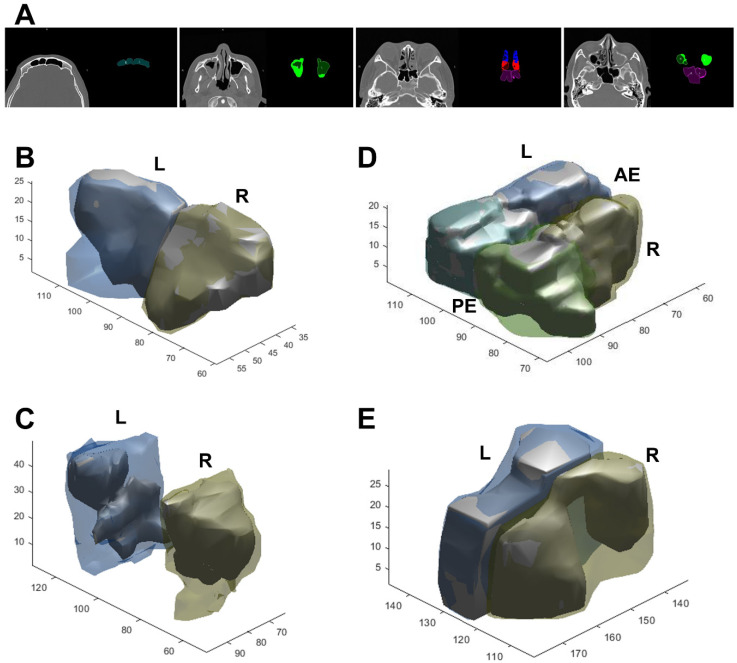
Methods: Semi-supervised learning with pseudo-labels used for self-training was adopted to train our convolutional neural networks, with the algorithm including a combination of MobileNet, SENet, and ResNet. A total of 175 CT sets, with 50 participants that would undergo sinus surgery, were recruited. The Sinonasal Outcomes Test-22 (SNOT-22) was used to assess disease-specific symptoms before and after surgery. A 3D-projected view was created and VMLMs were calculated for further comparison.
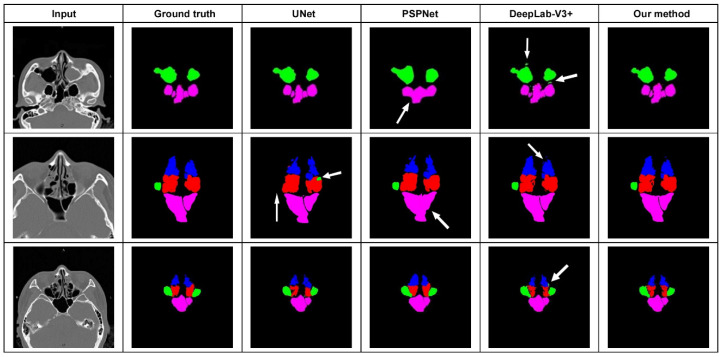
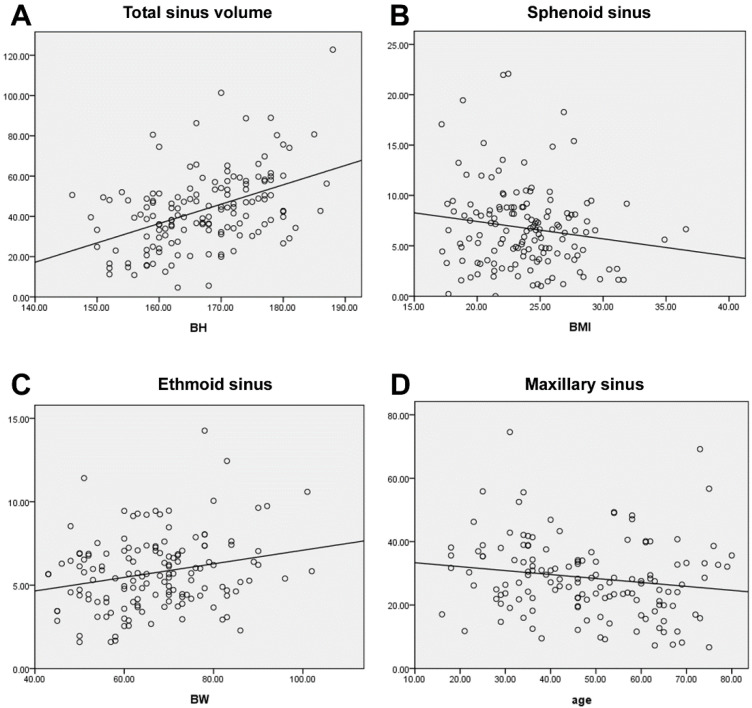
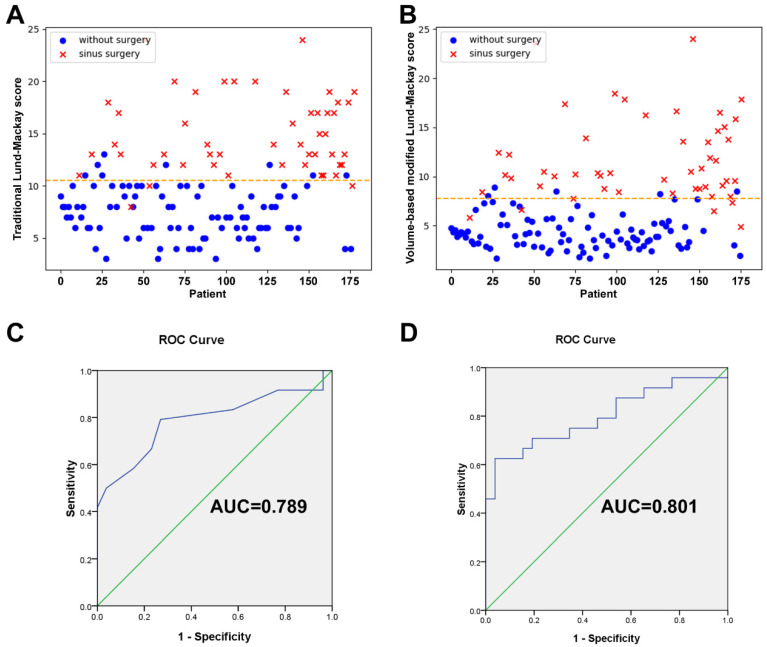
Results: Our methods showed a significant improvement both in sinus classification and segmentation as compared to state-of-the-art networks, with an average Dice coefficient of 91.57%, an MioU of 89.43%, and a pixel accuracy of 99.75%. The sinus volume exhibited sex dimorphism. There was a significant positive correlation between volume and height, but a trend toward a negative correlation between maxillary sinus and age. Subjects who underwent surgery had significantly greater TLMs (14.9 vs. 7.38) and VMLMs (11.65 vs. 4.34) than those who did not. ROC-AUC analyses showed that the VMLMs had excellent discrimination at classifying a high probability of postoperative improvement with SNOT-22 reduction.
Conclusions: Our method is suitable for obtaining detailed information, excellent sinus boundary prediction, and differentiating the target from its surrounding structure. These findings demonstrate the promise of CT-based volumetric analysis of sinus mucosal inflammation.
Keywords: Lund-Mackay score; MobileNet; ResNet; SENet; artificial intelligence; semi-supervised deep learning; three-dimensional CT.
Conflict of interest statement
The authors declare no conflict of interest.
Figures
References
-
- Brooks S.G., Trope M., Blasetti M., Doghramji L., Parasher A., Glicksman J.T., Kennedy D.W., Thaler E.R., Cohen N.A., Palmer J.N., et al. Preoperative Lund-Mackay computed tomography score is associated with preoperative symptom severity and predicts quality-of-life outcome trajectories after sinus surgery. Int. Forum Allergy Rhinol. 2018;8:668–675. doi: 10.1002/alr.22109. - DOI - PMC - PubMed
-
- Ta N.H., Gao J., Philpott C. A systematic review to examine the relationship between objective and patient-reported outcome measures in sinonasal disorders: Recommendations for use in research and clinical practice. Int. Forum Allergy Rhinol. 2021;11:910–923. doi: 10.1002/alr.22744. - DOI - PMC - PubMed
Publication types
MeSH terms
LinkOut - more resources
Full Text Sources
