


Anticonvulsive properties of soticlestat, a novel cholesterol 24-hydroxylase inhibitor
- PMID: 35316533
- PMCID: PMC9311151
- DOI: 10.1111/epi.17232
Anticonvulsive properties of soticlestat, a novel cholesterol 24-hydroxylase inhibitor
Abstract
Objective: The formation of 24S-hydroxycholesterol is a brain-specific mechanism of cholesterol catabolism catalyzed by cholesterol 24-hydroxylase (CYP46A1, also known as CH24H). CH24H has been implicated in various biological mechanisms, whereas pharmacological lowering of 24S-hydroxycholesterol has not been fully studied. Soticlestat is a novel small-molecule inhibitor of CH24H. Its therapeutic potential was previously identified in a mouse model with an epileptic phenotype. In the present study, the anticonvulsive property of soticlestat was characterized in rodent models of epilepsy that have long been used to identify antiseizure medications.
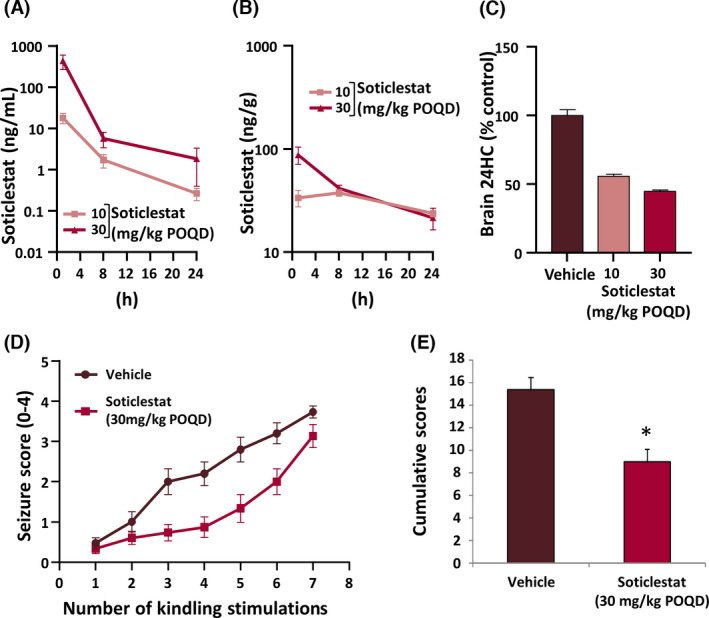
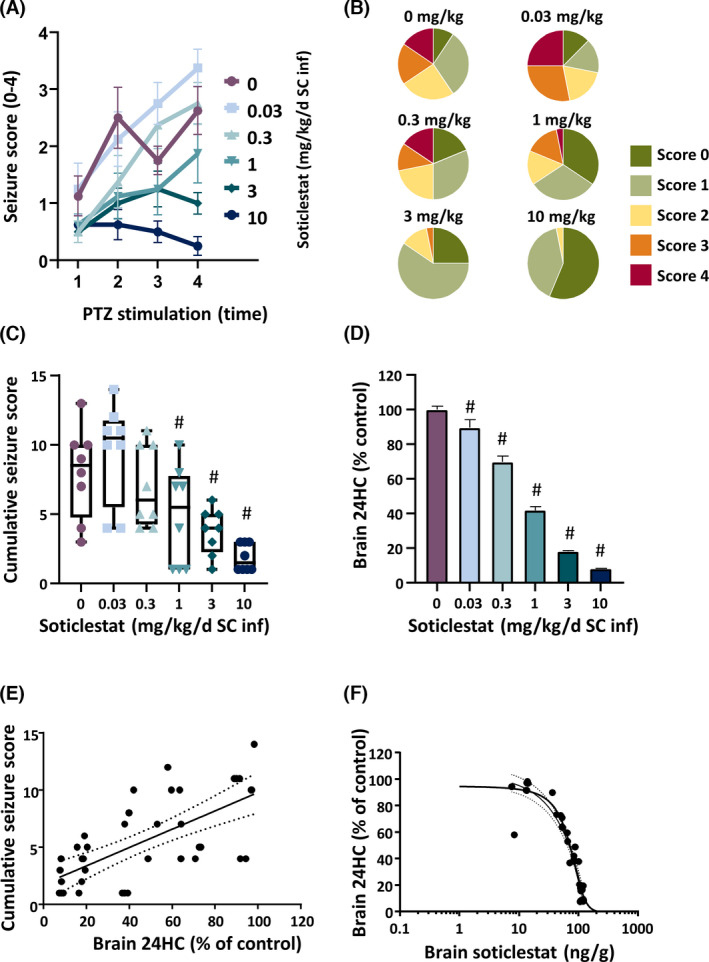
Methods: The anticonvulsive property of soticlestat was investigated in maximal electroshock seizures (MES), pentylenetetrazol (PTZ) acute seizures, 6-Hz psychomotor seizures, audiogenic seizures, amygdala kindling, PTZ kindling, and corneal kindling models. Soticlestat was characterized in a PTZ kindling model under steady-state pharmacokinetics to relate its anticonvulsive effects to pharmacodynamics.
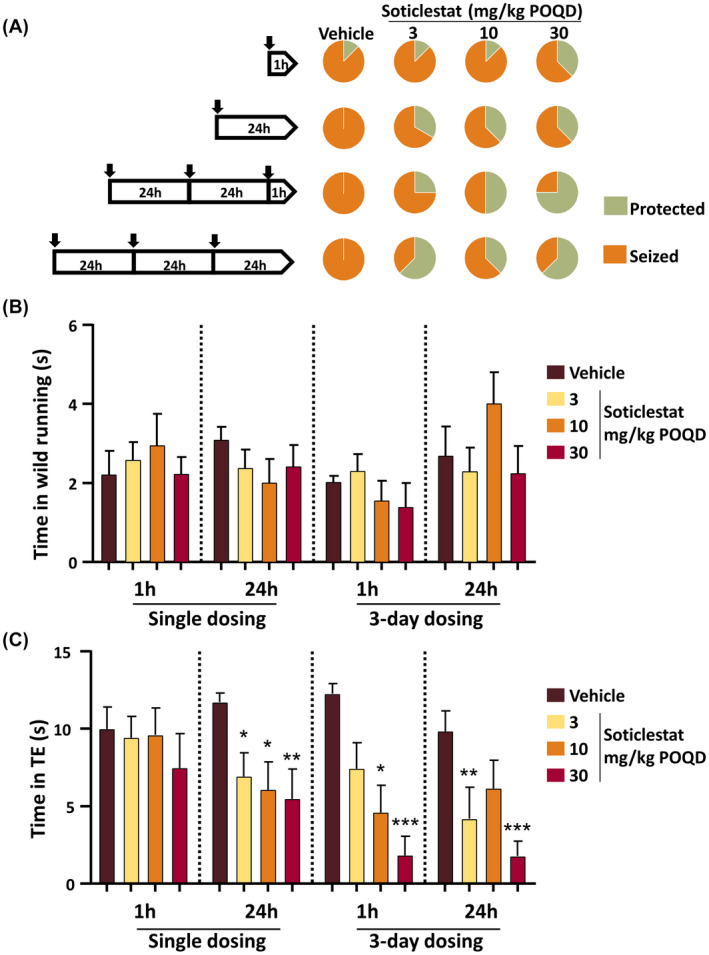
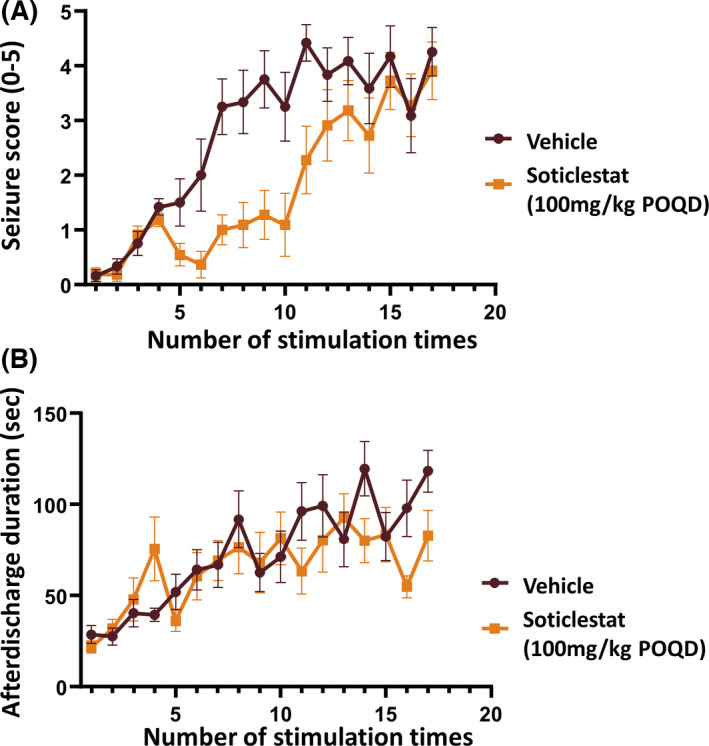
Results: Among models of acutely evoked seizures, whereas anticonvulsive effects of soticlestat were identified in Frings mice, a genetic model of audiogenic seizures, it was found ineffective in MES, acute PTZ seizures, and 6-Hz seizures. The protective effects of soticlestat against audiogenic seizures increased with repetitive dosing. Soticlestat was also tested in models of progressive seizure severity. Soticlestat treatment delayed kindling acquisition, whereas fully kindled animals were not protected. Importantly, soticlestat suppressed the progression of seizure severity in correlation with 24S-hydroxycholesterol lowering in the brain, suggesting that 24S-hydroxycholesterol can be aggressively reduced to produce more potent effects on seizure development in kindling acquisition.
Significance: The data collectively suggest that soticlestat can ameliorate seizure symptoms through a mechanism distinct from conventional antiseizure medications. With its novel mechanism of action, soticlestat could constitute a novel class of antiseizure medications for treatment of intractable epilepsy disorders such as developmental and epileptic encephalopathy.
Keywords: CYP46A1; anticonvulsants; cholesterol 24-hydroxylase; epilepsy; soticlestat.
© 2022 Takeda Pharmaceutical Company Limited. Epilepsia published by Wiley Periodicals LLC on behalf of International League Against Epilepsy.
Conflict of interest statement
T.N., S.F., S.H., M.M., E.S., S.W., and S.K. are either current or former employees of Takeda Pharmaceutical Company Limited. C.S.M. and H.S.W have no competing interests to declare.
Figures
References
-
- Pfrieger FW. Outsourcing in the brain: do neurons depend on cholesterol delivery by astrocytes? BioEssays. 2003;25:72–8. - PubMed
-
- Dietschy JM, Turley SD. Thematic review series: Brain lipids. Cholesterol metabolism in the central nervous system during early development and in the mature animal. J Lipid Res. 2004;45:1375–97. - PubMed
-
- Borroni MV, Vallés AS, Barrantes FJ. The lipid habitats of neurotransmitter receptors in brain. Biochim Biophys Acta. 1858;2016:2662–70. - PubMed
-
- Lund EG, Xie C, Kotti T, Turley SD, Dietschy JM, Russell DW. Knockout of the cholesterol 24‐hydroxylase gene in mice reveals a brain‐specific mechanism of cholesterol turnover. J Biol Chem. 2003;278:22980–8. - PubMed
-
- Xie C, Lund EG, Turley SD, Russell DW, Dietschy JM. Quantitation of two pathways for cholesterol excretion from the brain in normal mice and mice with neurodegeneration. J Lipid Res. 2003;44:1780–9. - PubMed
Publication types
MeSH terms
Substances
LinkOut - more resources
Full Text Sources
Other Literature Sources
Medical
Miscellaneous
