


Climate change and alpine-adapted insects: modelling environmental envelopes of a grasshopper radiation
- PMID: 35316945
- PMCID: PMC8889178
- DOI: 10.1098/rsos.211596
Climate change and alpine-adapted insects: modelling environmental envelopes of a grasshopper radiation
Abstract
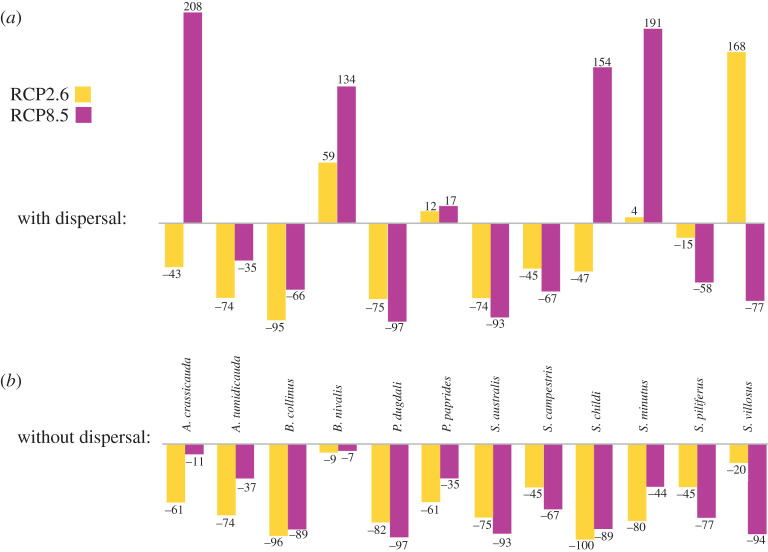
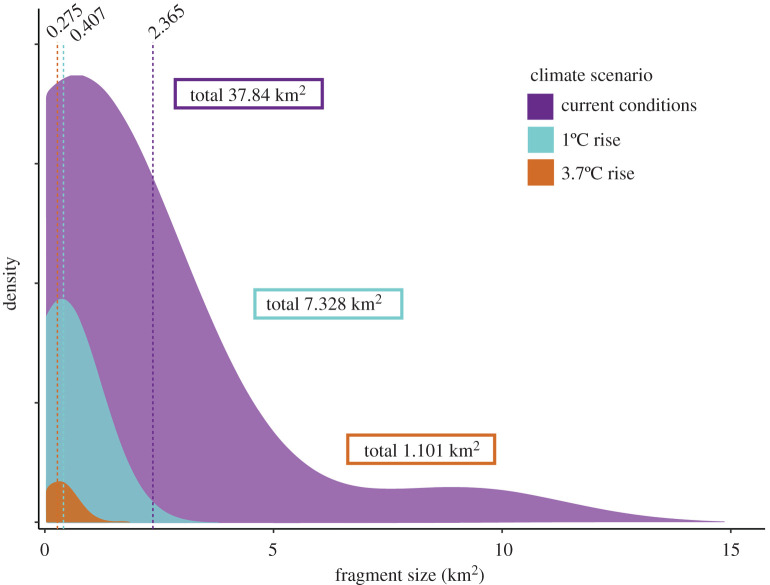
Mountains create steep environmental gradients that are sensitive barometers of climate change. We calibrated 10 statistical models to formulate ensemble ecological niche models for 12 predominantly alpine, flightless grasshopper species in Aotearoa New Zealand, using their current distributions and current conditions. Niche models were then projected for two future global climate scenarios: representative concentration pathway (RCP) 2.6 (1.0°C rise) and RCP8.5 (3.7°C rise). Results were species specific, with two-thirds of our models suggesting a reduction in potential range for nine species by 2070, but surprisingly, for six species, we predict an increase in potential suitable habitat under mild (+1.0°C) or severe global warming (+3.7°C). However, when the limited dispersal ability of these flightless grasshoppers is taken into account, all 12 species studied are predicted to suffer extreme reductions in range, with a quarter likely to go extinct due to a 96-100% reduction in suitable habitat. Habitat loss is associated with habitat fragmentation that is likely to escalate stochastic vulnerability of remaining populations. Here, we present the predicted outcomes for an endemic radiation of alpine taxa as an exemplar of the challenges that alpine species, both in New Zealand and internationally, are subject to by anthropogenic climate change.
Keywords: FRAGSTATS; alpine; biomod2; climate change; ecological niche modelling; ensemble modelling; fragmentation.
© 2022 The Authors.
Conflict of interest statement
We declare we have no competing interests.
Figures

References
-
- Clark JS, Bell DM, Hersh MH, Nichols L. 2011. Climate change vulnerability of forest biodiversity: climate and competition tracking of demographic rates. Glob. Change Biol. 17, 1834-1849. (10.1111/j.1365-2486.2010.02380.x) - DOI
-
- Ordonez A, Williams JW, Svenning JC. 2016. Mapping climatic mechanisms likely to favour the emergence of novel communities. Nat. Clim. Change 6, 1104-1109. (10.1038/nclimate3127) - DOI
-
- Parmesan C. 2006. Ecological and evolutionary responses to recent climate change. Annu. Rev. Ecol. Evol. Syst. 37, 637-669. (10.1146/annurev.ecolsys.37.091305.110100) - DOI
Associated data
LinkOut - more resources
Full Text Sources
