


Inverse correlation between gastroesophageal reflux disease and atrophic gastritis assessed by endoscopy and serology
- PMID: 35317098
- PMCID: PMC8900577
- DOI: 10.3748/wjg.v28.i8.853
Inverse correlation between gastroesophageal reflux disease and atrophic gastritis assessed by endoscopy and serology
Abstract
Background: Helicobacter pylori (H. pylori) infection is known to prevent the occurrence of gastroesophageal reflux disease (GERD) by inducing gastric mucosal atrophy. However, little is known about the relationship between atrophic gastritis (AG) and GERD.
Aim: To confirm the inverse correlation between AG and the occurrence and severity of GERD.
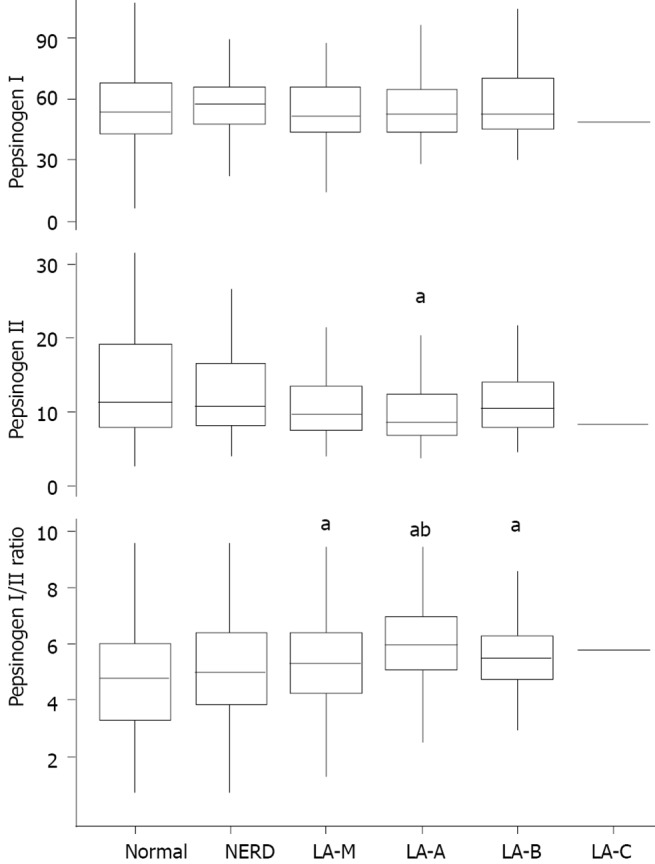
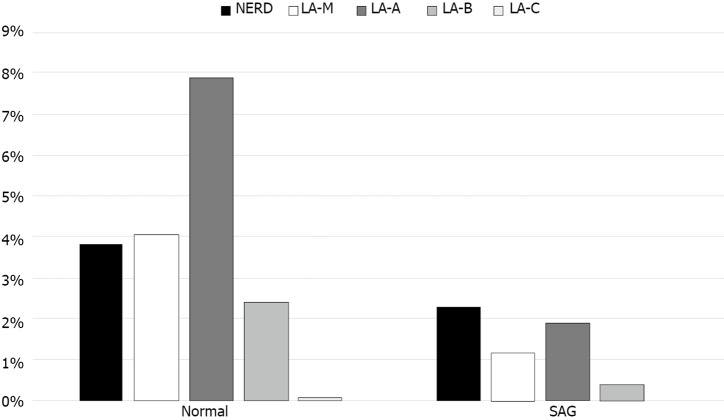
Methods: Individuals receiving health checkups who underwent upper gastrointestinal endoscopy at Seoul National University Healthcare System Gangnam Center were included. The grade of reflux esophagitis was evaluated according to the Los Angeles classification. Endoscopic AG (EAG) was categorized into six grades. Serologic AG (SAG) was defined as pepsinogen I ≤ 70 ng/mL and pepsinogen I/II ratio ≤ 3.0. The association between the extent of EAG and SAG and the occurrence and severity of GERD was evaluated using multivariate logistic regression analysis.
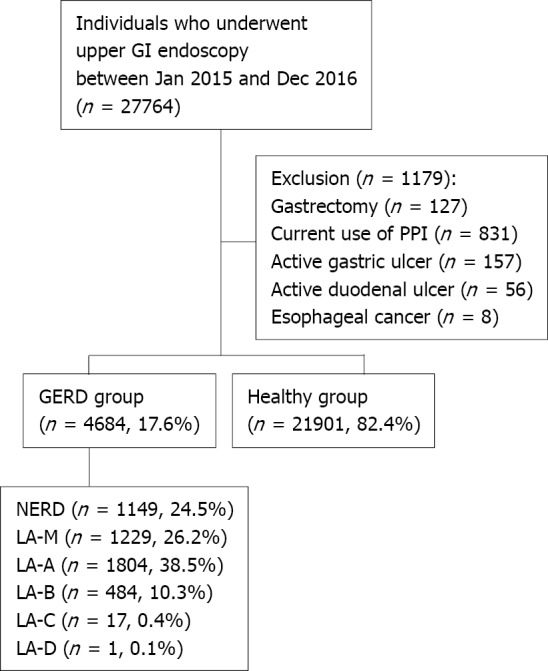
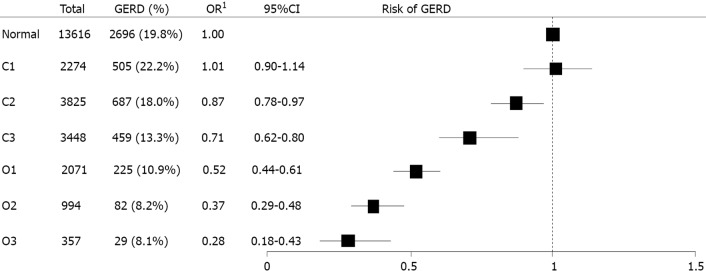
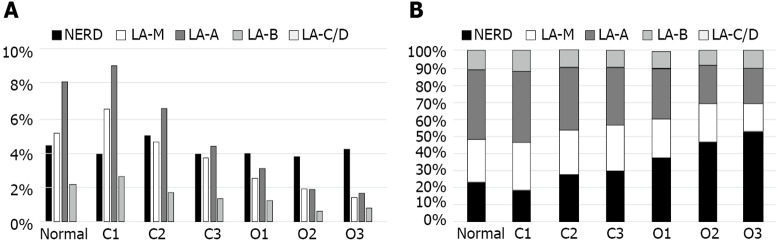
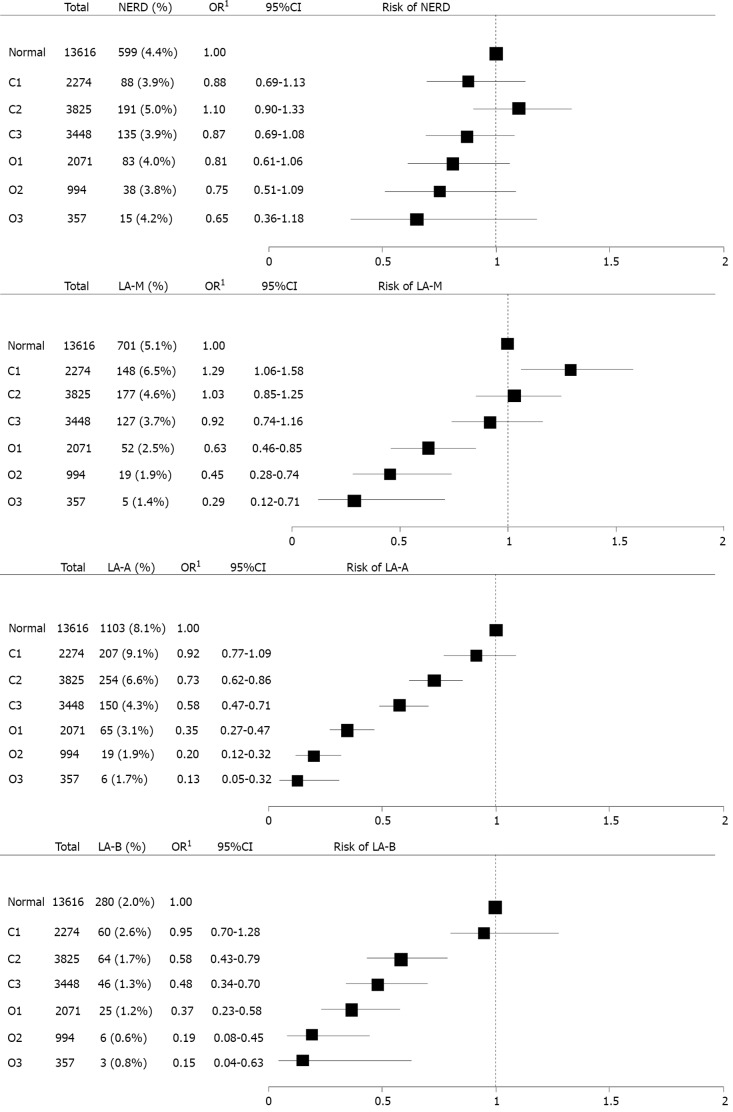
Results: In total, 4684 individuals with GERD were compared with 21901 healthy controls. In multivariate logistic regression analysis, advanced age, male sex, body mass index > 23 kg/m2, presence of metabolic syndrome, current smoking, and alcohol consumption were associated with an increased risk of GERD. Seropositivity for H. pylori immunoglobulin G antibodies was associated with a decreased risk of GERD. There was an inverse correlation between the extent of EAG and occurrence of GERD: Odds ratio (OR), 1.01 [95% confidence interval (CI): 0.90-1.14] in C1, 0.87 (0.78-0.97) in C2, 0.71 (0.62-0.80) in C3, 0.52 (0.44-0.61) in O1, 0.37 (0.29-0.48) in O2, and 0.28 (0.18-0.43) in O3. Additionally, the extent of EAG showed an inverse correlation with the severity of GERD. The presence of SAG was correlated with a reduced risk of GERD (OR = 0.49, 95%CI: 0.28-0.87, P = 0.014).
Conclusion: The extent of EAG and SAG exhibited strong inverse relationships with the occurrence and severity of GERD. AG followed by H. pylori infection may be independently protect against GERD.
Keywords: Atrophic gastritis; Gastroesophageal reflux disease; Helicobacter pylori; Pepsinogen; Reflux esophagitis.
©The Author(s) 2022. Published by Baishideng Publishing Group Inc. All rights reserved.
Conflict of interest statement
Conflict-of-interest statement: The authors declare that they have no conflicts of interest to disclose.
Figures

References
-
- Vakil N, van Zanten SV, Kahrilas P, Dent J, Jones R Global Consensus Group. The Montreal definition and classification of gastroesophageal reflux disease: a global evidence-based consensus. Am J Gastroenterol. 2006;101:1900–20; quiz 1943. - PubMed
-
- Kim N, Lee SW, Cho SI, Park CG, Yang CH, Kim HS, Rew JS, Moon JS, Kim S, Park SH, Jung HC, Chung IS H. pylori and Gerd Study Group of Korean College of Helicobacter and Upper Gastrointestinal Research. The prevalence of and risk factors for erosive oesophagitis and non-erosive reflux disease: a nationwide multicentre prospective study in Korea. Aliment Pharmacol Ther. 2008;27:173–185. - PubMed
-
- Youn YH, Kang YW, Ahn SH, Park SK. Prevalence alteration of reflux esophagitis in recent years. Korean J Gastrointest Endosc. 2001;23 (3):144–148.
MeSH terms
LinkOut - more resources
Full Text Sources
Medical
Miscellaneous
