


Surgery for Cronkhite-Canada syndrome complicated with intussusception: A case report and review of literature
- PMID: 35317544
- PMCID: PMC8908339
- DOI: 10.4240/wjgs.v14.i2.200
Surgery for Cronkhite-Canada syndrome complicated with intussusception: A case report and review of literature
Abstract
Background: Cronkhite-Canada syndrome (CCS) is a rare nonhereditary disease with a syndrome of multiple gastrointestinal polyps, skin pigmentation, hair loss, and fingernail/toenail dystrophy. Intussusception is a serious condition with an occurrence rate of 5% in adults, which is mainly caused by intestinal tumors or other intestinal occupations.
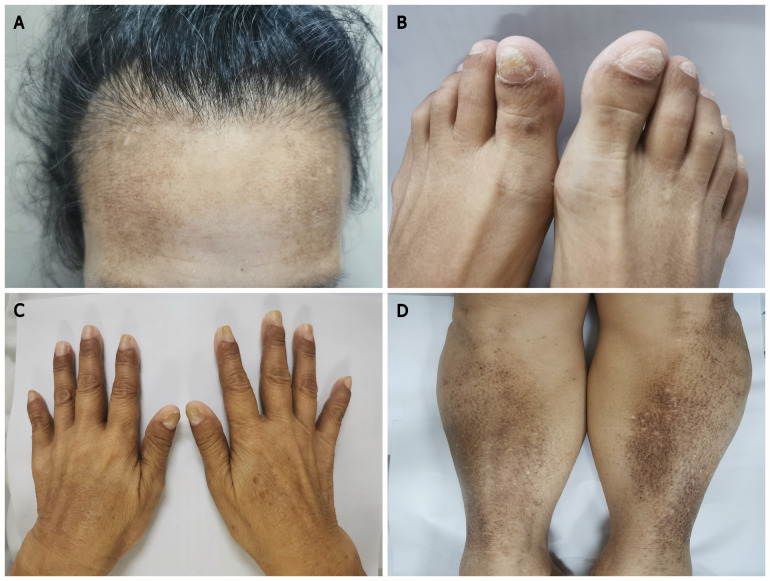
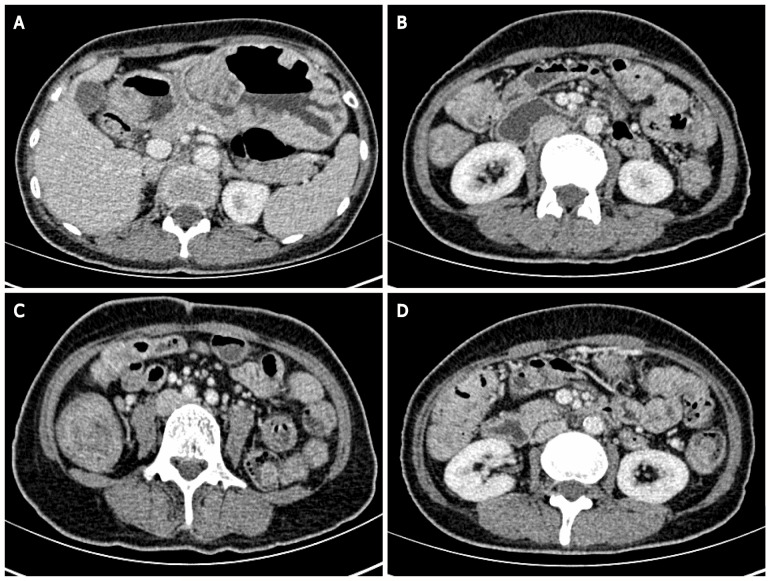
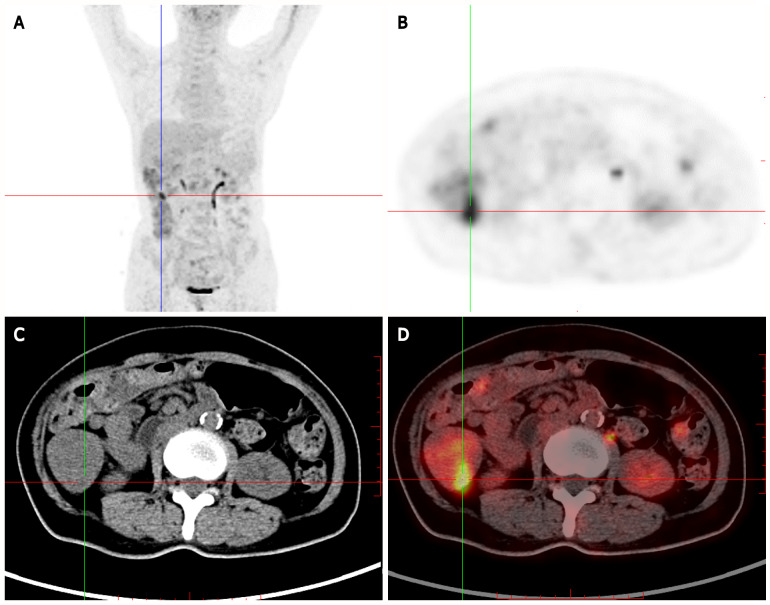
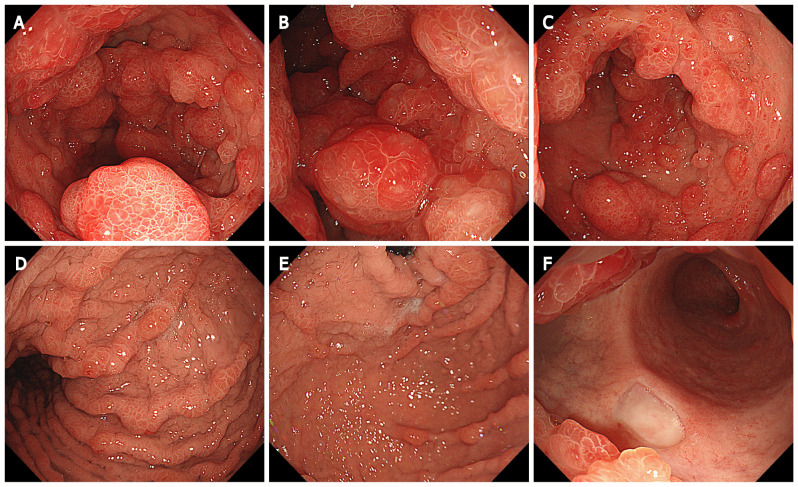
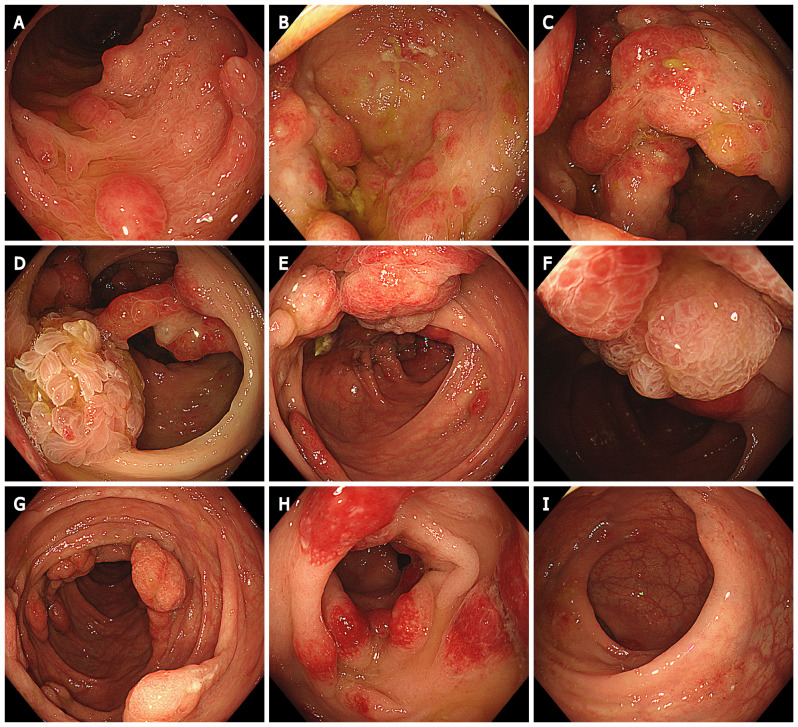
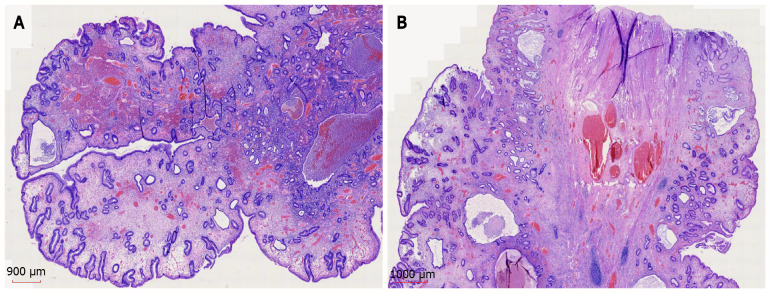
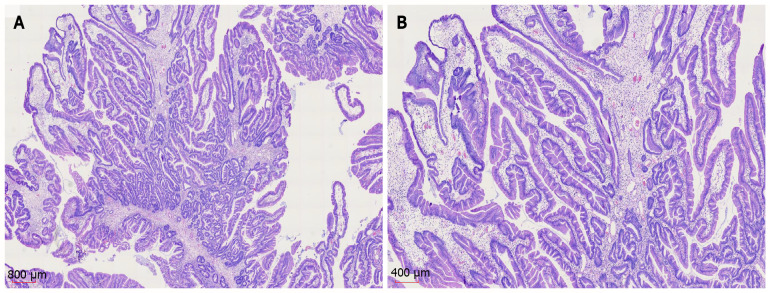
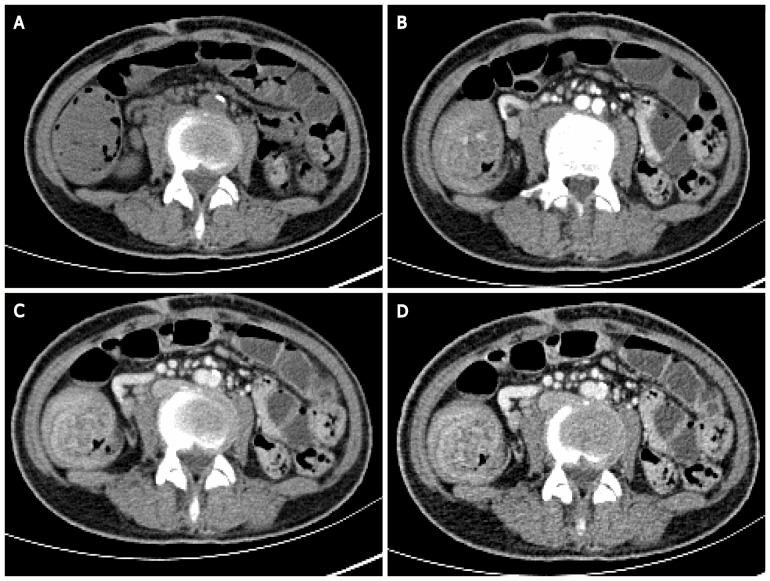
Case summary: A 57-year-old woman was admitted to our hospital due to abdominal distension and pain for the past year. Her nausea and vomiting symptoms had been aggravated for the past month. Previous transoral enteroscopy results one year prior showed chronic erosive gastritis protuberans, duodenitis, and jejunitis. She had sparse body hair and brown pigmentation on the skin of her hands and bilateral anterior tibias. The nails of both hands were pale and lacked luster, and the fingernail of her ring finger was longitudinally cracked. Gastroscopy showed extensive diffuse polypoid lump changes in the gastric body and antrum, of 0.5-3 cm in size. Colonoscopy showed multiple polypoid mucosal bulges in the terminal ileum and multiple polyps (0.3-5 cm) throughout the colon. The patient was diagnosed with CCS and underwent partial excision of the polyps, but she refused hormone therapy. One month later, the patient complained of nausea and vomiting, accompanied by abdominal pain and inability to pass gas or stool. Contrast-enhanced computed tomography of the abdomen showed gastrointestinal polyposis and ileocecal intussusception. She underwent stomach and bowel surgery.
Conclusion: CCS, as a rare disease with poor prognosis, should be treated aggressively. Systematic steroids, immunosuppressive agents, and biological agents were not applied; thus, the patient's symptoms quickly progressed, and intussusception occurred. She had to undergo surgery. Improved compliance may lead to a better prognosis.
Keywords: Case report; Cronkhite-Canada syndrome; Intussusception; Prognosis; Surgery; Treatment.
©The Author(s) 2022. Published by Baishideng Publishing Group Inc. All rights reserved.
Conflict of interest statement
Conflict-of-interest statement: The authors declare that they have no conflict of interest.
Figures
References
-
- Cronkhite LW Jr, Canada WJ. Generalized gastrointestinal polyposis; an unusual syndrome of polyposis, pigmentation, alopecia and onychotrophia. N Engl J Med. 1955;252:1011–1015. - PubMed
-
- Hoekstra E, van der Laan J, van der Voorn M. Seventy-five-year-old man with unexplained weight loss and alopecia. Gut. 2020;69:822–900. - PubMed
-
- Oba MS, Murakami Y, Nishiwaki Y, Asakura K, Ohfuji S, Fukushima W, Nakamura Y, Suzuki Y. Estimated Prevalence of Cronkhite-Canada Syndrome, Chronic Enteropathy Associated With SLCO2A1 Gene, and Intestinal Behçet's Disease in Japan in 2017: A Nationwide Survey. J Epidemiol. 2021;31:139–144. - PMC - PubMed
-
- Brill A, Lopez RA. Intussusception In Adults. StatPearls. Treasure Island (FL): StatPearls Publishing Copyright © 2020, StatPearls Publishing LLC, 2020.
Publication types
LinkOut - more resources
Full Text Sources
Miscellaneous
