


KCNQ2 and KCNQ5 form heteromeric channels independent of KCNQ3
- PMID: 35320039
- PMCID: PMC9060518
- DOI: 10.1073/pnas.2117640119
KCNQ2 and KCNQ5 form heteromeric channels independent of KCNQ3
Abstract
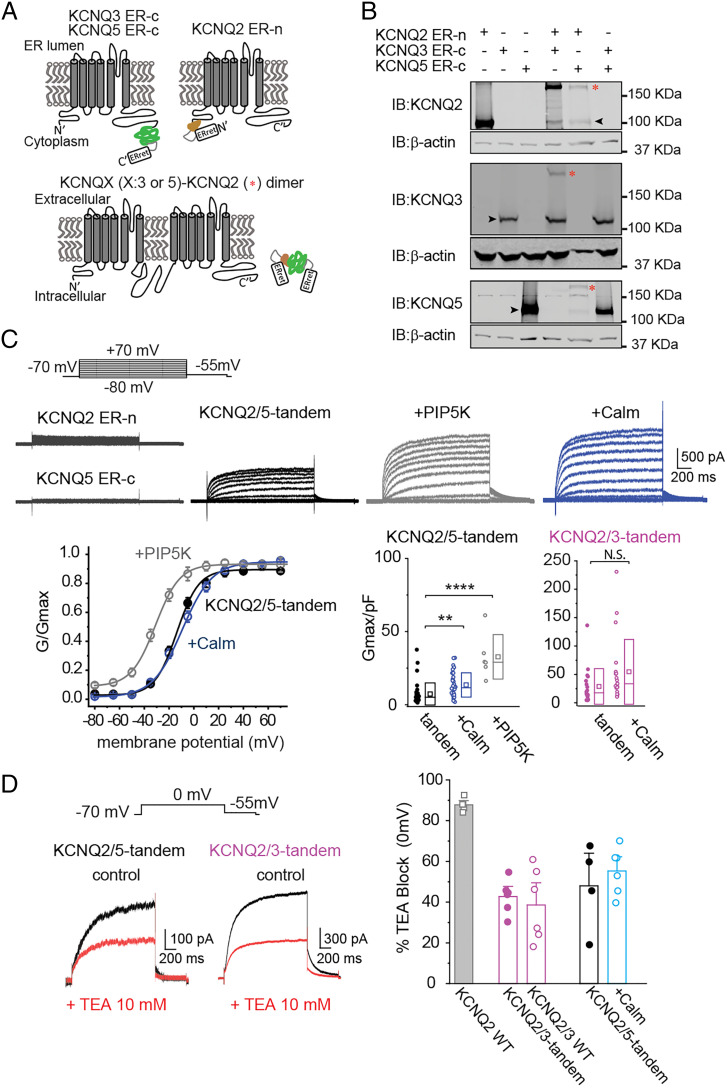
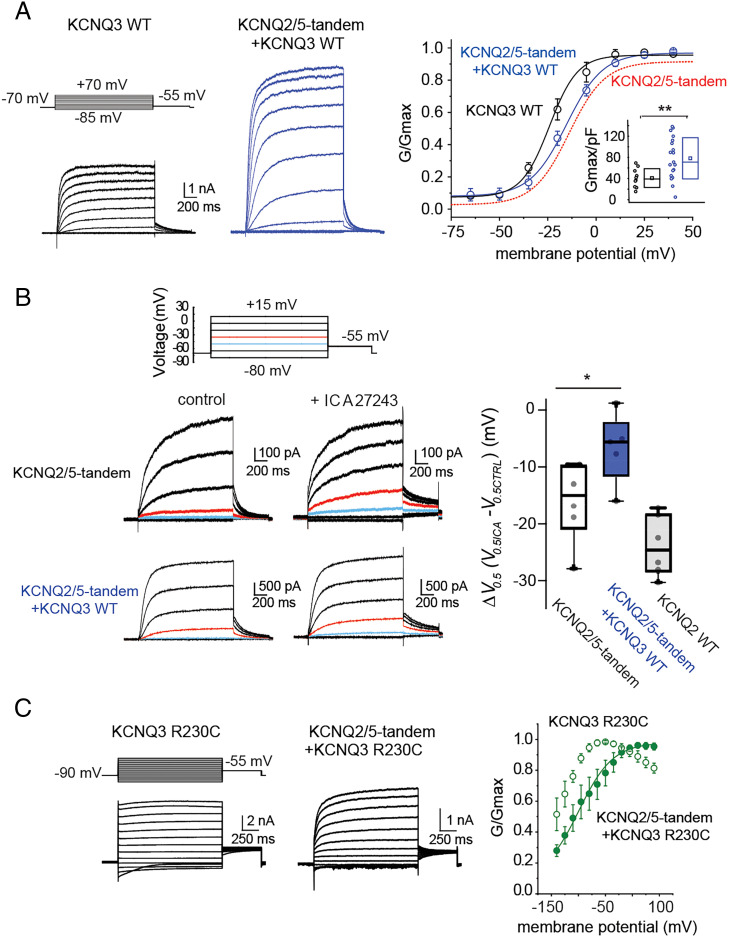
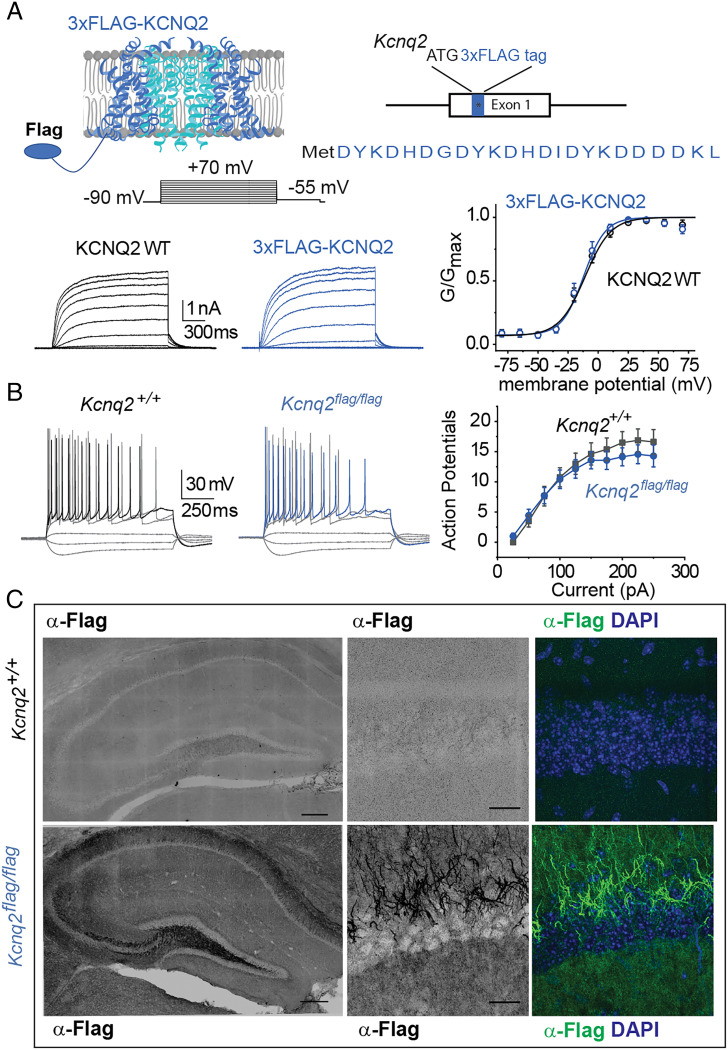
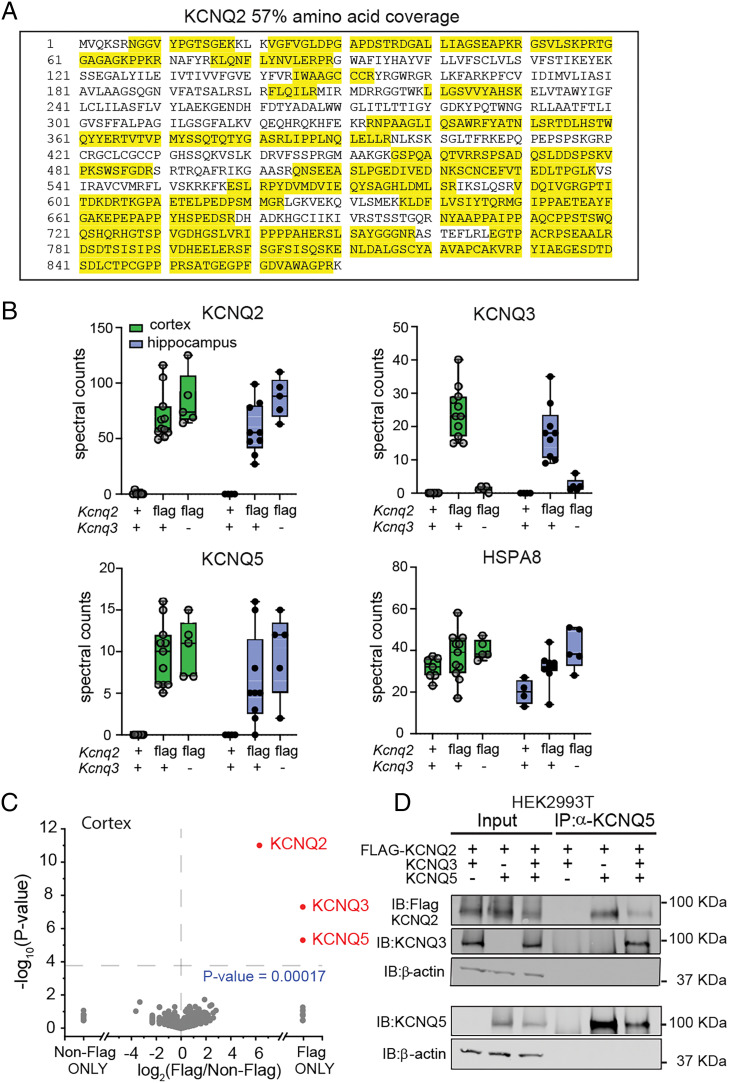
KCNQ2 and KCNQ3 channels are associated with multiple neurodevelopmental disorders and are also therapeutic targets for neurological and neuropsychiatric diseases. For more than two decades, it has been thought that most KCNQ channels in the brain are either KCNQ2/3 or KCNQ3/5 heteromers. Here, we investigated the potential heteromeric compositions of KCNQ2-containing channels. We applied split-intein protein trans-splicing to form KCNQ2/5 tandems and coexpressed these with and without KCNQ3. Unexpectedly, we found that KCNQ2/5 tandems form functional channels independent of KCNQ3 in heterologous cells. Using mass spectrometry, we went on to demonstrate that KCNQ2 associates with KCNQ5 in native channels in the brain, even in the absence of KCNQ3. Additionally, our functional heterologous expression data are consistent with the formation of KCNQ2/3/5 heteromers. Thus, the composition of KCNQ channels is more diverse than has been previously recognized, necessitating a re-examination of the genotype/phenotype relationship of KCNQ2 pathogenic variants.
Keywords: KCNQ2; KCNQ3; KCNQ5; autism; epilepsy.
Conflict of interest statement
The authors declare no competing interest.
Figures
References
-
- Nappi P., et al. , Epileptic channelopathies caused by neuronal Kv7 (KCNQ) channel dysfunction. Pflugers Arch. 472, 881–898 (2020). - PubMed
-
- Sands T. T., et al. , Autism and developmental disability caused by KCNQ3 gain-of-function variants. Ann. Neurol. 86, 181–192 (2019). - PubMed
-
- Delmas P., Brown D. A., Pathways modulating neural KCNQ/M (Kv7) potassium channels. Nat. Rev. Neurosci. 6, 850–862 (2005). - PubMed
MeSH terms
Substances
Grants and funding
LinkOut - more resources
Full Text Sources
Molecular Biology Databases
