


Gene loss, genome rearrangement, and accelerated substitution rates in plastid genome of Hypericum ascyron (Hypericaceae)
- PMID: 35321651
- PMCID: PMC8941745
- DOI: 10.1186/s12870-022-03515-x
Gene loss, genome rearrangement, and accelerated substitution rates in plastid genome of Hypericum ascyron (Hypericaceae)
Abstract
Background: Comparative genomic analysis exhibits dynamic evolution of plastid genome (plastome) in the clusioid clade of Malpighiales, which comprise five families, including multiple inversions and gene losses. Little is known about the plastome evolution in Hypericaceae, a large family in the clade. Only the plastome of one species, Cratoxylum cochinchinense, has been published.
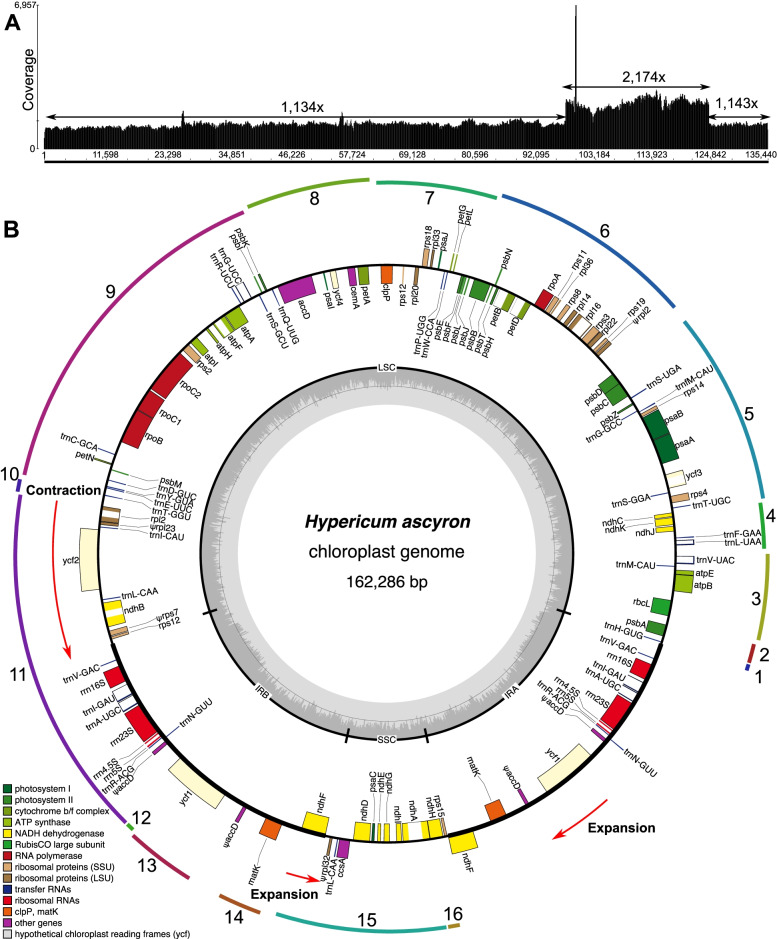
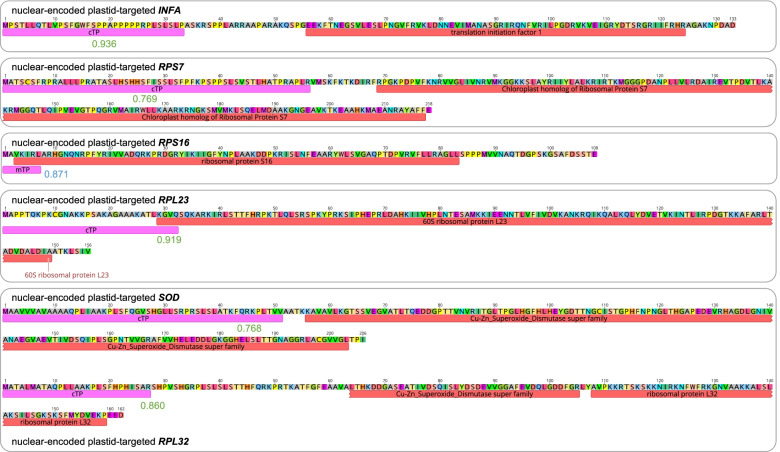
Results: We generated a complete plastome sequence for Hypericum ascyron, providing the first complete plastome from the tribe Hypericeae (Hypericaceae). The H. ascyron plastome exhibits dynamic changes in gene and intron content, structure, and sequence divergence compared to the C. cochinchinense plastome from the tribe Cratoxyleae (Hypericaceae). Transcriptome data determined the evolutionary fate of the missing plastid genes infA, rps7, rps16, rpl23, and rpl32 in H. ascyron. Putative functional transfers of infA, rps7, and rpl32 were detected to the nucleus, whereas rps16 and rpl23 were substituted by nuclear-encoded homologs. The plastid rpl32 was integrated into the nuclear-encoded SODcp gene. Our findings suggested that the transferred rpl32 had undergone subfunctionalization by duplication rather than alternative splicing. The H. ascyron plastome rearrangements involved seven inversions, at least three inverted repeat (IR) boundary shifts, which generated gene relocations and duplications. Accelerated substitution rates of plastid genes were observed in the H. ascyron plastome compared with that of C. cochinchinense plastid genes. The higher substitution rates in the accD and clpP were correlated with structural change, including a large insertion of amino acids and losses of two introns, respectively. In addition, we found evidence of positive selection of the clpP, matK, and rps3 genes in the three branches related to H. ascyron. In particular, the matK gene was repeatedly under selection within the family Hypericaceae. Selective pressure in the H. ascyron matK gene was associated with the loss of trnK-UUU and relocation into the IR region.
Conclusions: The Hypericum ascyron plastome sequence provides valuable information for improving the understanding of plastome evolution among the clusioid of the Malpighiales. Evidence for intracellular gene transfer from the plastid to the nucleus was detected in the nuclear transcriptome, providing insight into the evolutionary fate of plastid genes in Hypericaceae.
Keywords: Gene substitution; Gene transfer; Inversion; Plastome; Rearrangement; matK.
© 2022. The Author(s).
Conflict of interest statement
The authors declare that they have no competing interests.
Figures



References
-
- Timmis JN, Ayliffe MA, Huang CY, Martin W. Endosymbiotic gene transfer: organelle genomes forge eukaryotic chromosomes. Nat Rev Genet. 2004;5(2):123–135. - PubMed
-
- Huang CY, Ayliffe MA, Timmis JN. Direct measurement of the transfer rate of chloroplast DNA into the nucleus. Nature. 2003;422(6927):72–76. - PubMed
-
- Ruhlman TA, Jansen RK. Plastid genomes of flowering plants: essential principles. In: Maliga P, editor. Chloroplast Biotechnology: Methods and Protocols. New York: Springer US; 2021. pp. 3–47. - PubMed
-
- Kim K-J, Choi K-S, Jansen RK. Two chloroplast DNA inversions originated simultaneously during the early evolution of the sunflower family (Asteraceae) Mol Biol Evol. 2005;22(9):1783–1792. - PubMed
MeSH terms
Grants and funding
LinkOut - more resources
Full Text Sources
Miscellaneous
