


Female hormones prevent sepsis-induced cardiac dysfunction: an experimental randomized study
- PMID: 35322092
- PMCID: PMC8943058
- DOI: 10.1038/s41598-022-08889-4
Female hormones prevent sepsis-induced cardiac dysfunction: an experimental randomized study
Abstract
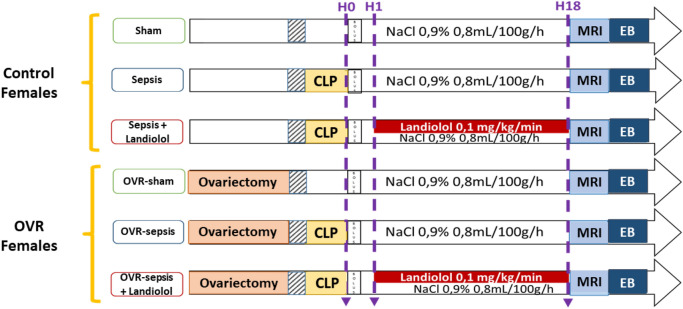
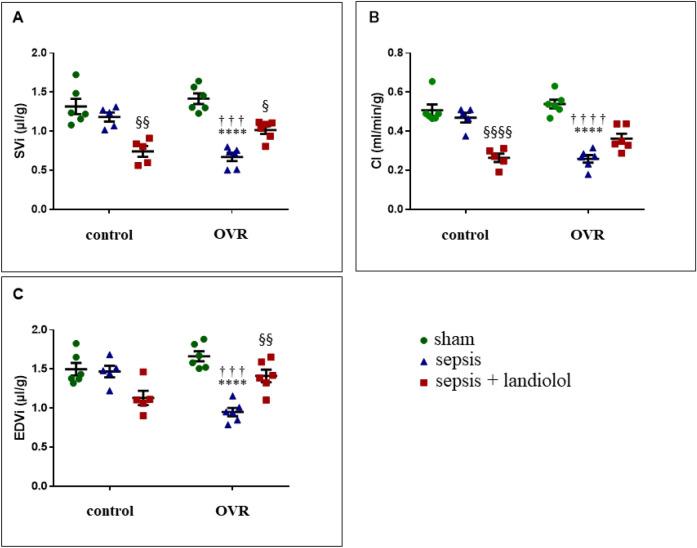
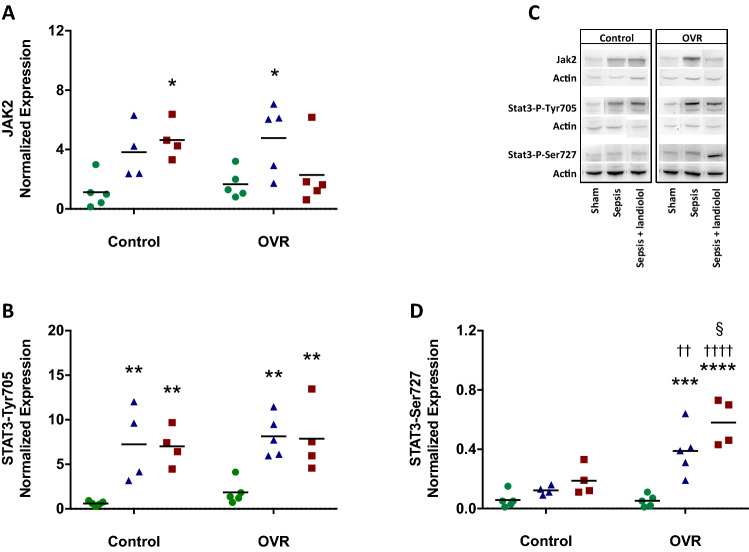
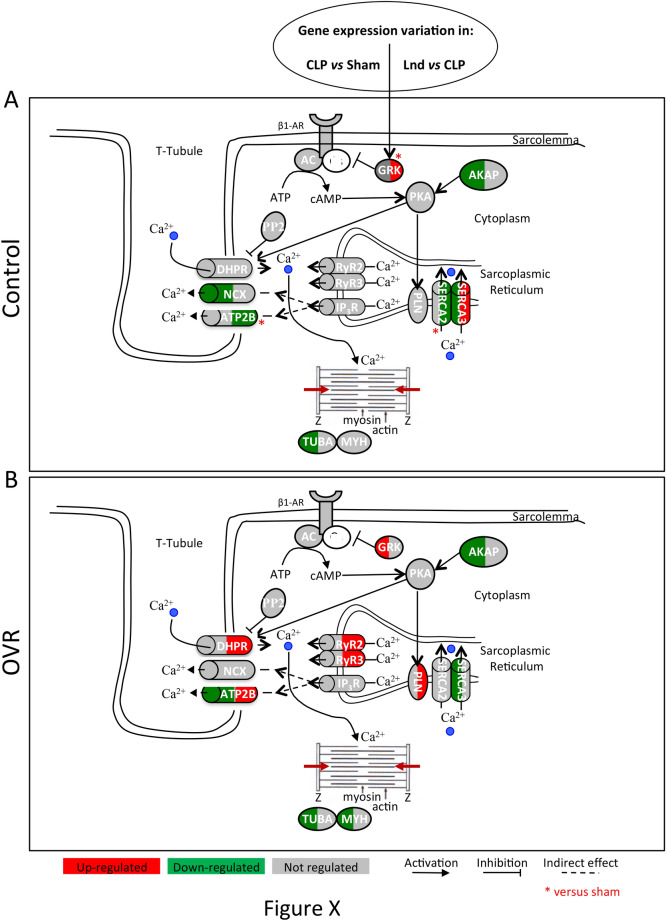
Although epidemiologic research has demonstrated significant differences in incidence and outcomes of sepsis according to sex, their underlying biological mechanisms are poorly understood. Here, we studied the influence of hormonal status by comparing in vivo cardiac performances measured by MRI in non-ovariectomized and ovariectomized septic female rats. Control and ovariectomized rats were randomly allocated to the following groups: sham, sepsis and sepsis plus landiolol. Sepsis was induced by caecum ligation and punction (CLP). Landiolol, a short-acting selective β1-adrenergic blocker improving the in vivo cardiac performance of septic male rats was perfused continuously after sepsis induction. Cardiac MRI was carried out 18 h after induction of sepsis to assess in vivo cardiac function. Capillary permeability was evaluated by Evans Blue administration and measurement of its tissue extravasation. Variation in myocardial gene and protein expression was also assessed by qPCR and western-blot in the left ventricular tissue. Sepsis reduced indexed stroke volume, cardiac index and indexed end-diastolic volume compared to sham group in ovariectomized females whereas it had no effect in control females. This was associated with an overexpression of JAK2 expression and STAT3 phosphorylation on Ser727 site, and an inhibition of the adrenergic pathways in OVR females. Landiolol increased the indexed stroke volume by reversing the indexed end-diastolic volume reduction after sepsis in ovariectomized females, while it decreased indexed stroke volume and cardiac index in control. This was supported by an overexpression of genes involved in calcium influx in OVR females while an inactivation of the β-adrenergic and a calcium efflux pathway was observed in control females. Sepsis decreased in vivo cardiac performances in ovariectomized females but not in control females, presumably associated with a more pronounced inflammation, inhibition of the adrenergic pathway and calcium efflux defects. Administration of landiolol prevents this cardiac dysfunction in ovariectomized females with a probable activation of calcium influx, while it has deleterious effects in control females in which calcium efflux pathways were down-regulated.
© 2022. The Author(s).
Conflict of interest statement
The authors declare no competing interests.
Figures
References
-
- Kisat M, Villegas CV, Onguti S, Zafar SN, Latif A, Efron DT, Haut ER, Schneider EB, Lipsett PA, Zafar H, Haider AH. Predictors of sepsis in moderately severely injured patients: An analysis of the National Trauma Data Bank. Surg. Infect. 2013;14(1):62–68. doi: 10.1089/sur.2012.009. - DOI - PMC - PubMed
-
- Reade MC, Yende S, D’Angelo G, Kong L, Kellum JA, Barnato AE, Milbrandt EB, Dooley C, Mayr FB, Weissfeld L, Angus DC. Genetic and inflammatory markers of sepsis investigators: Differences in immune response may explain lower survival among older men with pneumonia. Crit. Care Med. 2009;37(5):1655–1662. doi: 10.1097/CCM.0b013e31819da853. - DOI - PMC - PubMed
-
- Offner PJ, Moore EE, Biffl WL. Male gender is a risk factor for major infections after surgery. Arch. Surg. Chic. Ill. 1960. 1999;134(9):935–938. - PubMed
Publication types
MeSH terms
Substances
LinkOut - more resources
Full Text Sources
Medical
Molecular Biology Databases
Miscellaneous
