


Long non-coding RNA GAS5 contributes to the progression of nonalcoholic fatty liver disease by targeting the microRNA-29a-3p/NOTCH2 axis
- PMID: 35322757
- PMCID: PMC9161890
- DOI: 10.1080/21655979.2022.2026858
Long non-coding RNA GAS5 contributes to the progression of nonalcoholic fatty liver disease by targeting the microRNA-29a-3p/NOTCH2 axis
Abstract
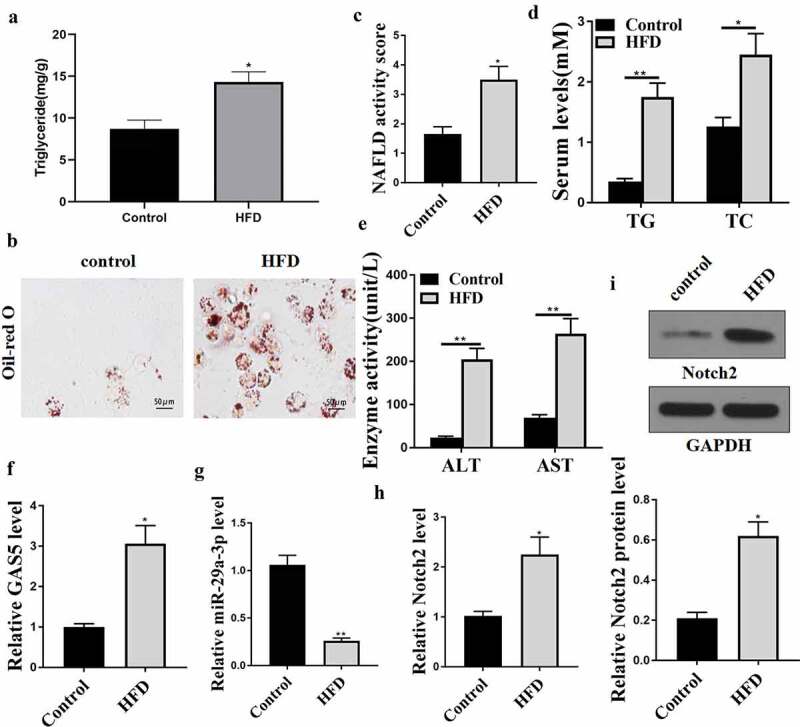
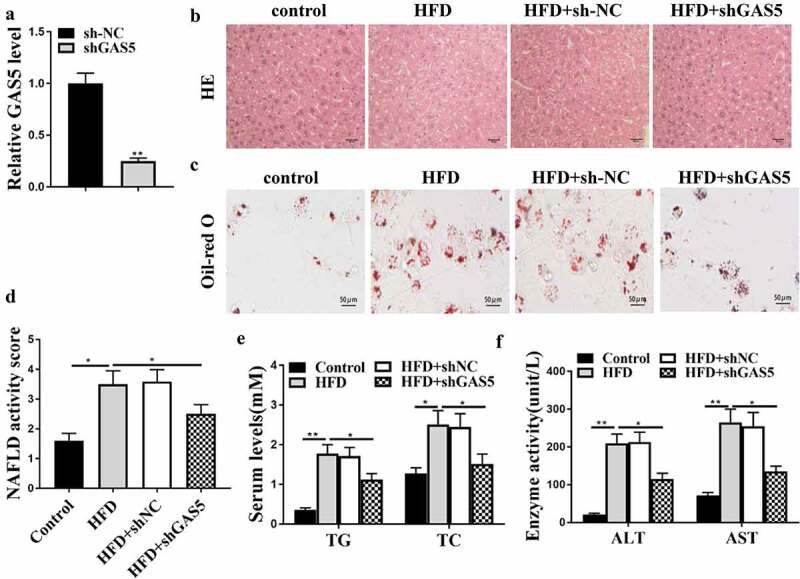
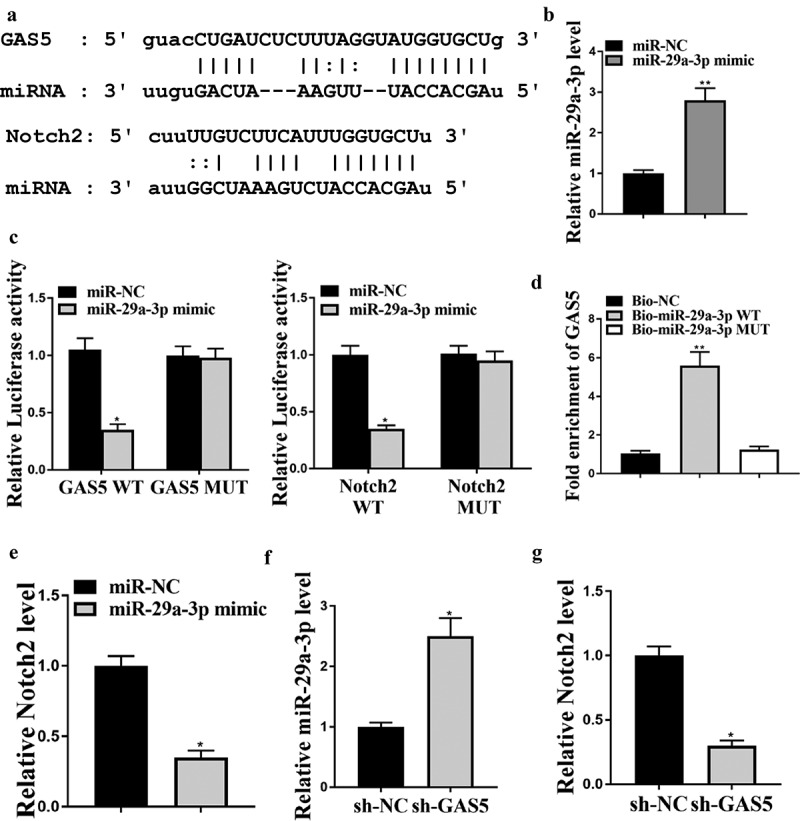
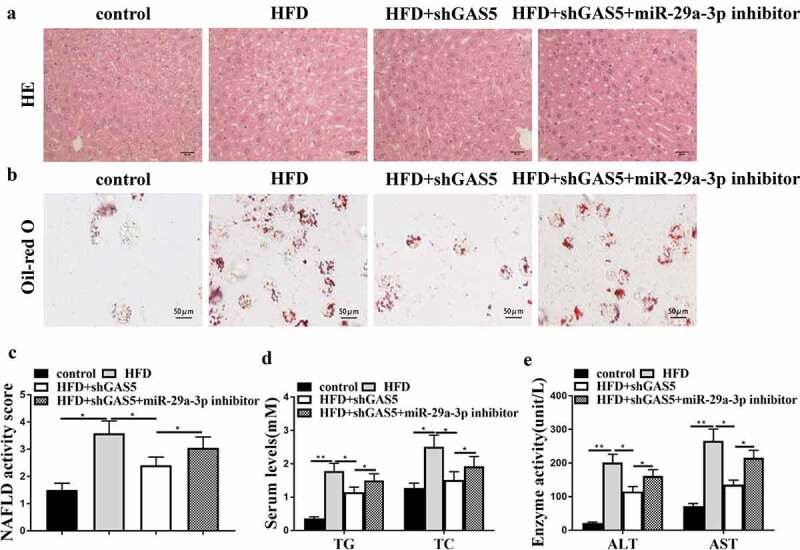
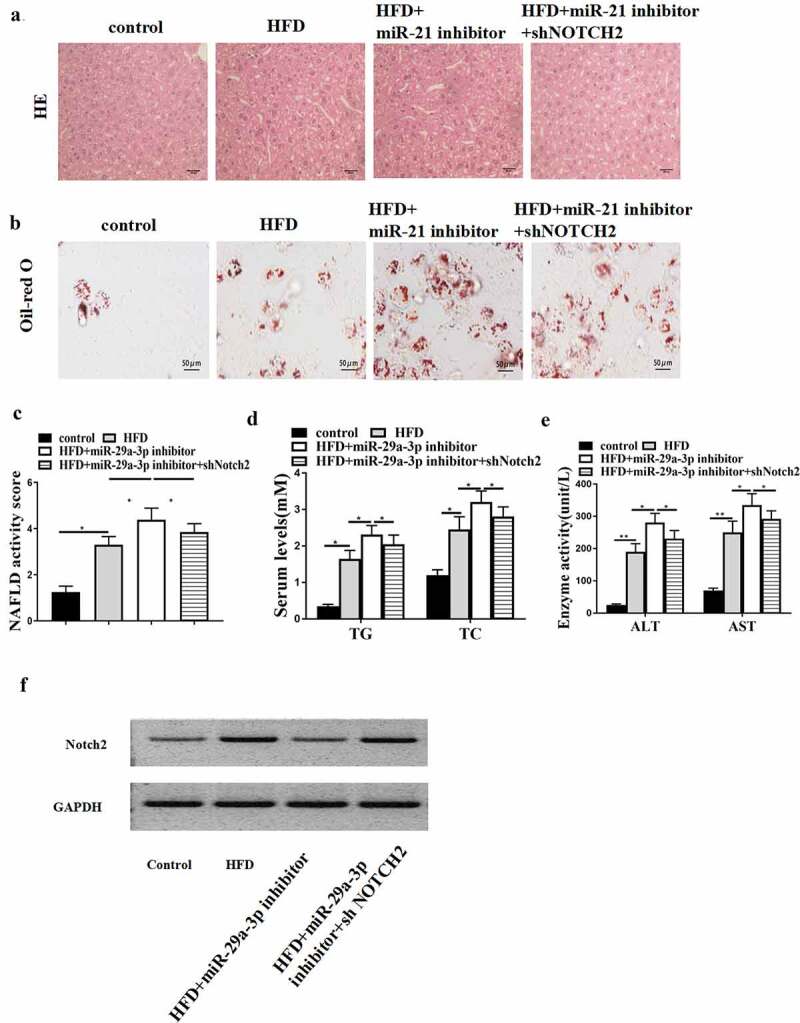
Long non-coding RNAs (lncRNAs) have been widely recognized as critical players in the development of nonalcoholic fatty liver disease (NAFLD), one of the most prevalent liver diseases globally. In this study, we established a HFD-induced NAFLD mouse model and explored the role of lncRNA GAS5 in NAFLD progression and its possible underlying mechanisms. We showed that NAFLD activity score was elevated in the HFD mice. GAS5 knockdown attenuated HFD-induced hepatic steatosis and lipid accumulation and reduced NAFLD activity score in HFD mice. In addition, GAS5 knockdown reduced serum triglyceride cholesterol levels and inhibited alanine aminotransferase and aspartate aminotransferase activities in HFD mice. Moreover, GAS5 overexpression enhanced NOTCH2 levels in liver cells and promoted NAFLD progression by sponging miR-29a-3p in vivo. Furthermore, miR-29a-3p inhibited NAFLD progression by targeting NOTCH2 in vivo. Overall, our results indicated that GAS5 acts as a sponge of miR-29a-3p to increase NOTCH2 expression and facilitate NAFLD progression by targeting the miR-29a-3p/NOTCH2 axis and demonstrated a new GAS5-mediated mechanism underlying NAFLD development, suggesting that GAS5 could be a potential therapeutic target of NAFLD.Abbreviations: Alanine aminotransferase: ALT; Aspartate aminotransferase: AST; Enzyme linked immunosorbent assay: ELISA; Hepatocellular carcinoma: HCC; High-fat diet: HFD; Long non-coding RNA: Lnc RNA; Long non-coding RNA GAS5: GAS5; MicroRNAs: MiRNAs; Nonalcoholic fatty liver disease: NAFLD; Quantitative reverse transcription PCRs: RT-qPCRs; siRNA negative control: si-NC; Total cholesterol: TC; Triglyceride: TG.
Keywords: NAFLD; NOTCH2; lncRNA GAS5; miR-29a-3p; progression.
Conflict of interest statement
No potential conflict of interest was reported by the author(s).
Figures
Similar articles
-
The Implications of Noncoding RNAs in the Evolution and Progression of Nonalcoholic Fatty Liver Disease (NAFLD)-Related HCC.Int J Mol Sci. 2022 Oct 15;23(20):12370. doi: 10.3390/ijms232012370. Int J Mol Sci. 2022. PMID: 36293225 Free PMC article. Review.
-
GAS5 protects against nonalcoholic fatty liver disease via miR-28a-5p/MARCH7/NLRP3 axis-mediated pyroptosis.Cell Death Differ. 2023 Jul;30(7):1829-1848. doi: 10.1038/s41418-023-01183-4. Epub 2023 Jun 19. Cell Death Differ. 2023. PMID: 37337032 Free PMC article.
-
Long non-coding RNA AC012668 suppresses non-alcoholic fatty liver disease by competing for microRNA miR-380-5p with lipoprotein-related protein LRP2.Bioengineered. 2021 Dec;12(1):6738-6747. doi: 10.1080/21655979.2021.1960463. Bioengineered. 2021. PMID: 34511037 Free PMC article.
-
LncRNA Gm28382 promotes lipogenesis by interacting with miR-326-3p to regulate ChREBP signaling pathway in NAFLD.Int Immunopharmacol. 2024 Jan 25;127:111444. doi: 10.1016/j.intimp.2023.111444. Epub 2023 Dec 28. Int Immunopharmacol. 2024. PMID: 38157698
-
Long non-coding RNAs as modulators and therapeutic targets in non-alcoholic fatty liver disease (NAFLD).Gastroenterol Hepatol. 2024 May;47(5):506-516. doi: 10.1016/j.gastrohep.2023.09.014. Epub 2023 Oct 6. Gastroenterol Hepatol. 2024. PMID: 37806343 Review. English, Spanish.
Cited by
-
Long Noncoding RNAs in the Pathogenesis of Insulin Resistance.Int J Mol Sci. 2022 Dec 16;23(24):16054. doi: 10.3390/ijms232416054. Int J Mol Sci. 2022. PMID: 36555704 Free PMC article. Review.
-
MicroRNA-379-5p regulates free cholesterol accumulation and relieves diet induced-liver damage in db/db mice via STAT1/HMGCS1 axis.Mol Biomed. 2022 Aug 10;3(1):25. doi: 10.1186/s43556-022-00089-w. Mol Biomed. 2022. PMID: 35945406 Free PMC article.
-
The Implications of Noncoding RNAs in the Evolution and Progression of Nonalcoholic Fatty Liver Disease (NAFLD)-Related HCC.Int J Mol Sci. 2022 Oct 15;23(20):12370. doi: 10.3390/ijms232012370. Int J Mol Sci. 2022. PMID: 36293225 Free PMC article. Review.
-
Screening of differentially expressed RNAs and identifying a ceRNA axis during cadmium-induced oxidative damage in pancreatic β cells.Sci Rep. 2024 Aug 16;14(1):18962. doi: 10.1038/s41598-024-69937-9. Sci Rep. 2024. PMID: 39152192 Free PMC article.
-
Exosome-mediated Transfer of lncRNA in Liver Associated Diseases; Uncovered Truths.Cell Biochem Biophys. 2025 Jun;83(2):1465-1481. doi: 10.1007/s12013-024-01617-x. Epub 2024 Nov 20. Cell Biochem Biophys. 2025. PMID: 39567423 Review.
References
-
- Katsiki N, Mikhailidis DP, Mantzoros CS. Non-alcoholic fatty liver disease and dyslipidemia: an update. Metabolism. 2016;65:1109–1123. - PubMed
MeSH terms
Substances
LinkOut - more resources
Full Text Sources
Other Literature Sources
Medical
Miscellaneous
