


Chronic Stress and Depression in Periodontitis and Peri-Implantitis: A Narrative Review on Neurobiological, Neurobehavioral and Immune-Microbiome Interplays and Clinical Management Implications
- PMID: 35323251
- PMCID: PMC8947556
- DOI: 10.3390/dj10030049
Chronic Stress and Depression in Periodontitis and Peri-Implantitis: A Narrative Review on Neurobiological, Neurobehavioral and Immune-Microbiome Interplays and Clinical Management Implications
Abstract
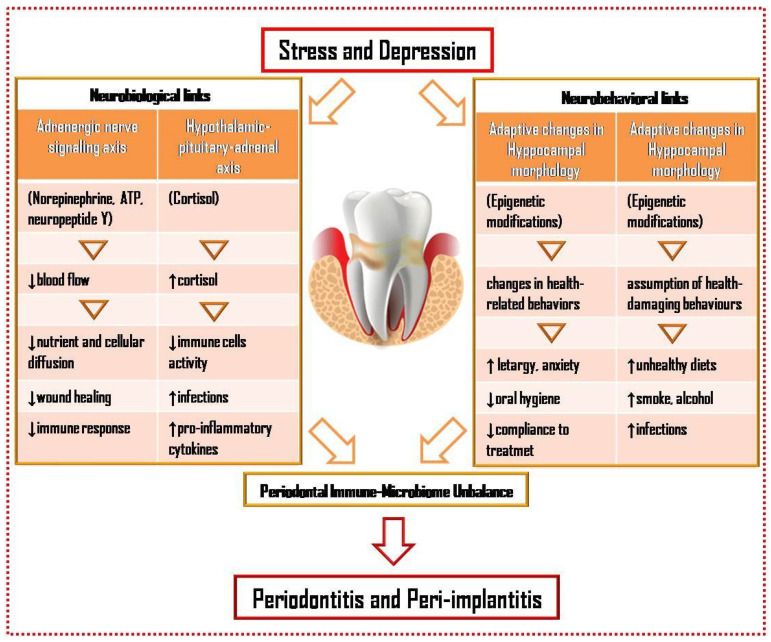
Besides the well-known systemic factors for periodontal and peri-implant diseases, additional co-factors, such as chronic stress and depression, may also affect disease onset and progression as well as treatment responsiveness. Neurobiological and neurobehavioral pathogenic links between chronic stress and depression, on the one side, and periodontitis and peri-implantitis, on the other side, which have been little investigated and principally related to necrotizing periodontal disease, have been reviewed, along with their putative interconnections with periodontal immune-microbiome balance. Rising evidence suggest that dysregulated neurobiological and neurobehavioral factors, as well as periodontal immune-microbiome unbalance, all related to chronic stress and depression, may crucially interact and thus represent contributing factors in the genesis and worsening not only of necrotizing periodontal lesions, but also of chronic periodontitis and peri-implantitis. Such potential interconnections may be even more relevant in recurrent and aggressive cases of periodontal and peri-implant disease, which are frequently refractory to therapy, and may, if corroborated, coherently pave the way for personalized prevention and treatment strategies, possibly targeting immune-microbiome unbalance and neurobehavioral factors and focusing on neurobiological ones, especially in chronically stressed and depressed subjects with periodontitis and peri-implantitis.
Keywords: chronic stress; depression; microbiome; peri-implantitis; periodontitis.
Conflict of interest statement
The authors declare no conflict of interest.
Figures
References
-
- American Psychiatric Association Diagnostic and statistical manual of mental disorders. BMC Med. 2013;17:133–137.
Publication types
LinkOut - more resources
Full Text Sources
