


The antibody crossmatch in liver transplantation
Abstract
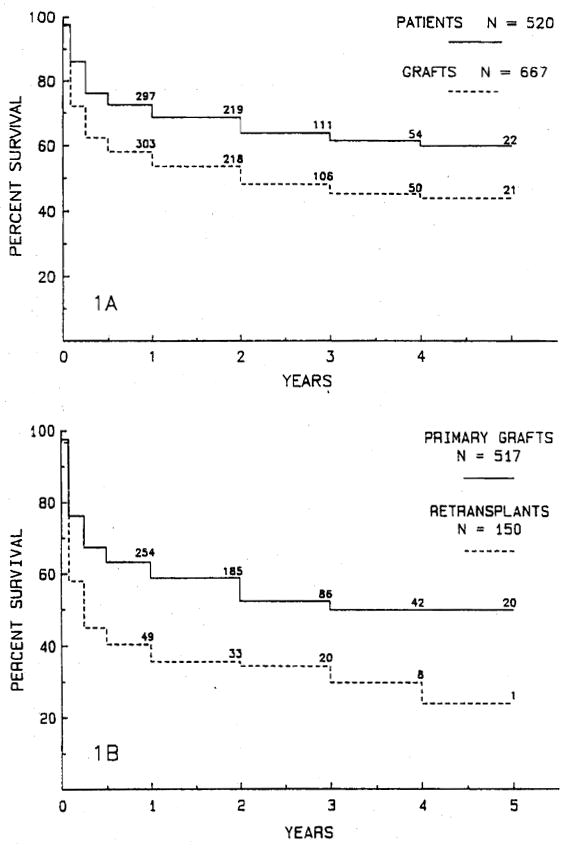
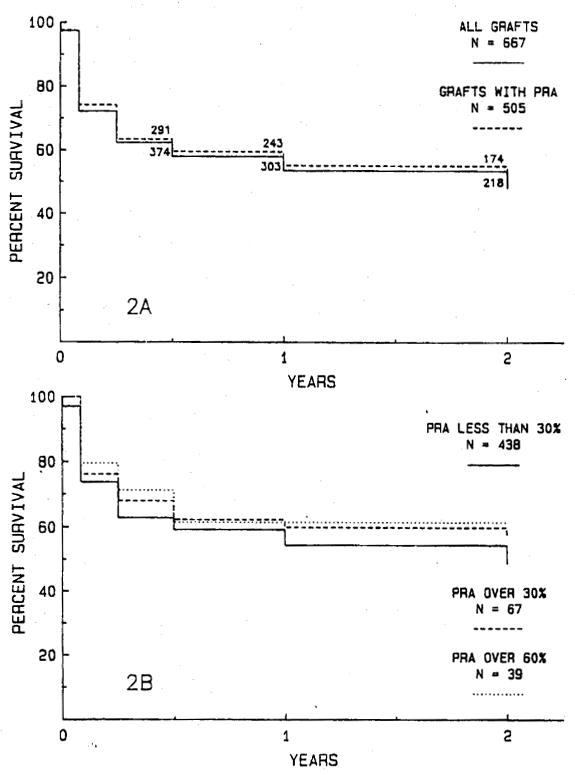
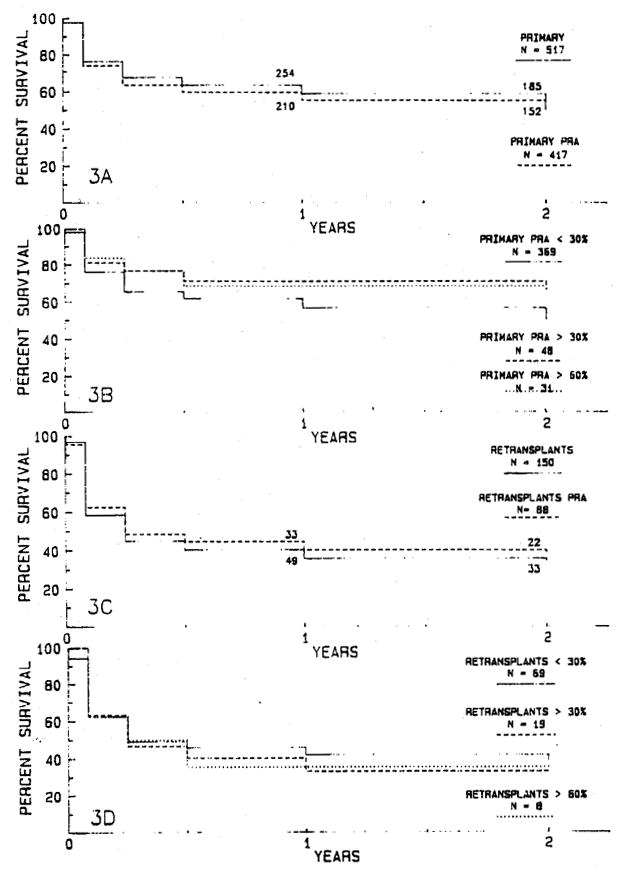
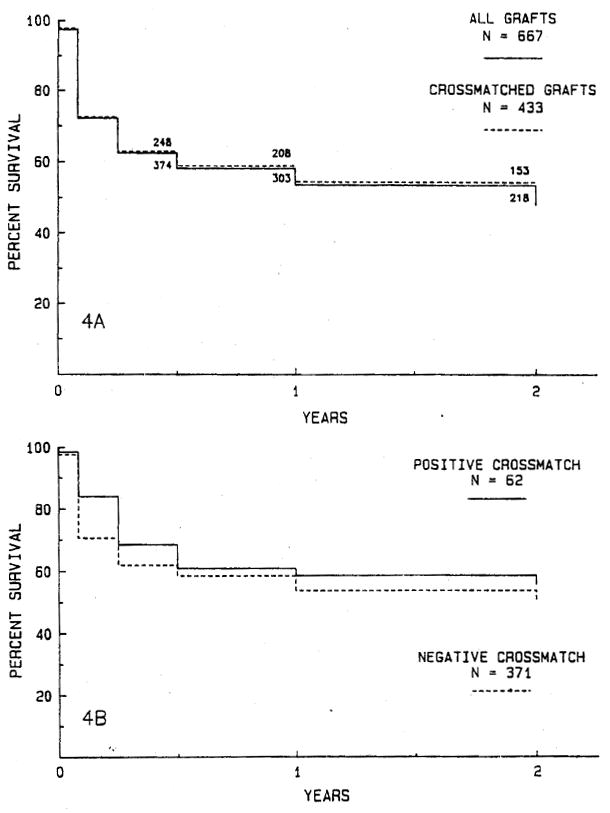
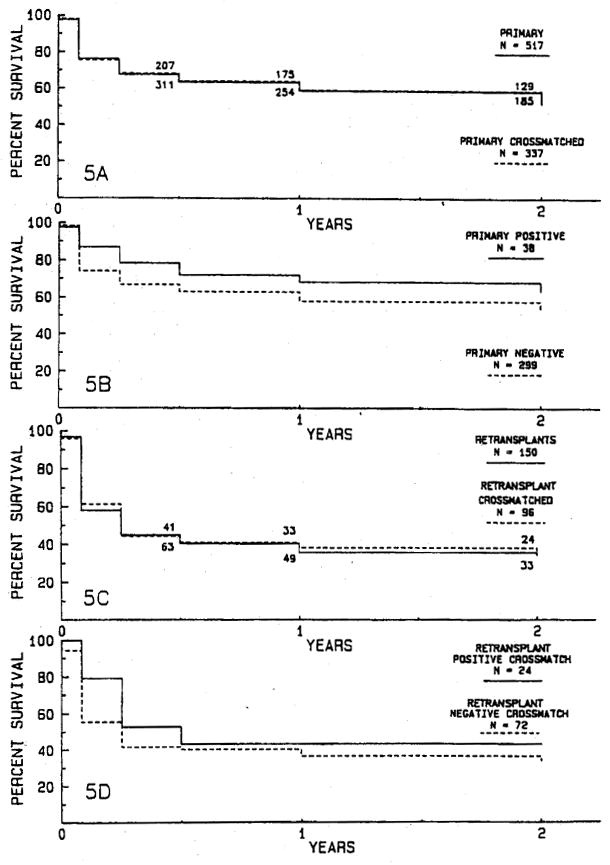
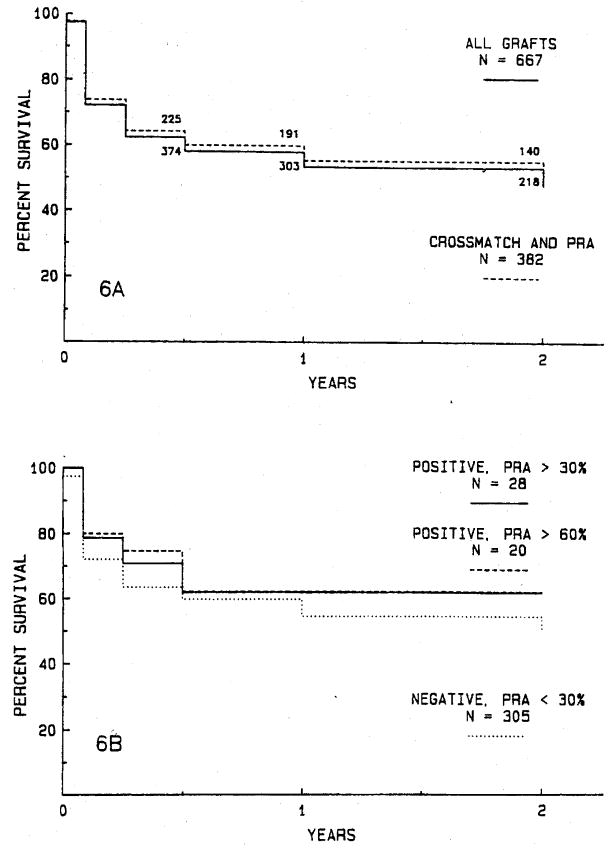
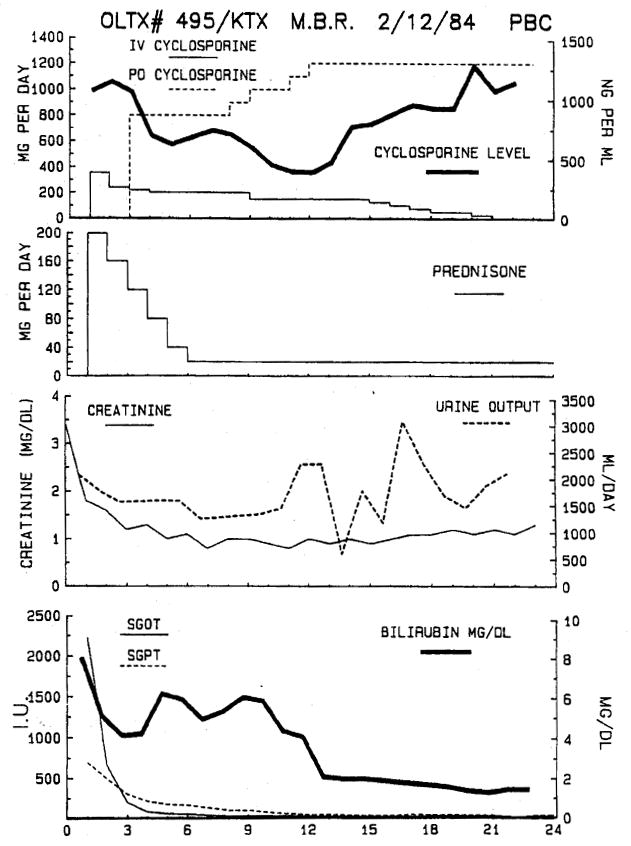
Six hundred sixty-seven first, second, and third orthotopic liver allografts in 520 patients were reviewed to determine the effect of recipient panel-reactive antibody (PRA) and donor-recipient antibody crossmatch on 2-year patient and liver allograft survival rates. Neither a high panel-reactive antibody nor a positive crossmatch for donor-specific preformed antibody was associated with decreased patient or liver allograft survival for primary grafts or retransplants. Two patients have been given kidney transplants immediately after a liver allograft from a donor with whom each patient had an initial strongly positive donor-specific antibody crossmatch. The liver apparently removed or neutralized circulating anti-donor antibody, since the renal allografts functioned promptly and did not experience hyperacute rejection.
Figures
References
-
- Terasaki PI, Marchioro TL, Starzl TE. Serotyping of human lymphocyte antigens: Preliminary trials on long term kidney homograft survivors. In: Russell PS, Winn HJ, Amos DB, editors. Histocompatibility testing. Washington D.C: National Academy of Science—National Research Council; 1965. pp. 83–96.
-
- Kissmeyer-Nielsen F, Olsen S, Peterson VP, Fjeldborg O. Hyperacute rejection of kidney allografts, associated with pre-existing humoral antibodies against donor cells. Lancet. 1966;2:662–5. - PubMed
-
- Patel R, Terasaki PI. Significance of the positive crossmatch test in kidney transplantation. New Engl J Med. 1969;14:735–9. - PubMed
-
- Ting A. The lymphocytotoxic crossmatch test of clinical renal transplantation. Transplantation. 1983;5:403–7. - PubMed
-
- Opelz G. Effect of HLA matching, blood tranfusions, and presensitization in cyclosporine-treated kidney transplant recipients. Transplant Proc. 1985;6:2179–83.
Publication types
MeSH terms
Substances
Grants and funding
LinkOut - more resources
Full Text Sources
Other Literature Sources
Medical
Research Materials