


Sex differences associate with late microbiome alterations after murine surgical sepsis
- PMID: 35324554
- PMCID: PMC9323556
- DOI: 10.1097/TA.0000000000003599
Sex differences associate with late microbiome alterations after murine surgical sepsis
Abstract
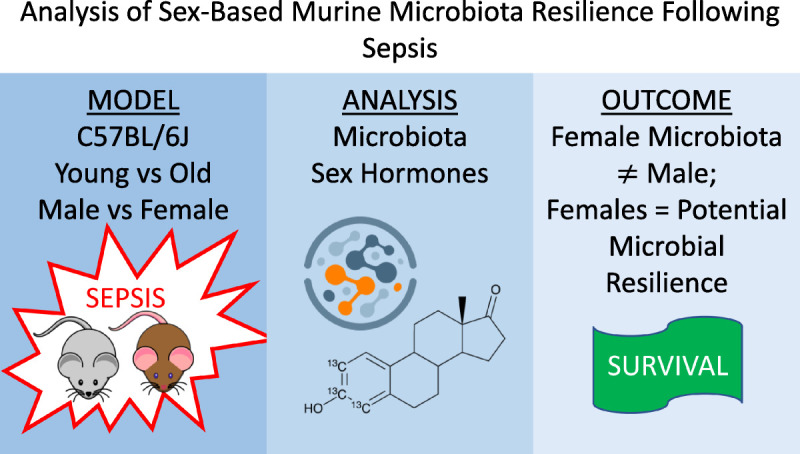
Background: Sepsis-induced gut microbiome alterations contribute to sepsis-related morbidity and mortality. Given evidence for improved postsepsis outcomes in females compared with males, we hypothesized that female mice maintain microbiota resilience versus males.
Methods: Mixed-sex C57BL/6 mice underwent cecal ligation and puncture (CLP) with antibiotics, saline resuscitation, and daily chronic stress and were compared with naive (nonsepsis/no antibiotics) controls. For this work, the results of young (3-5 months) and old (18-22 months) adult mice were analyzed by sex, independent and dependent of age. Mice were sacrificed at days 7 and 14, and 16S rRNA gene sequencing was performed on fecal bacterial DNA. α and β diversity were determined by Shannon index and Bray-Curtis with principal coordinate analysis, respectively. False discovery rate (FDR) correction was implemented to account for potential housing effect.
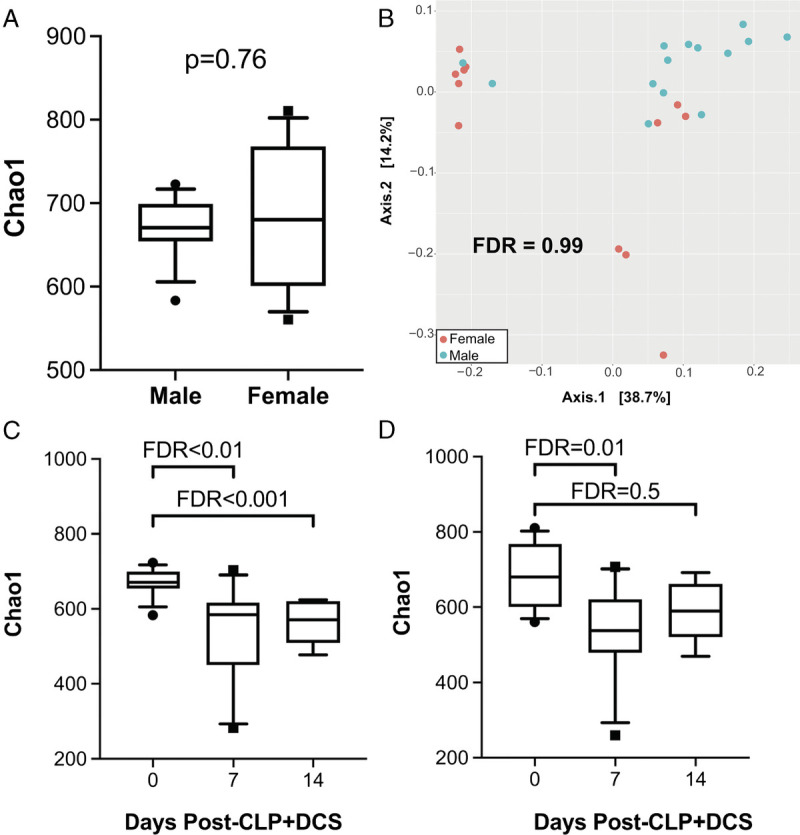
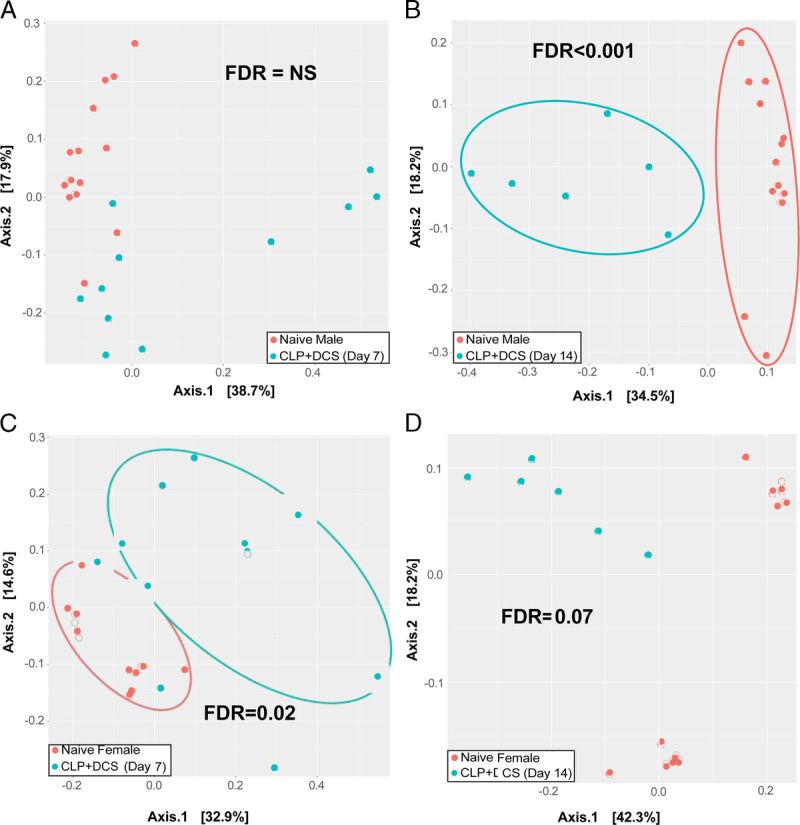
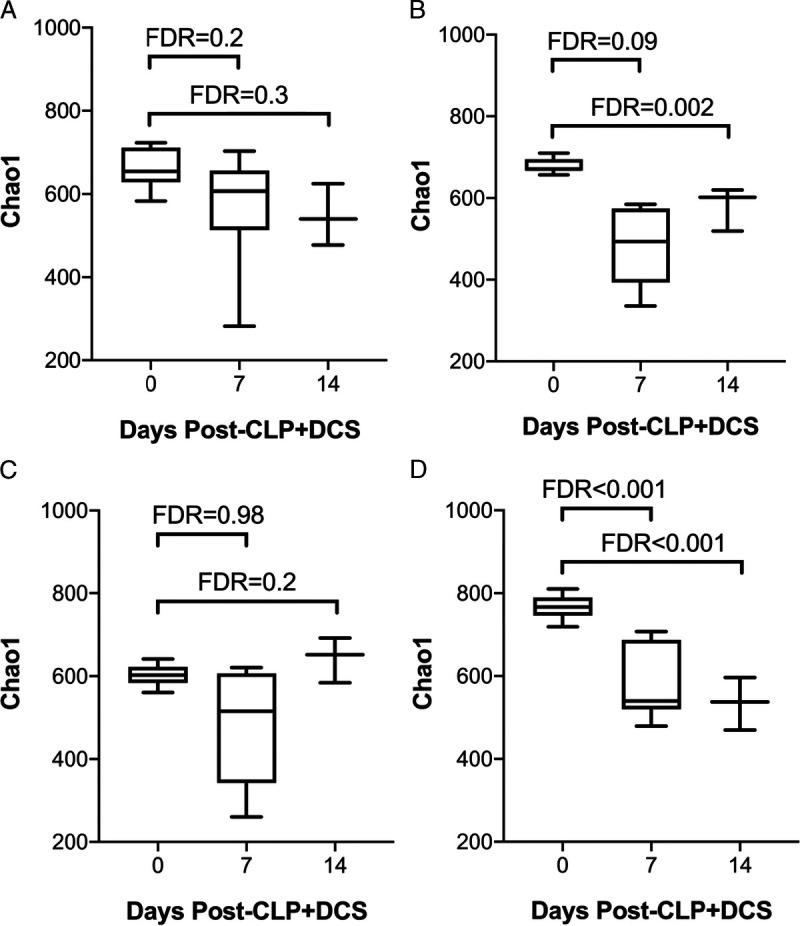
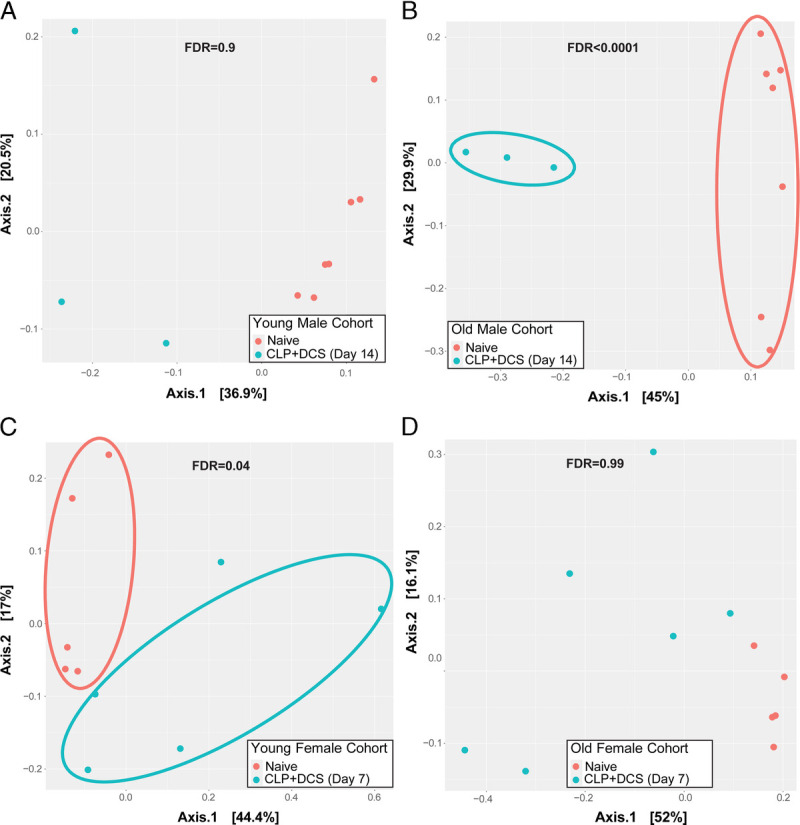
Results: In control mice, there was no difference in α or β diversity between male and female mice (FDR, 0.76 and 0.99, respectively). However, male mice that underwent CLP with daily chronic stress had a decrease in microbiota α diversity at 7 days post-CLP (Shannon FDR, 0.005), which was sustained at 14 days post-CLP (Shannon FDR, 0.001), compared with baseline. In addition, male mice maintained differences in β diversity even at day 14 compared with controls (FDR, <0.0001). In contrast, female mice had a decreased microbiota α diversity (Shannon FDR, 0.03) and β diversity (FDR, 0.02) 7 days post-CLP but recovered their α and β diversity by post-CLP day 14 (Shannon FDR, 0.5, and FDR, 0.02, respectively). Further analysis of females revealed that only young female mice were not different (β diversity) post-CLP day 14 to controls.
Conclusion: Although sepsis-induced perturbations of the intestinal microbiota occur initially in both male and female C57BL/6 mice, females demonstrate different microbiota by day 14. This may be seen primarily in younger females. This difference in recovery may play a role in outcome differences between sexes after sepsis.
Copyright © 2022 The Author(s). Published by Wolters Kluwer Health, Inc. on behalf of the American Association for the Surgery of Trauma.
Figures
References
-
- Gaieski DF, Edwards JM, Kallan MJ, Carr BG. Benchmarking the incidence and mortality of severe sepsis in the United States. Crit Care Med. 2013;41(5):1167–1174. - PubMed
-
- World Health Organization . Editor improving the prevention, diagnosis and clinical management of sepsis (WHA 70.7). Geneva, Switzerland: Seventieth World Health Assembly; 2017.
-
- Torio CM, Moore BJ. National Inpatient Hospital Costs: The Most Expensive Conditions by Payer, 2013: Statistical Brief #204. Healthcare Cost and Utilization Project (HCUP) Statistical Briefs [Internet]. Rockville, MD: Agency for Healthcare Research and Quality (US); 2016. - PubMed
Publication types
MeSH terms
Substances
Grants and funding
LinkOut - more resources
Full Text Sources
Medical
Miscellaneous
