


Relationship between Vitamin C Deficiency and Cognitive Impairment in Older Hospitalised Patients: A Cross-Sectional Study
- PMID: 35326113
- PMCID: PMC8944675
- DOI: 10.3390/antiox11030463
Relationship between Vitamin C Deficiency and Cognitive Impairment in Older Hospitalised Patients: A Cross-Sectional Study
Abstract
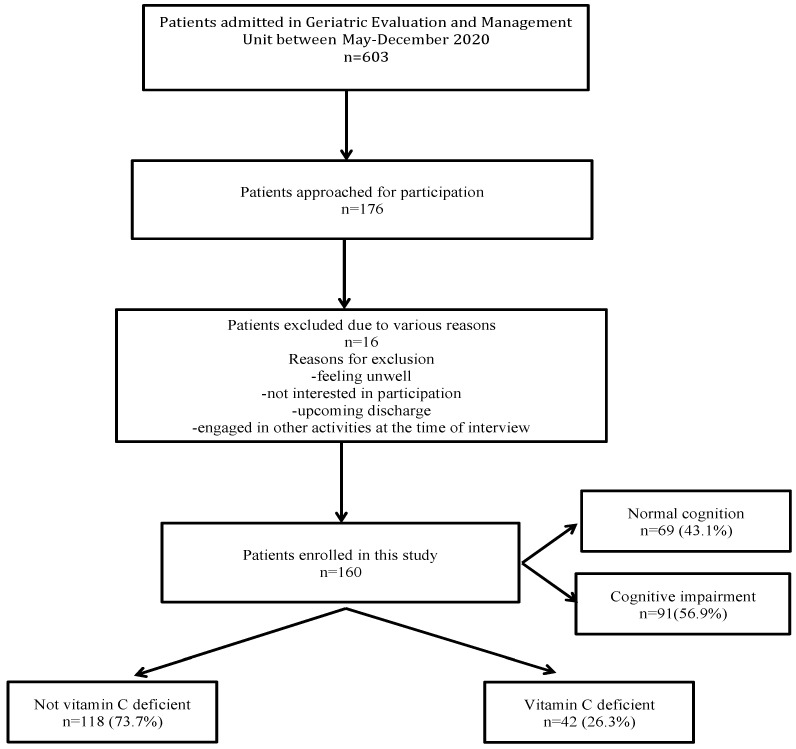
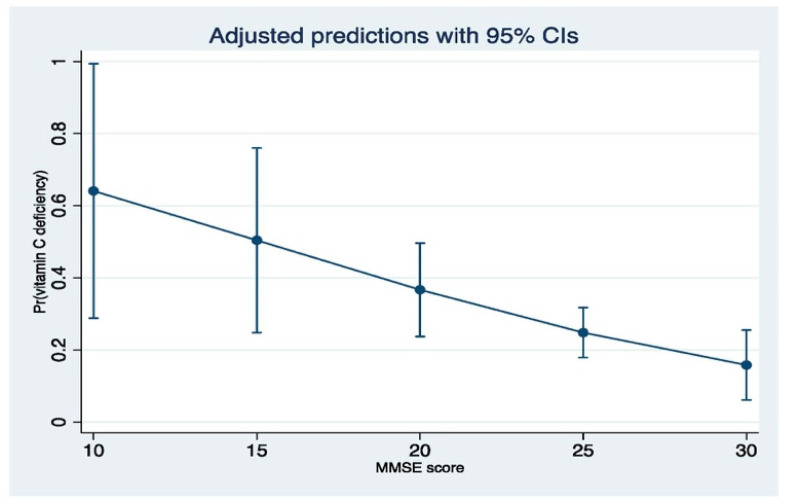
Vitamin C is a powerful antioxidant and facilitates neurotransmission. This study explored association between vitamin C deficiency and cognitive impairment in older hospitalised patients. This prospective study recruited 160 patients ≥ 75 years admitted under a Geriatric Unit in Australia. Cognitive assessment was performed by use of the Mini-Mental-State-Examination (MMSE) and patients with MMSE scores <24 were classified as cognitively-impaired. Fasting plasma vitamin C levels were determined using high-performance-liquid-chromatography. Patients were classified as vitamin C deficient if their levels were below 11 micromol/L. Logistic regression analysis was used to determine whether vitamin C deficiency was associated with cognitive impairment after adjustment for various covariates. The mean (SD) age was 84.4 (6.4) years and 60% were females. A total of 91 (56.9%) were found to have cognitive impairment, while 42 (26.3%) were found to be vitamin C deficient. The mean (SD) MMSE scores were significantly lower among patients who were vitamin C deficient (24.9 (3.3) vs. 23.6 (3.4), p-value = 0.03). Logistic regression analysis suggested that vitamin C deficiency was 2.9-fold more likely to be associated with cognitive impairment after adjustment for covariates (aOR 2.93, 95% CI 1.05−8.19, p-value = 0.031). Vitamin C deficiency is common and is associated with cognitive impairment in older hospitalised patients.
Keywords: clock drawing test; cognitive impairment; geriatric patients; mini mental state examination; older hospitalised patients; vitamin C deficiency.
Conflict of interest statement
The authors declare no conflict of interest.
Figures
References
-
- McCall S.J., Clark A.B., Luben R.N., Wareham N.J., Khaw K.T., Myint P.K. Plasma Vitamin C Levels: Risk Factors for Deficiency and Association with Self-Reported Functional Health in the European Prospective Investigation into Cancer-Norfolk. Nutrients. 2019;11:1552. doi: 10.3390/nu11071552. - DOI - PMC - PubMed
-
- Kallner A. Influence of vitamin C status on the urinary excretion of catecholamines in stress. Hum. Nutr. Clin. Nutr. 1983;37:405–411. - PubMed
LinkOut - more resources
Full Text Sources
