


Outpatient Oral Neuropathic Pain Management with Photobiomodulation Therapy: A Prospective Analgesic Pharmacotherapy-Paralleled Feasibility Trial
- PMID: 35326183
- PMCID: PMC8944471
- DOI: 10.3390/antiox11030533
Outpatient Oral Neuropathic Pain Management with Photobiomodulation Therapy: A Prospective Analgesic Pharmacotherapy-Paralleled Feasibility Trial
Abstract
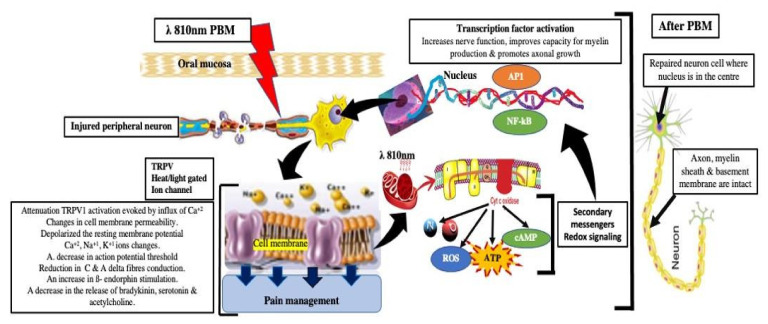
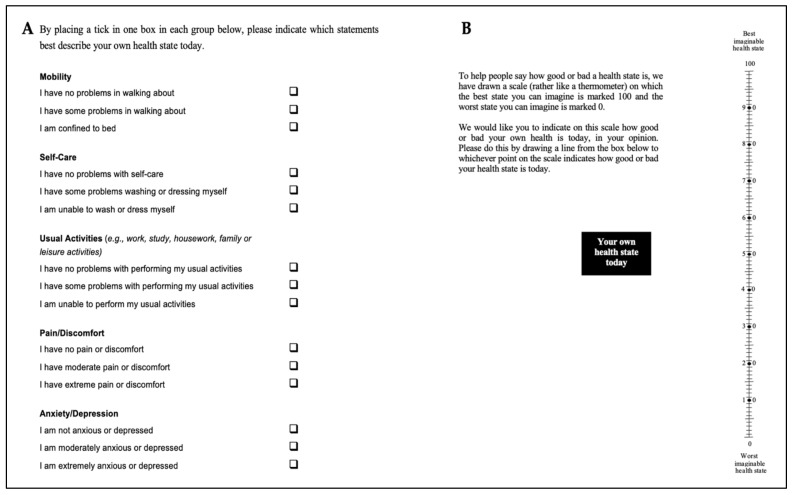
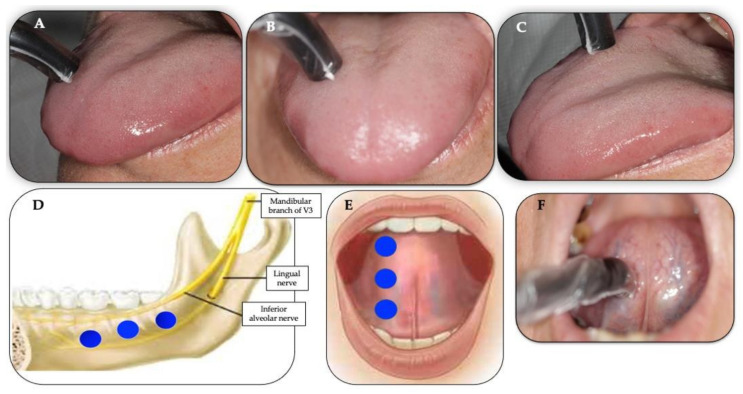
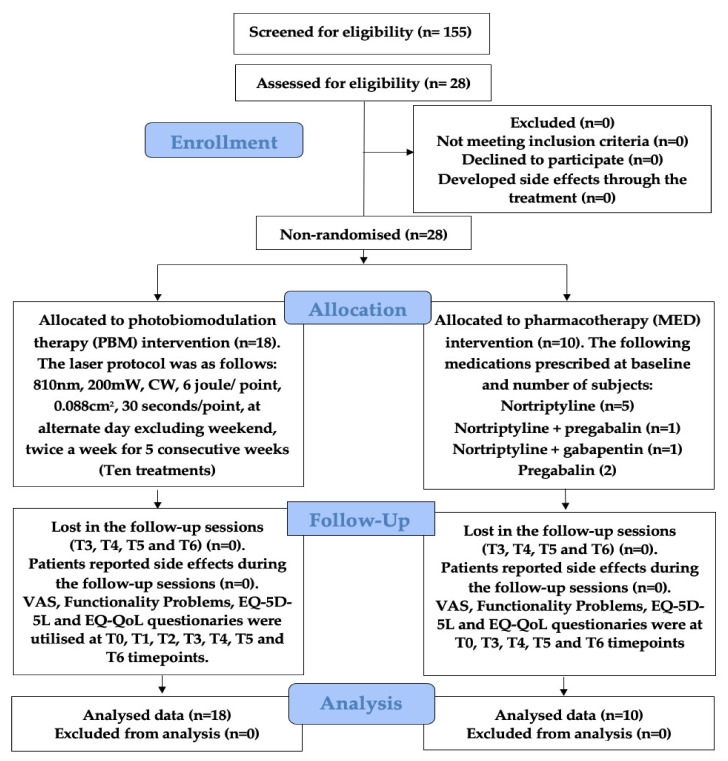
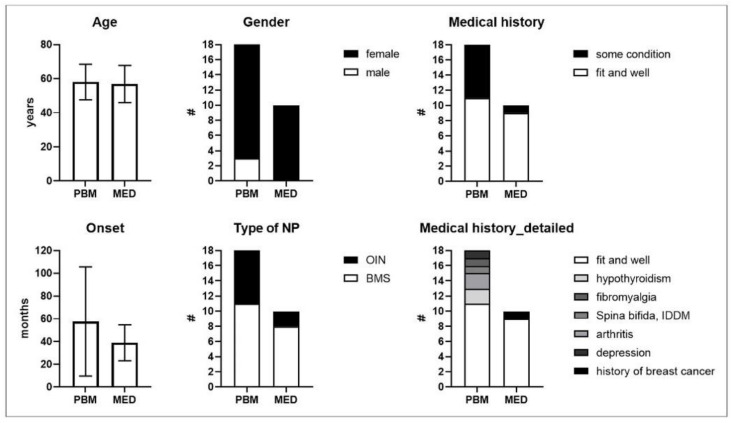
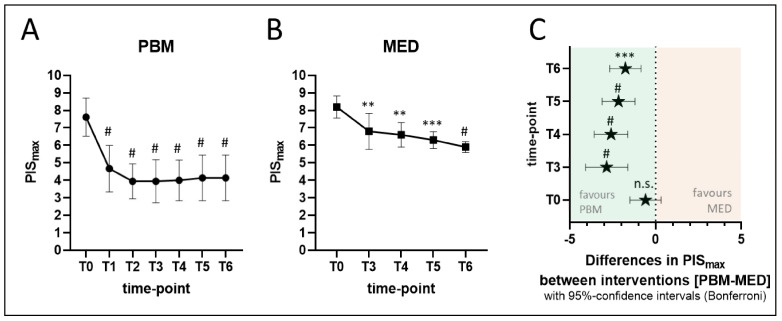
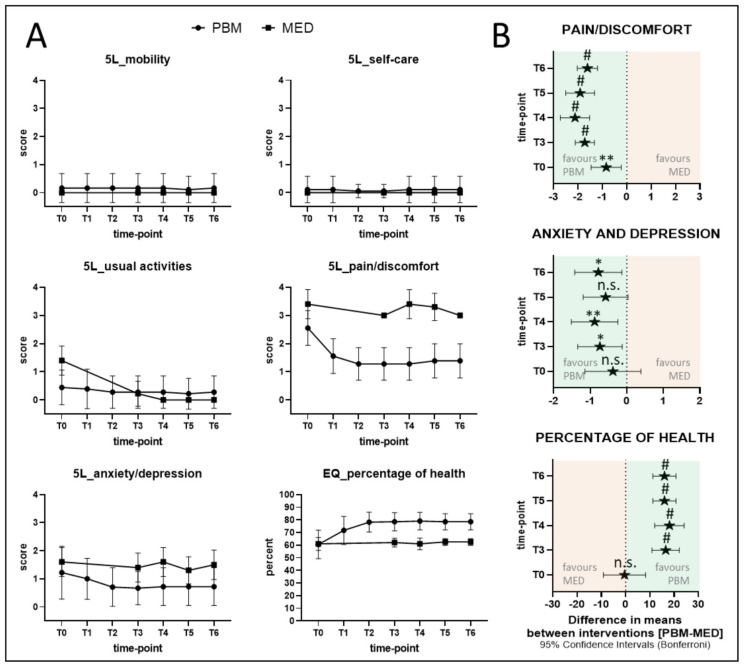
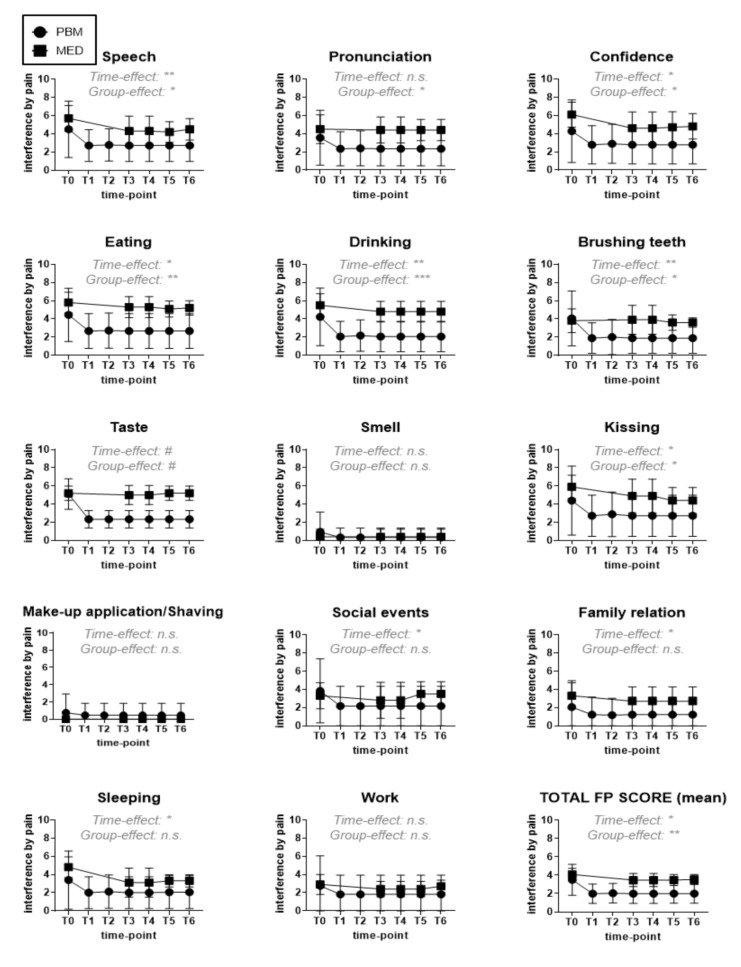
Neuropathic pain (NP) can be challenging to treat effectively as analgesic pharmacotherapy (MED) can reduce pain, but the majority of patients do not experience complete pain relief. Our pilot approach is to assess the feasibility and efficacy of an evidence-based photobiomodulation (PBM) intervention protocol. This would be as an alternative to paralleled standard analgesic MED for modulating NP intensity-related physical function and quality of life (QoL) prospectively in a mixed neurological primary burning mouth syndrome and oral iatrogenic neuropathy study population (n = 28). The study group assignments and outcome evaluation strategy/location depended on the individual patient preferences and convenience rather than on randomisation. Our prospective parallel study aimed to evaluate the possible pre/post-benefit of PBM and to allow for a first qualitative comparison with MED, various patient-reported outcome measures (PROMs) based on Initiative on Methods, Measurement, and Pain Assessment in Clinical Trials (IMMPACT-II) were used for up to a nine-month follow-up period in both intervention groups (PBM and MED). The PBM protocol applied to the PBM group was as follows: λ810 nm, 200 mW, 0.088 cm2, 30 s/point, 9 trigger and affected points, twice a week for five consecutive weeks, whereas the MED protocol followed the National Institute of Clinical Excellence (NICE) guidelines. Our results showed that despite the severe and persistent nature of the symptoms of 57.50 ± 47.93 months at baseline in the PBM group, a notably rapid reduction in PISmax on VAS from 7.6 at baseline (T0) to 3.9 at one-month post-treatment (T3) could be achieved. On the other hand, mean PISmax was only reduced from 8.2 at baseline to 6.8 at T3 in the MED group. Our positive PBM findings furthermore support more patients' benefits in improving QoL and functional activities, which were considerably impaired by NP such as: eating, drinking and tasting, whereas the analgesic medication regimens did not. No adverse events were observed in both groups. To the best knowledge of the authors, our study is the first to investigate PBM efficacy as a monotherapy compared to the gold standard analgesic pharmacotherapy. Our positive data proves statistically significant improvements in patient self-reported NP, functionality, psychological profile and QoL at mid- and end-treatment, as well as throughout the follow-up time points (one, three, six and nine months) and sustained up to nine months in the PBM group, compared to the MED group. Our study, for the first time, proves the efficacy and safety of PBM as a potent analgesic in oral NP and as a valid alternative to the gold standard pharmacotherapy approach. Furthermore, we observed long-term pain relief and functional benefits that indicate that PBM modulates NP pathology in a pro-regenerative manner, presumably via antioxidant mechanisms.
Keywords: EQ-5D-5L; IMMPACT; PROMs; burning mouth syndrome; functional problems; neuropathic pain; oral iatrogenic neuropathy; pharmacotherapy; photobiomodulation therapy; psychological dysfunction; standard analgesic.
Conflict of interest statement
All the authors, including S.V.B. (senior project manager, bredent medical GmbH & Co. KG), J.C. (CEO, Thor Photomedicine Ltd.), P.B. (senior researcher at Thor Photomedicine Ltd.) have declared no conflict of interest.
Figures
References
-
- Bennett G.J. Neuropathic pain in the orofacial region: Clinical and research challenges. J. Orofac. Pain. 2004;18:281–286. - PubMed
-
- Bouhassira D., Attal N., Alchaar H., Boureau F., Brochet B., Bruxelle J., Cunin G., Fermanian J., Ginies P., Grun-Overdyking A., et al. Comparison of pain syndromes associated with nervous or somatic lesions and development of a new neuropathic pain diagnostic questionnaire (DN4) Pain. 2005;114:29–36. doi: 10.1016/j.pain.2004.12.010. - DOI - PubMed
LinkOut - more resources
Full Text Sources
Miscellaneous
