


A Novel Framework for the Optimization of Simultaneous ThermoBrachyTherapy
- PMID: 35326574
- PMCID: PMC8946271
- DOI: 10.3390/cancers14061425
A Novel Framework for the Optimization of Simultaneous ThermoBrachyTherapy
Abstract
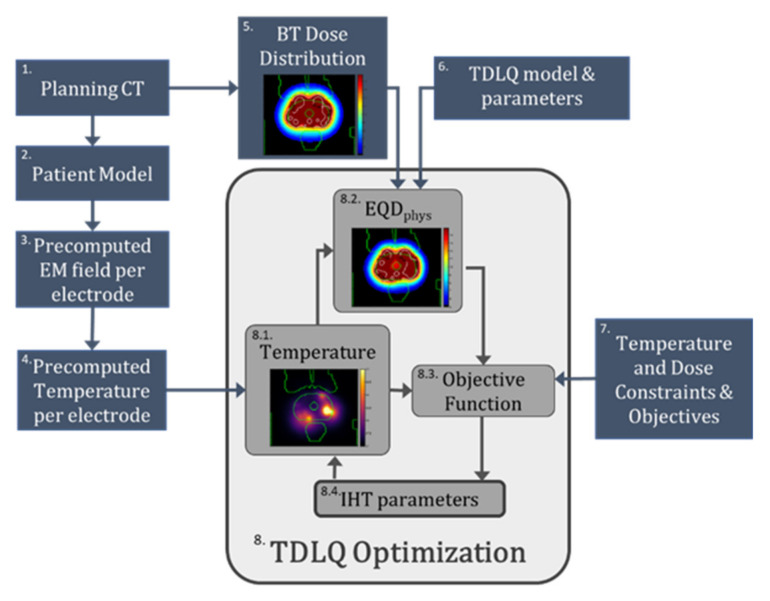
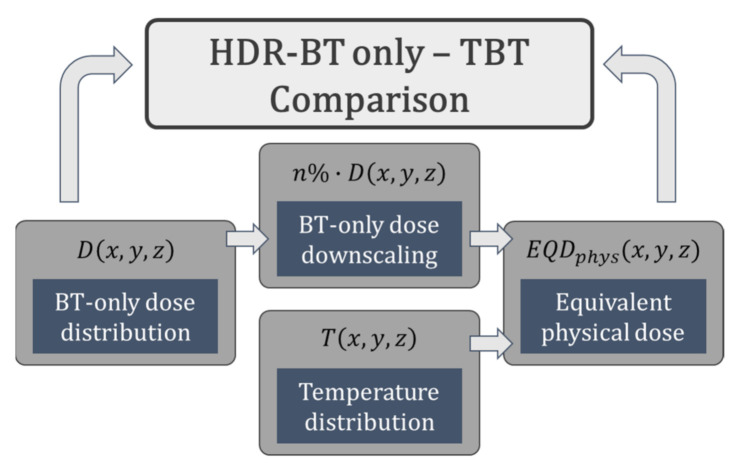
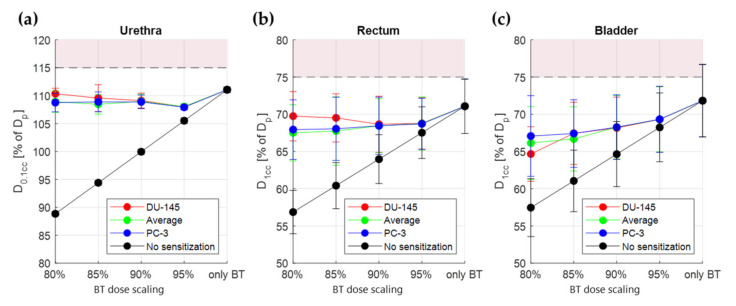
In high-dose-rate brachytherapy (HDR-BT) for prostate cancer treatment, interstitial hyperthermia (IHT) is applied to sensitize the tumor to the radiation (RT) dose, aiming at a more efficient treatment. Simultaneous application of HDR-BT and IHT is anticipated to provide maximum radiosensitization of the tumor. With this rationale, the ThermoBrachyTherapy applicators have been designed and developed, enabling simultaneous irradiation and heating. In this research, we present a method to optimize the three-dimensional temperature distribution for simultaneous HDR-BT and IHT based on the resulting equivalent physical dose (EQDphys) of the combined treatment. First, the temperature resulting from each electrode is precomputed. Then, for a given set of electrode settings and a precomputed radiation dose, the EQDphys is calculated based on the temperature-dependent linear-quadratic model. Finally, the optimum set of electrode settings is found through an optimization algorithm. The method is applied on implant geometries and anatomical data of 10 previously irradiated patients, using reported thermoradiobiological parameters and physical doses. We found that an equal equivalent dose coverage of the target can be achieved with a physical RT dose reduction of 20% together with a significantly lower EQDphys to the organs at risk (p-value < 0.001), even in the least favorable scenarios. As a result, simultaneous ThermoBrachyTherapy could lead to a relevant therapeutic benefit for patients with prostate cancer.
Keywords: biological modeling; brachytherapy; hyperthermia; induced; interstitial hyperthermia; linear quadratic model; prostate; prostatic neoplasms; thermoradiotherapy; treatment plan optimization.
Conflict of interest statement
The authors declare no conflict of interest. The funders had no role in the design of the study; in the collection, analyses, or interpretation of data; in the writing of the manuscript, or in the decision to publish the results.
Figures
References
-
- Miralbell R., Roberts S.A., Zubizarreta E., Hendry J.H. Dose-Fractionation Sensitivity of Prostate Cancer Deduced from Radiotherapy Outcomes of 5,969 Patients in Seven International Institutional Datasets: α/β = 1.4 (0.9–2.2) Gy. Int. J. Radiat. Oncol. Biol. Phys. 2012;82:e17–e24. doi: 10.1016/j.ijrobp.2010.10.075. - DOI - PubMed
-
- Gocho T., Hori M., Fukushima Y., Someya M., Kitagawa M., Hasegawa T., Tsuchiya T., Hareyama M., Takagi M., Hashimoto K. Evaluation of the Urethral α/β Ratio and Tissue Repair Half-Time for Iodine-125 Prostate Brachytherapy with or without Supplemental External Beam Radiotherapy. Brachytherapy. 2020;19:290–297. doi: 10.1016/j.brachy.2020.02.007. - DOI - PubMed
-
- Brand D.H., Brüningk S.C., Wilkins A., Fernandez K., Naismith O., Gao A., Syndikus I., Dearnaley D.P., Tree A.C., van As N. Estimates of Alpha/Beta (α/β) Ratios for Individual Late Rectal Toxicity Endpoints: An Analysis of the CHHiP Trial. Int. J. Radiat. Oncol. Biol. Phys. 2021;110:596–608. doi: 10.1016/j.ijrobp.2020.12.041. - DOI - PMC - PubMed
Grants and funding
LinkOut - more resources
Full Text Sources
Research Materials
