


Disruption of Colorectal Cancer Network by Polyphyllins Reveals Pivotal Entities with Implications for Chemoimmunotherapy
- PMID: 35327385
- PMCID: PMC8945690
- DOI: 10.3390/biomedicines10030583
Disruption of Colorectal Cancer Network by Polyphyllins Reveals Pivotal Entities with Implications for Chemoimmunotherapy
Abstract
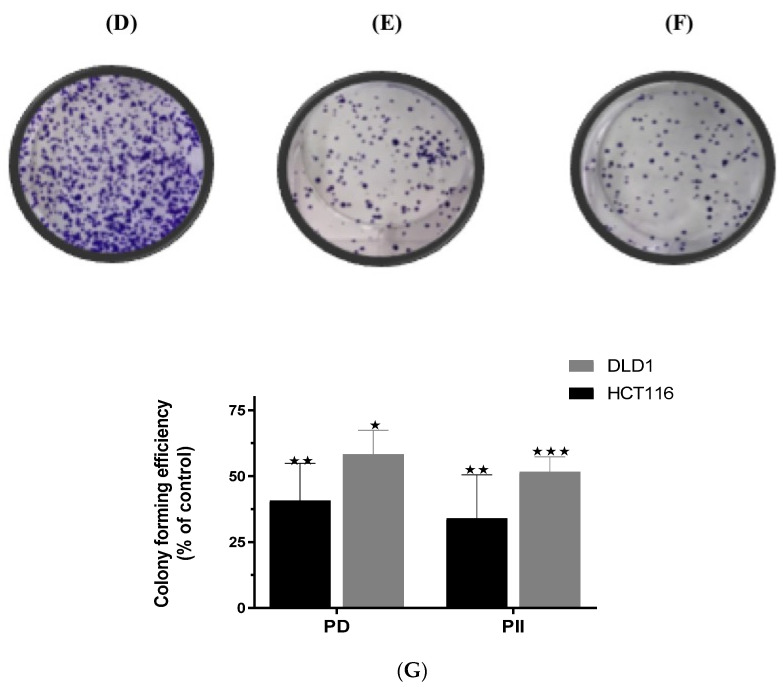
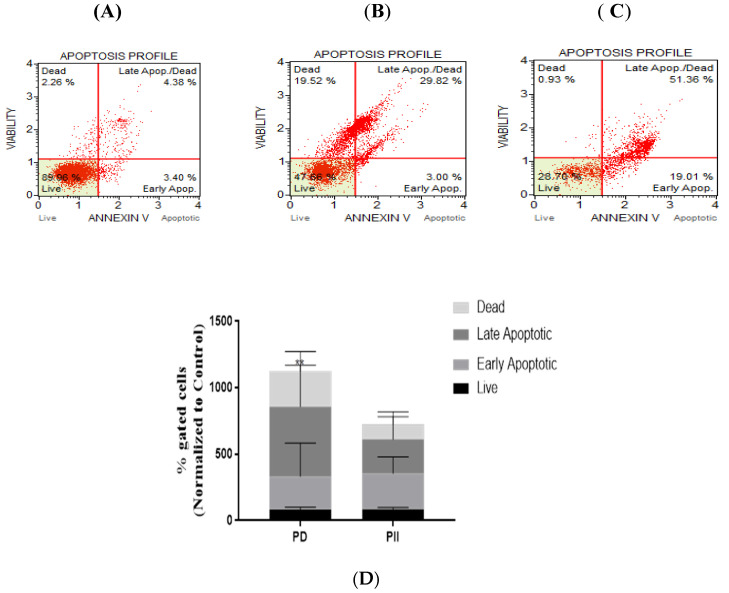
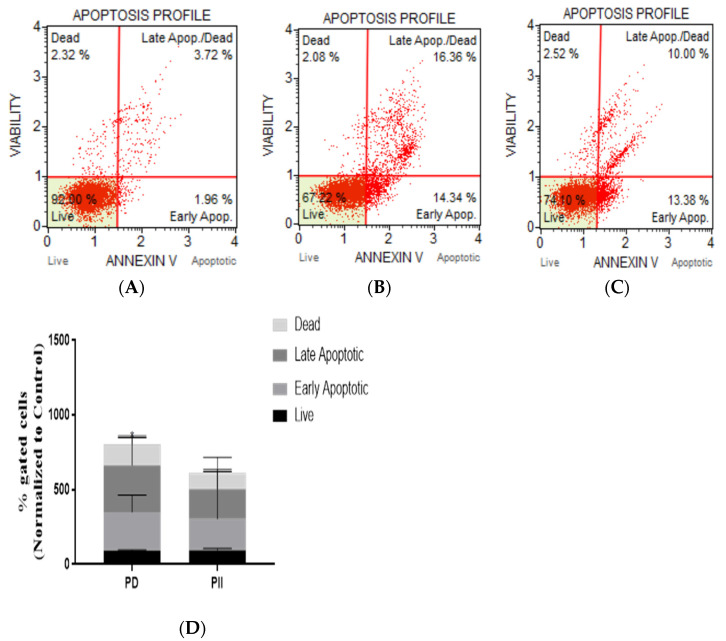
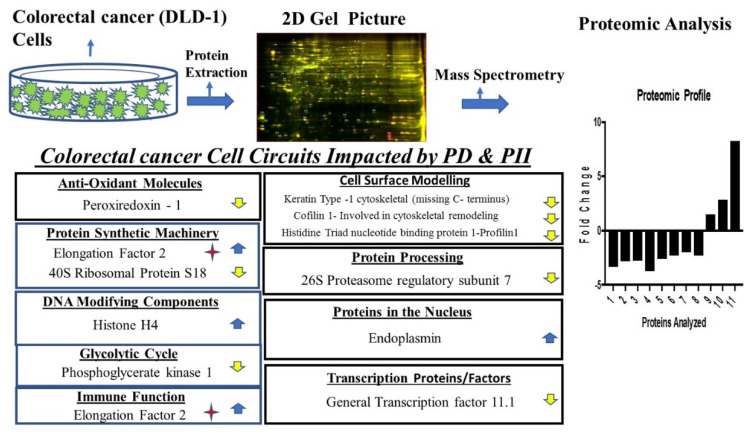
The prevalence of colorectal cancer has increased world-wide with high rates of mortality and morbidity. In the absence of efficacious drugs to treat this neoplasia, there is an imminent need to discover molecules with multifaceted effects. To this end, we opted to study the effect of steroidal saponins such as Polyphyllins. We performed anticancer activity studies with three analogs of Polyphyllins: Polyphyllin D (PD), Polyphyllin II (PII) and Polyphyllin G (PG). Here we show the potent effect of PD, PII (IC50 of 0.5-1 µM) and PG (IC50 of 3 µM) in inhibiting the viability of colorectal adenocarcinoma cells (DLD-1) and colorectal carcinoma cells (HCT116). PD and PII also showed inhibition of cell proliferation and sustained response upon withdrawal of the compounds when assessed by clonogenic assays in both the cell lines. Elucidation of the molecular mode of action revealed impact on the programmed cell death pathway. Additionally, proteomic profiling of DLD-1 revealed pivotal proteins differentially regulated by PD and PII, including a downregulated peroxiredoxin-1 which is considered as one of the novel targets to combat colorectal cancers and an upregulated elongation factor 2 (EF2), one of the key molecules considered as a tumor associated antigen (TAA) in colon cancer. Entities of cell metabolic pathways including downregulation of the key enzyme Phosphoglycerate kinase 1 of the glycolytic pathway was also observed. Importantly, the fold changes per se of the key components has led to the loss of viability of the colorectal cancer cells. We envision that the multifaceted function of PD and PII against the proliferation of colorectal carcinoma cells could have potential for novel treatments such as chemoimmunotherapy for colorectal adenocarcinomas. Future studies to develop these compounds as potent anti-colorectal cancer agents are warranted.
Keywords: DLD-1; HCT116; Polyphyllin D; Polyphyllin G; Polyphyllin II; apoptosis; proteomics.
Conflict of interest statement
The authors declare no conflict of interest.
Figures



References
-
- United States Cancer Incidence, Centers for Disease Control and Prevention. [(accessed on 31 January 2022)]; Available online: https://gis.cdc.gov/Cancer/USCS/DataViz.html.
-
- Ayanian J.Z., Zaslavsky A.M., Fuchs C.S., Guadagnoli E., Creech C.M., Cress R.D., O’Connor L.C., West D.W., Allen M.E., Wolf R.E., et al. Use of adjuvant chemotherapy and radiation therapy for colorectal cancer in a population-based cohort. J. Clin. Oncol. 2003;21:1293–1300. doi: 10.1200/JCO.2003.06.178. - DOI - PubMed
LinkOut - more resources
Full Text Sources
Miscellaneous
