


2022 Overview of Metabolic Epilepsies
- PMID: 35328062
- PMCID: PMC8952328
- DOI: 10.3390/genes13030508
2022 Overview of Metabolic Epilepsies
Abstract
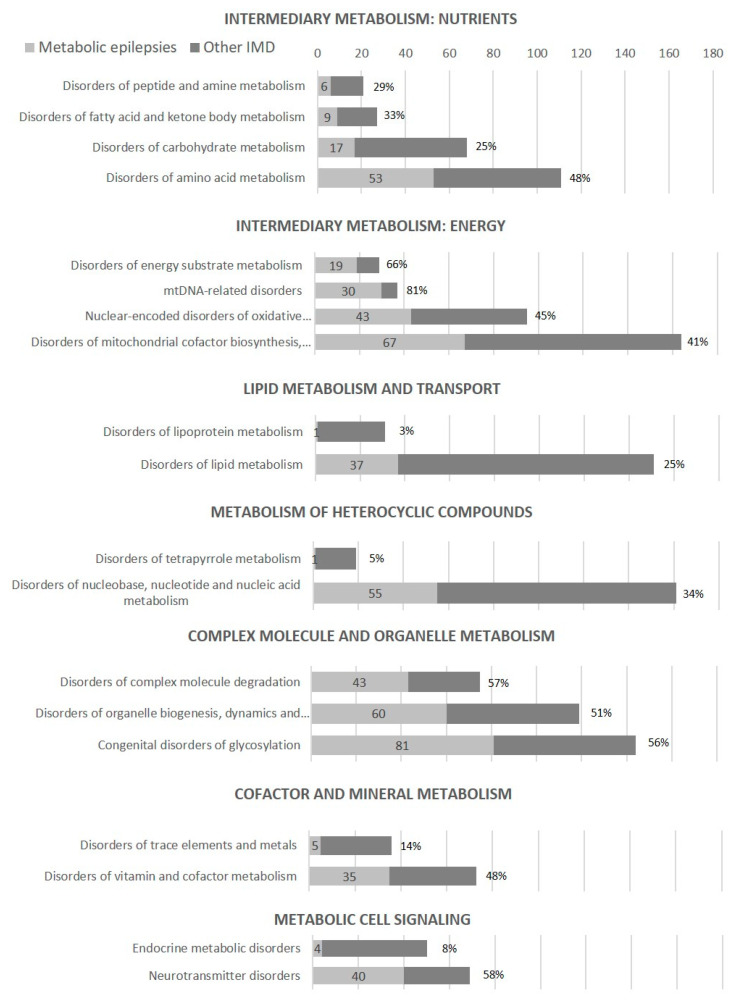
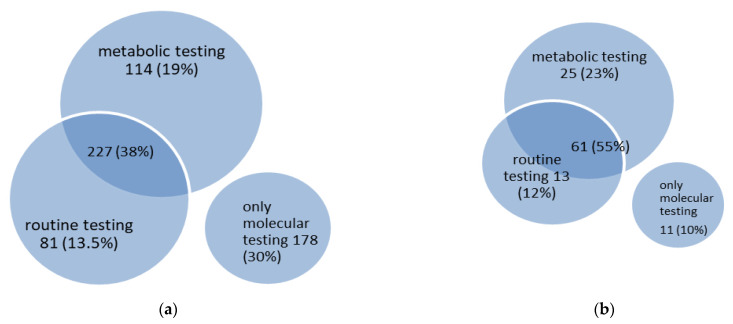
Understanding the genetic architecture of metabolic epilepsies is of paramount importance, both to current clinical practice and for the identification of further research directions. The main goals of our study were to identify the scope of metabolic epilepsies and to investigate their clinical presentation, diagnostic approaches and treatments. The International Classification of Inherited Metabolic Disorders and IEMbase were used as a basis for the identification and classification of metabolic epilepsies. Six hundred metabolic epilepsies have been identified, accounting for as much as 37% of all currently described inherited metabolic diseases (IMD). Epilepsy is a particularly common symptom in disorders of energy metabolism, congenital disorders of glycosylation, neurotransmitter disorders, disorders of the synaptic vesicle cycle and some other IMDs. Seizures in metabolic epilepsies may present variably, and most of these disorders are complex and multisystem. Abnormalities in routine laboratory tests and/or metabolic testing may be identified in 70% of all metabolic epilepsies, but in many cases they are non-specific. In total, 111 metabolic epilepsies (18% of all) have specific treatments that may significantly change health outcomes if diagnosed in time. Although metabolic epilepsies comprise an important and significant group of disorders, their real scope and frequency may have been underestimated.
Keywords: International Classification of Inherited Metabolic Disorders; congenital disorders of autophagy; diagnostics; disorders of metabolite repair or proofreading; disorders of the synaptic vesicle cycle; inherited metabolic diseases; specific treatments.
Conflict of interest statement
The authors declare no conflict of interest.
Figures
References
-
- Scheffer I.E., Berkovic S., Capovilla G., Connolly M.B., French J., Guilhoto L., Hirsch E., Jain S., Mathern G.W., Moshé S.L., et al. ILAE classification of the epilepsies: Position paper of the ILAE Commission for Classification and Terminology. Epilepsia. 2017;58:512–521. doi: 10.1111/epi.13709. - DOI - PMC - PubMed
Publication types
MeSH terms
LinkOut - more resources
Full Text Sources
Medical
