


Molecular Approaches in Fetal Malformations, Dynamic Anomalies and Soft Markers: Diagnostic Rates and Challenges-Systematic Review of the Literature and Meta-Analysis
- PMID: 35328129
- PMCID: PMC8947110
- DOI: 10.3390/diagnostics12030575
Molecular Approaches in Fetal Malformations, Dynamic Anomalies and Soft Markers: Diagnostic Rates and Challenges-Systematic Review of the Literature and Meta-Analysis
Abstract
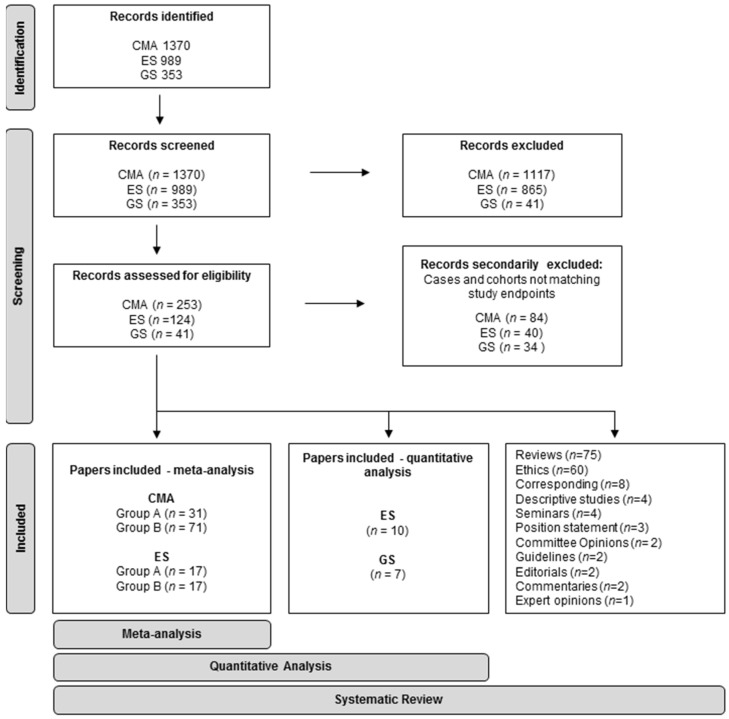
Fetal malformations occur in 2-3% of pregnancies. They require invasive procedures for cytogenetics and molecular testing. "Structural anomalies" include non-transient anatomic alterations. "Soft markers" are often transient minor ultrasound findings. Anomalies not fitting these definitions are categorized as "dynamic". This meta-analysis aims to evaluate the diagnostic yield and the rates of variants of uncertain significance (VUSs) in fetuses undergoing molecular testing (chromosomal microarray (CMA), exome sequencing (ES), genome sequencing (WGS)) due to ultrasound findings. The CMA diagnostic yield was 2.15% in single soft markers (vs. 0.79% baseline risk), 3.44% in multiple soft markers, 3.66% in single structural anomalies and 8.57% in multiple structural anomalies. Rates for specific subcategories vary significantly. ES showed a diagnostic rate of 19.47%, reaching 27.47% in multiple structural anomalies. WGS data did not allow meta-analysis. In fetal structural anomalies, CMA is a first-tier test, but should be integrated with karyotype and parental segregations. In this class of fetuses, ES presents a very high incremental yield, with a significant VUSs burden, so we encourage its use in selected cases. Soft markers present heterogeneous CMA results from each other, some of them with risks comparable to structural anomalies, and would benefit from molecular analysis. The diagnostic rate of multiple soft markers poses a solid indication to CMA.
Keywords: chromosomal microarray; exome sequencing; fetal malformations; genetic counseling; genome sequencing; molecular approaches; prenatal diagnosis; soft markers; structural anomalies.
Conflict of interest statement
The authors declare no conflict of interest.
Figures
References
-
- Crane J.P., LeFevre M.L., Winborn R.C., Evans J.K., Ewigman B.G., Bain R.P., Frigoletto F.D., McNellis D. A randomized trial of prenatal ultrasonographic screening: Impact on the detection, management, and outcome of anomalous fetuses. ACOG Curr. J. Rev. 1995;8:15–16. doi: 10.1016/S0002-9378(94)70040-0. - DOI - PubMed
Publication types
LinkOut - more resources
Full Text Sources
