


Melatonin Signaling Pathways Implicated in Metabolic Processes in Human Granulosa Cells (KGN)
- PMID: 35328408
- PMCID: PMC8950389
- DOI: 10.3390/ijms23062988
Melatonin Signaling Pathways Implicated in Metabolic Processes in Human Granulosa Cells (KGN)
Abstract
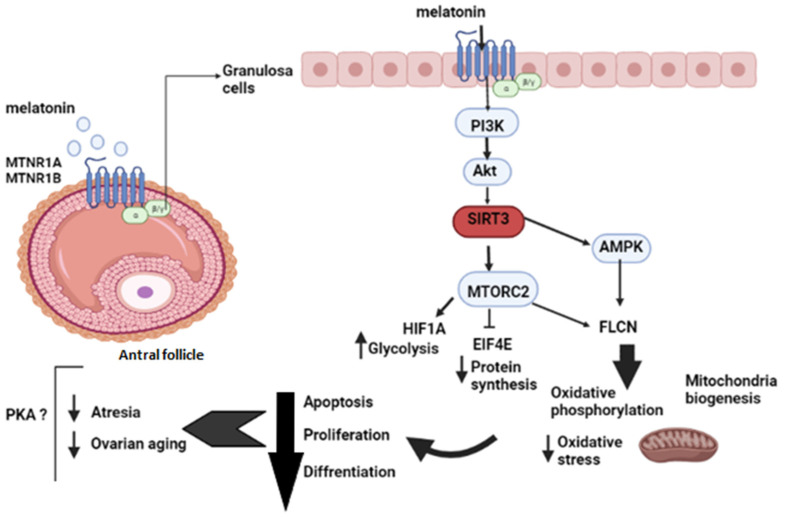
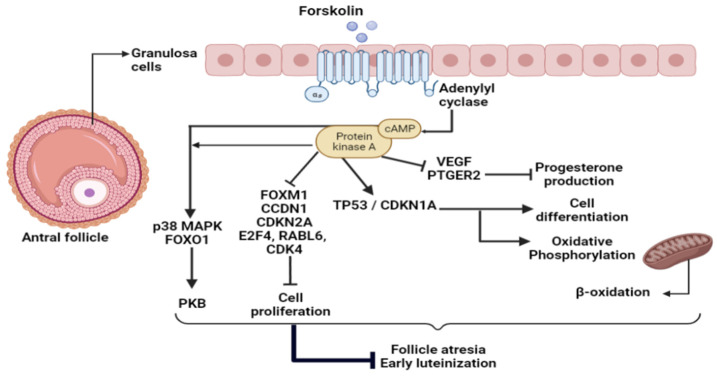
Female reproduction depends on the metabolic status, especially during the period of folliculogenesis. Even though it is believed that melatonin can improve oocyte competence, there is still limited knowledge of how it can modulate metabolic processes during folliculogenesis and which signaling pathways are involved in regulating gene expression. To investigate the effects of melatonin on metabolic signals during the antral stage of follicular development, human granulosa-like tumor cells (KGN) were treated with melatonin or forskolin, and gene expression was analyzed with RNA-seq technology. Following appropriate normalization and the application of a fold change cut-off of 1.5 (FC 1.5, p ≤ 0.05), 1009 and 922 genes were identified as differentially expressed in response to melatonin and forskolin, respectively. Analysis of major upstream regulators suggested that melatonin may activate PKB/mTOR signaling pathways to program the metabolism of KGN cells to support slower growth and differentiation and to prevent follicular atresia. Similarly, PKA activation through stimulation of cAMP synthesis with FSK seemed to exert the same effects as melatonin in reducing follicular growth and regulating differentiation. This study suggests that melatonin may act through PKA and PKB simultaneously in human granulosa cells to prevent follicular atresia and early luteinization at the antral stage.
Keywords: granulosa cells; melatonin; signaling pathways.
Conflict of interest statement
The authors declare no conflict of interest.
Figures
References
MeSH terms
Substances
Grants and funding
LinkOut - more resources
Full Text Sources
Molecular Biology Databases
Research Materials
Miscellaneous
