Review
. 2022 Mar 13;19(6):3392.
doi: 10.3390/ijerph19063392.

Update on Diagnosis and Management of Onychophagia and Onychotillomania

Affiliations
Review

Update on Diagnosis and Management of Onychophagia and Onychotillomania

Debra K Lee et al. Int J Environ Res Public Health. .

Abstract

Onychophagia (nail biting) and onychotillomania (nail picking) are chronic nail conditions categorized as body-focused repetitive behavior (BFRB) disorders. Due to a limited awareness of their clinical presentations, embarrassment on the part of patients, and/or comorbid psychiatric conditions, these conditions are frequently underrecognized and misdiagnosed. This article reviews the prevalence, etiology, diagnostic criteria, historical and physical exam findings, and treatment options for these conditions. The PubMed/MEDLINE database was searched for relevant articles. Onychophagia and onychotillomania are complex disorders necessitating a detailed patient history and physical examination and a multidisciplinary treatment approach for successful diagnosis and management. Due to the dearth of clinical trials for treatment of nail biting and nail picking, large clinical trials are necessary to establish standardized therapies.

Keywords: BFRB; body-focused repetitive behavior; nail biting; nail picking; onychophagia; onychotillomania.


Conflict of interest statement

The authors declare no conflict of interest.

Figures
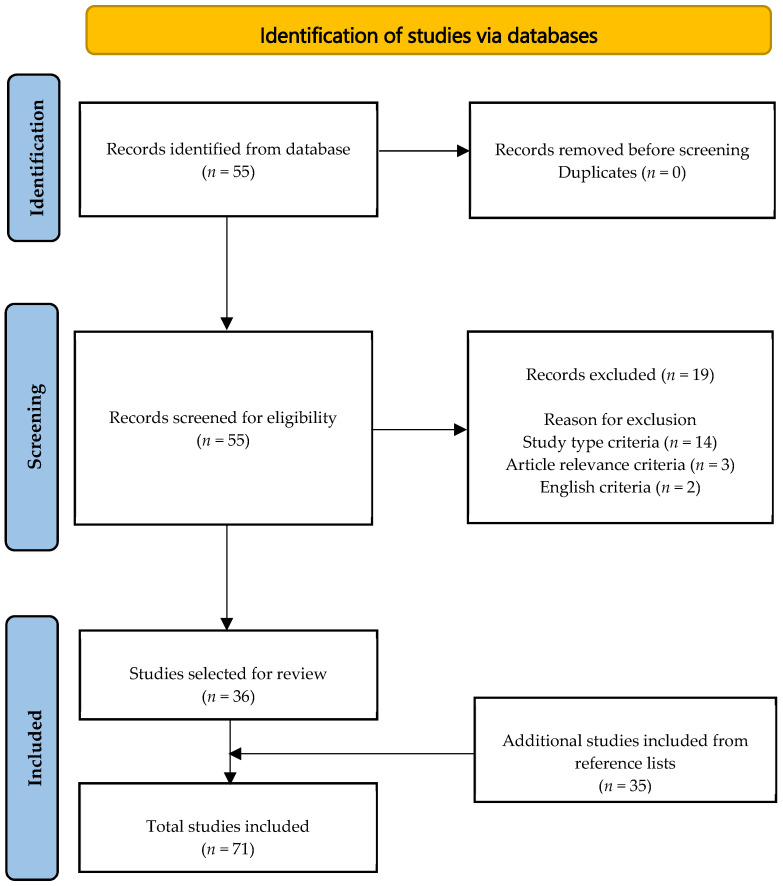
Figure 1
Figure 1
PRISMA flowchart for literature search.
Figure 2
Figure 2
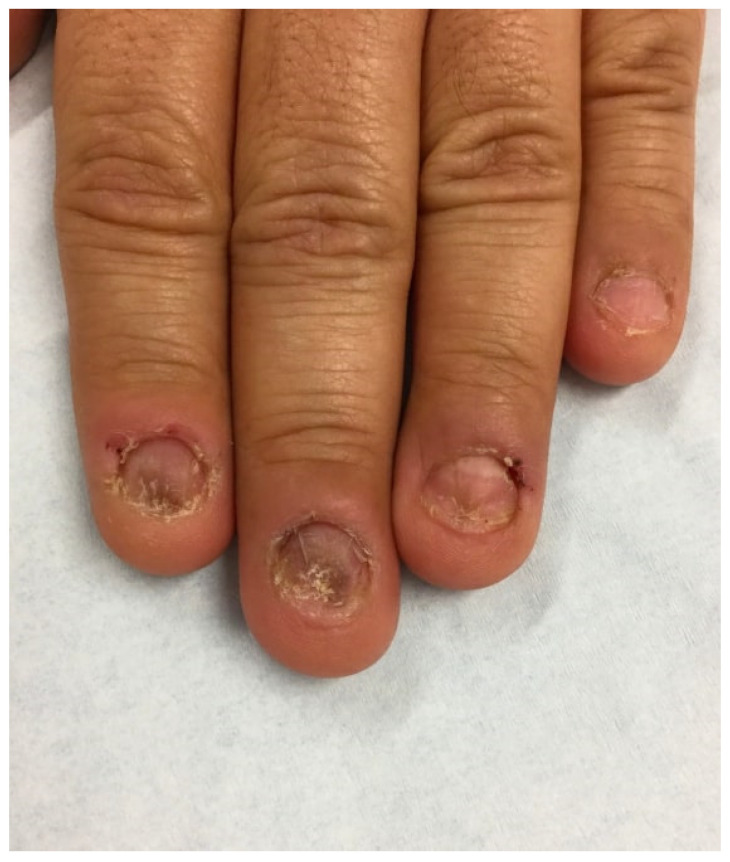
A 46-year-old nail biter with short, uneven nails and ragged cuticles. Nail folds are erythematous and in different stages of healing.
Figure 3
Figure 3
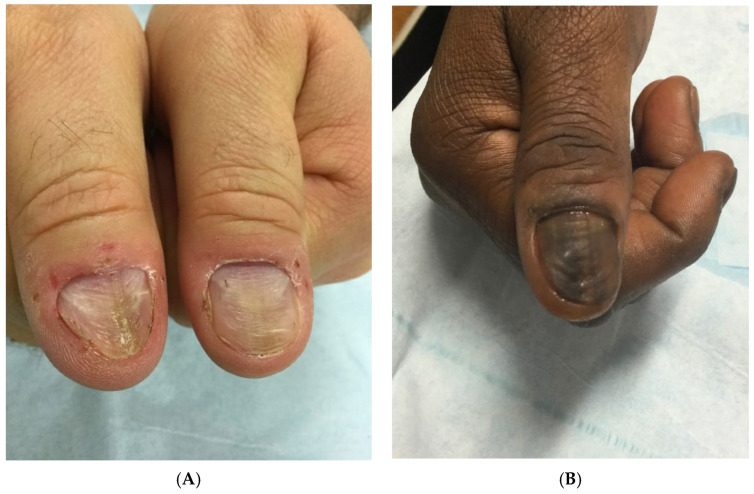
(A) A 58-year-old nail picker with habit tic deformity of the bilateral thumbnails. There are parallel transverse grooves in the nail plate. (B) A 54-year-old nail picker with transverse grooves in the nail plate (habit tic deformity) and longitudinal melanonychia from chronic nail picking.

References

    1. Halteh P., Scher R.K., Lipner S.R. Onychophagia: A nail-biting conundrum for physicians. J. Dermatol. Treat. 2017;28:166–172. doi: 10.1080/09546634.2016.1200711. - DOI - PubMed
    1. Pacan P., Grzesiak M., Reich A., Kantorska-Janiec M., Szepietowski J.C. Onychophagia and onychotillomania: Prevalence, clinical picture and comorbidities. Acta Derm. Venereol. 2014;94:67–71. doi: 10.2340/00015555-1616. - DOI - PubMed
    1. Lipner S.R., Scher R.K. Comment on “Psychocutaneous disease: Clinical perspectives”. J. Am. Acad. Dermatol. 2017;77:e141–e142. doi: 10.1016/j.jaad.2017.05.061. - DOI - PubMed
    1. Gupta M.A., Gupta A.K. Self-induced dermatoses: A great imitator. Clin. Dermatol. 2019;37:268–277. doi: 10.1016/j.clindermatol.2019.01.006. - DOI - PubMed
    1. Foster L.G. Nervous habits and stereotyped behaviors in preschool children. J. Am. Acad. Child Adolesc. Psychiatry. 1998;37:711–717. doi: 10.1097/00004583-199807000-00010. - DOI - PubMed

LinkOut - more resources