


In Vitro Evaluation of the Antibacterial Activity of EndoSeal MTA, iRoot SP, and AH Plus against Planktonic Bacteria
- PMID: 35329464
- PMCID: PMC8950277
- DOI: 10.3390/ma15062012
In Vitro Evaluation of the Antibacterial Activity of EndoSeal MTA, iRoot SP, and AH Plus against Planktonic Bacteria
Abstract
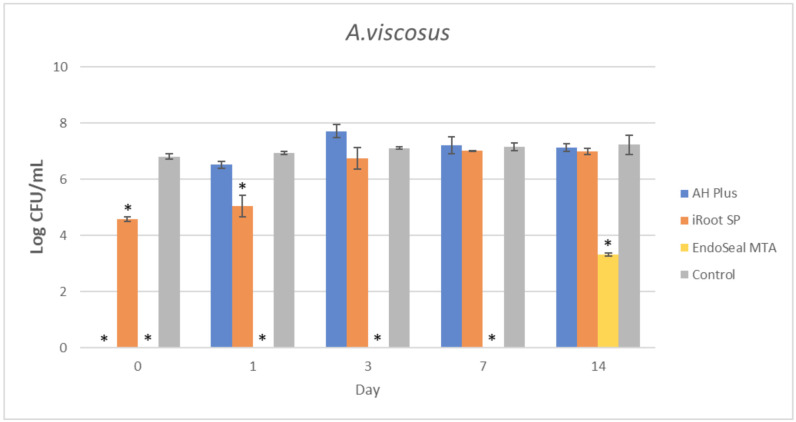
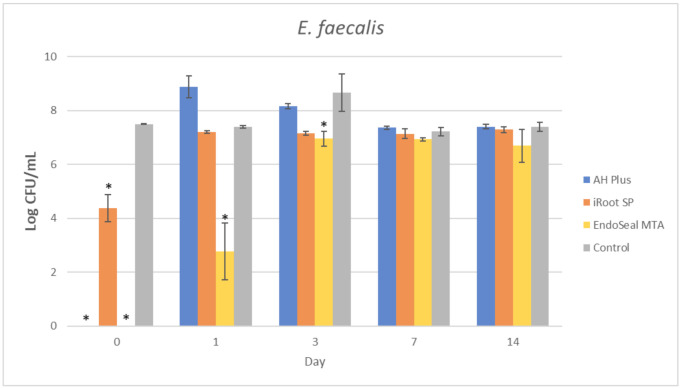
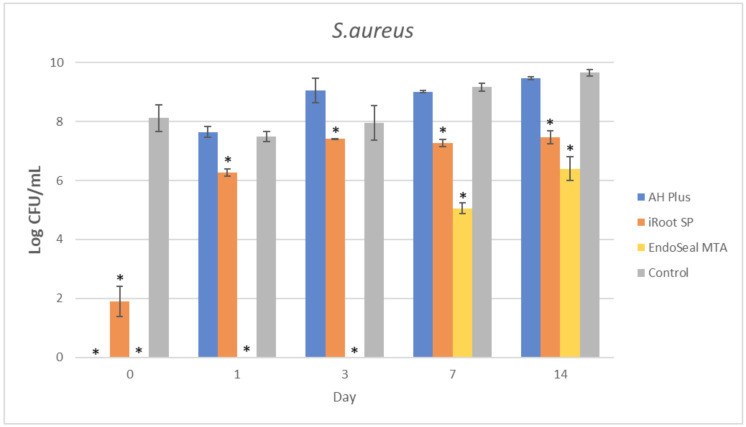
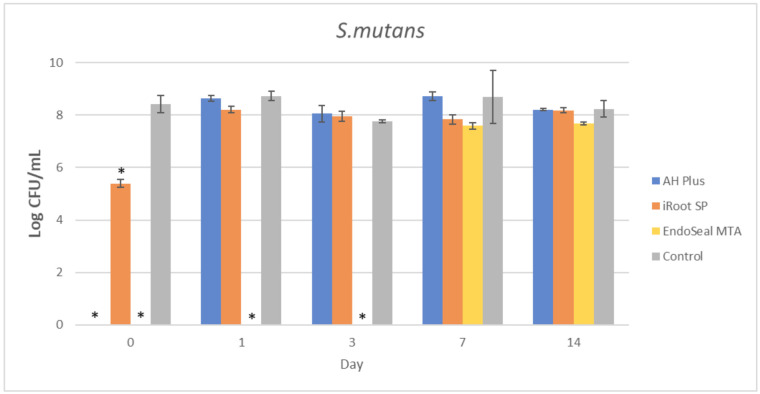
This study aimed to investigate the antibacterial activity of three endodontic sealers, AH Plus, iRoot SP, and EndoSeal MTA, against four planktonic bacteria species. The antibacterial activity of the three endodontic sealers was assessed using a modified direct contact test. Bacteria suspension of Actinomycoses viscosus, Enterococcus faecalis, Staphylococcus aureus, and Streptococcus mutans were left in contact with the sealers that were pre-set or set for 1, 3, 7, and l4 days for an hour. Freshly mixed AH Plus and EndoSeal MTA were highly effective against all four tested bacteria as no surviving bacteria were recovered after treatment. Meanwhile, freshly mixed iRoot SP was not able to kill all bacteria, regardless of the species, demonstrating a weak antibacterial effect. After 24 h, AH Plus lost its antibacterial activity. EndoSeal MTA showed a strong and extended bactericidal effect against S. aureus and S. mutans for 3 days and A. viscosus for 7 days. In conclusion, fresh AH Plus and EndoSeal MTA exhibited a potent effect against all four bacteria species. EndoSeal MTA remained effective after setting when tested against A. viscosus, S. aureus, and S. mutans. Among all tested sealers, iRoot SP demonstrates the weakest antibacterial activity.
Keywords: antibacterial; bacteria; endodontic sealer; modified direct contact test; planktonic.
Conflict of interest statement
The authors declare no conflict of interest.
Figures

References
-
- Singh H., Markan S., Kaur M., Gupta G., Singh H., Kaur M.S. Endodontic Sealers: Current Concepts and Comparative Analysis. Dent. Open J. 2015;2:32–37. doi: 10.17140/DOJ-2-107. - DOI
Grants and funding
LinkOut - more resources
Full Text Sources
Molecular Biology Databases
