


A Personalized Multidisciplinary Approach to Evaluating and Treating Autism Spectrum Disorder
- PMID: 35330464
- PMCID: PMC8949394
- DOI: 10.3390/jpm12030464
A Personalized Multidisciplinary Approach to Evaluating and Treating Autism Spectrum Disorder
Abstract
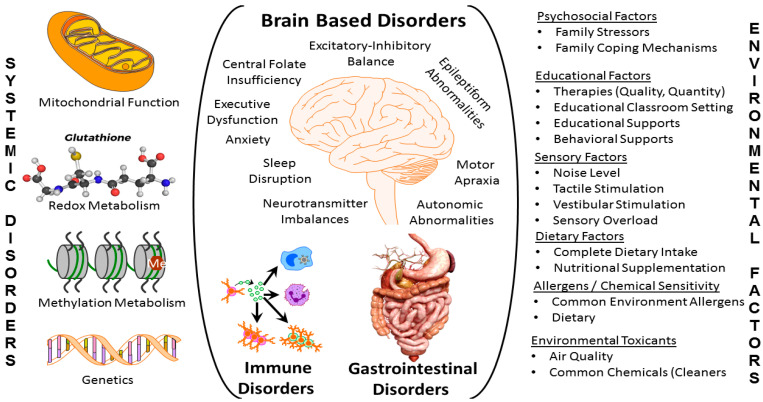
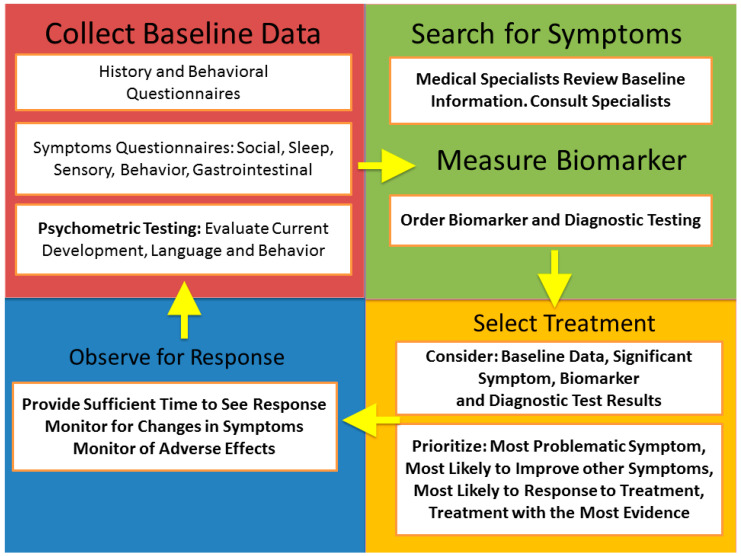
Autism Spectrum Disorder (ASD) is a complex neurodevelopmental disorder without a known cure. Current standard-of-care treatments focus on addressing core symptoms directly but have provided limited benefits. In many cases, individuals with ASD have abnormalities in multiple organs, including the brain, immune and gastrointestinal system, and multiple physiological systems including redox and metabolic systems. Additionally, multiple aspects of the environment can adversely affect children with ASD including the sensory environment, psychosocial stress, dietary limitations and exposures to allergens and toxicants. Although it is not clear whether these medical abnormalities and environmental factors are related to the etiology of ASD, there is evidence that many of these factors can modulate ASD symptoms, making them a potential treatment target for improving core and associated ASD-related symptoms and improving functional limitation. Additionally, addressing underlying biological disturbances that drive pathophysiology has the potential to be disease modifying. This article describes a systematic approach using clinical history and biomarkers to personalize medical treatment for children with ASD. This approach is medically comprehensive, making it attractive for a multidisciplinary approach. By concentrating on treatable conditions in ASD, it is possible to improve functional ability and quality of life, thus providing optimal outcomes.
Keywords: autism spectrum disorder; environment; multidisciplinary; optimal outcomes.
Conflict of interest statement
The author declares no conflict of interest.
Figures
References
-
- Rossignol D.A., Frye R.E. A review of research trends in physiological abnormalities in autism spectrum disorders: Immune dysregulation, inflammation, oxidative stress, mitochondrial dysfunction and environmental toxicant exposures. Mol. Psychiatry. 2012;17:389–401. doi: 10.1038/mp.2011.165. - DOI - PMC - PubMed
-
- Maenner M.J., Shaw K.A., Baio J., Washington A., Patrick M., DiRienzo M., Christensen D.L., Wiggins L.D., Pettygrove S., Andrews J.G., et al. Prevalence of Autism Spectrum Disorder among Children Aged 8 Years—Autism and Developmental Disabilities Monitoring Network, 11 Sites, United States, 2016. MMWR Surveill. Summ. 2020;69:1–12. doi: 10.15585/mmwr.ss6904a1. - DOI - PMC - PubMed
-
- Hyman S.L., Levy S.E., Myers S.M., Council on Children with Disabilities, Section on Developmental and Behavioral Pediatrics. Kuo D.Z., Apkon S., Davidson L.F., Ellerbeck K.A., Foster J.E.A., Noritz G.H. Identification, Evaluation, and Management of Children with Autism Spectrum Disorder. Pediatrics. 2020;145 doi: 10.1542/peds.2019-3447. - DOI - PubMed
Publication types
LinkOut - more resources
Full Text Sources
