


Risk of Dementia According to Surgery Type: A Nationwide Cohort Study
- PMID: 35330467
- PMCID: PMC8955036
- DOI: 10.3390/jpm12030468
Risk of Dementia According to Surgery Type: A Nationwide Cohort Study
Abstract
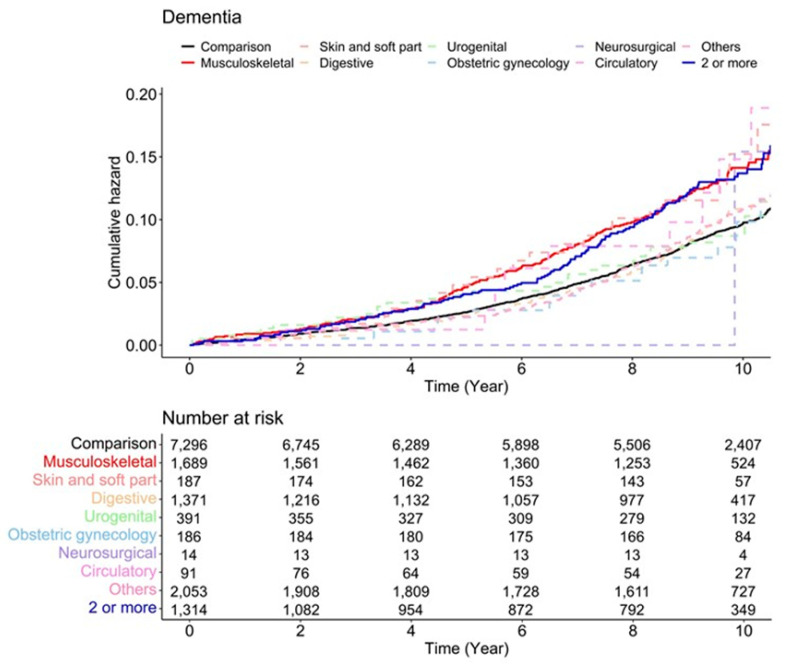
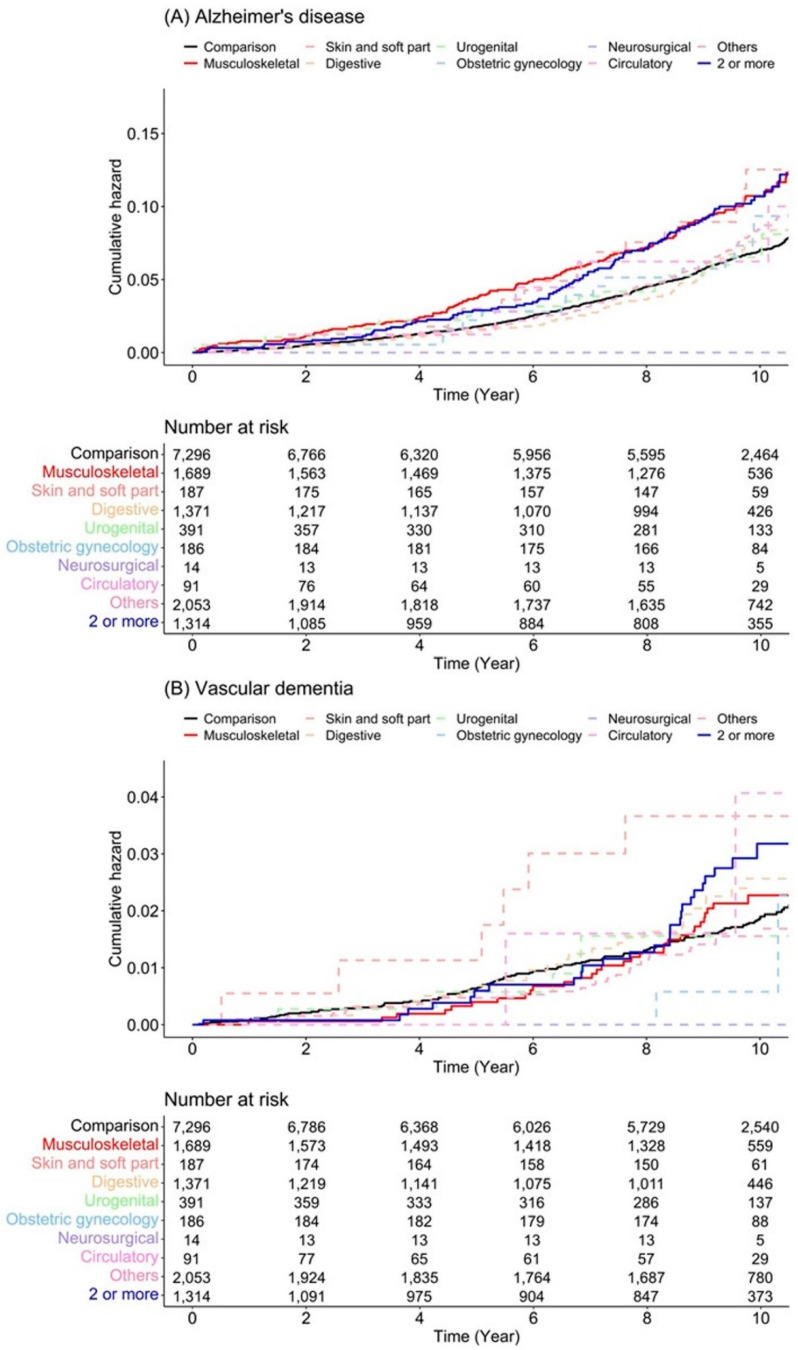
The relationship between dementia and surgery remains unclear. Research to elucidate the relationship between them is scarce, and conducting epidemiological research is complicated. This study aimed to investigate the incidence and risk of dementia according to the surgery type. We performed a retrospective propensity score-matched cohort study using nationwide representative cohort sample data from the Korean National Health Insurance Service in South Korea between 2003 and 2004. Incidence rates for dementia were obtained by dividing the number of patients with dementia by person-years at risk. To identify the risk of dementia according to the type of surgery, we investigated the hazard ratio by each surgery type. The incidence rates of dementia in control, musculoskeletal, and two or more surgeries groups were 9.66, 13.47, and 13.36 cases per 1000 person-years, respectively. The risk of dementia in the musculoskeletal and two or more surgeries groups was 1.44-fold higher (95% confidence interval (95% CI), 1.22-1.70) and 1.42-fold higher (95% CI, 1.17-1.72) than that in the control group, respectively. Patients who underwent musculoskeletal surgery and two or more surgeries had a higher risk of dementia; however, there was no association with the type of anesthesia administered.
Keywords: Alzheimer’s disease; anesthesia; dementia; incidence rate; surgery type; vascular dementia.
Conflict of interest statement
The authors declare no conflict of interest.
Figures
References
-
- WHO Dementia. [(accessed on 2 March 2022)]. Available online: https://www.who.int/news-room/fact-sheets/detail/dementia.
-
- Shavit Y., Weidenfeld J., DeKeyser F.G., Fish G., Wolf G., Mayburd E., Meerson Y., Beilin B. Effects of surgical stress on brain prostaglandin E2 production and on the pituitary–Adrenal axis: Attenuation by preemptive analgesia and by central amygdala lesion. Brain Res. 2005;1047:10–17. doi: 10.1016/j.brainres.2005.04.003. - DOI - PubMed
Grants and funding
LinkOut - more resources
Full Text Sources
