


Comprehensive identification and expression analysis of CRY gene family in Gossypium
- PMID: 35331129
- PMCID: PMC8952943
- DOI: 10.1186/s12864-022-08440-9
Comprehensive identification and expression analysis of CRY gene family in Gossypium
Abstract
Background: The cryptochromes (CRY) are specific blue light receptors of plants and animals, which play crucial roles in physiological processes of plant growth, development, and stress tolerance.
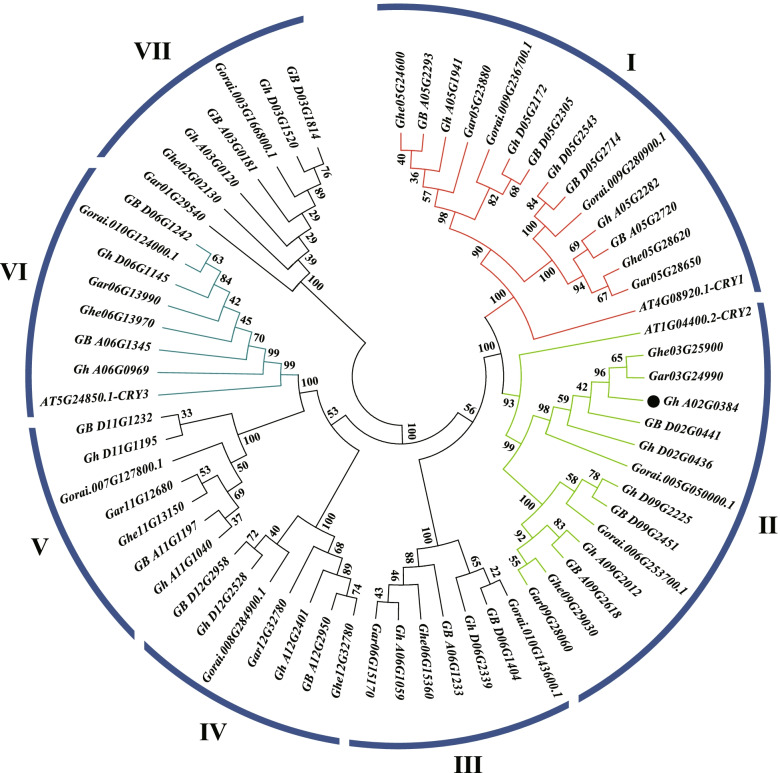
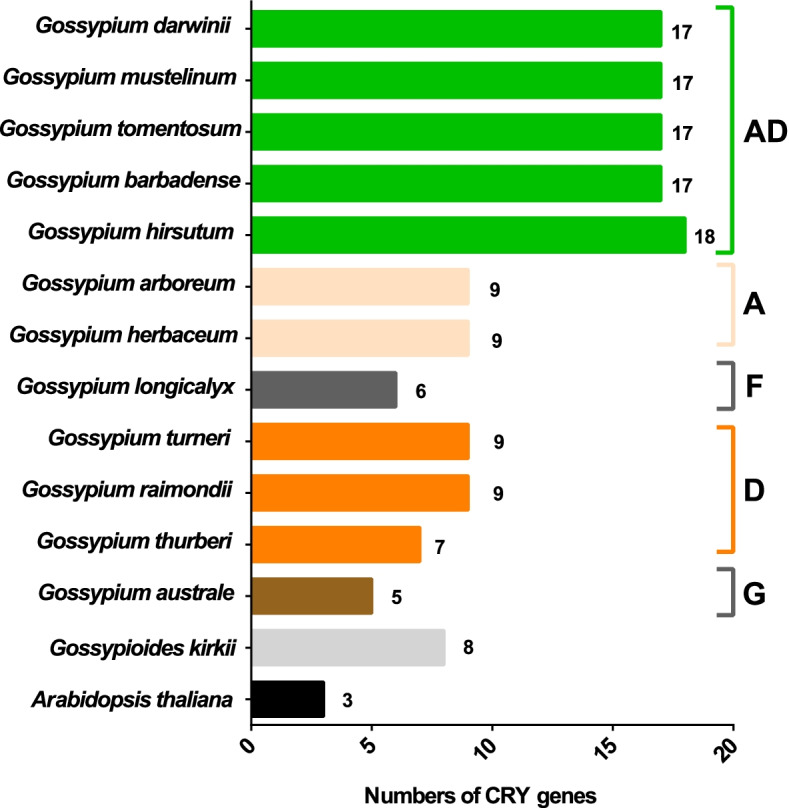
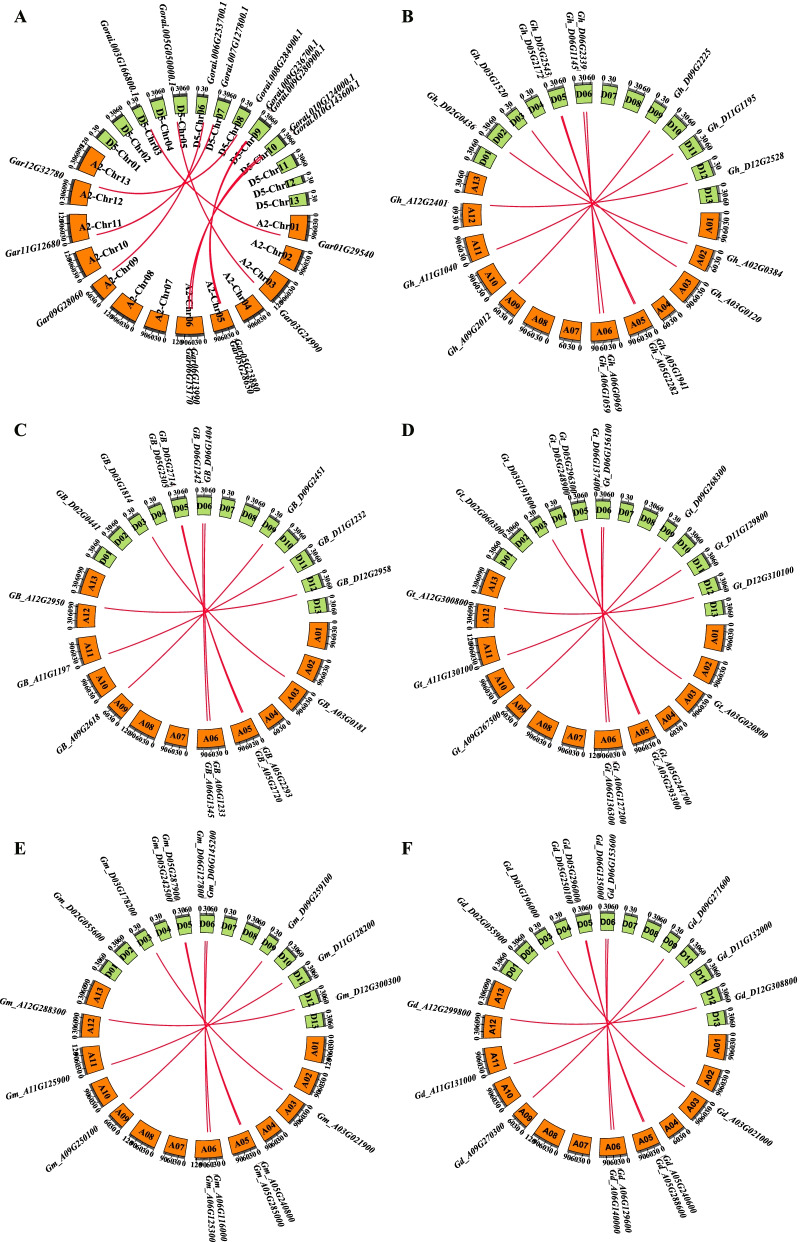
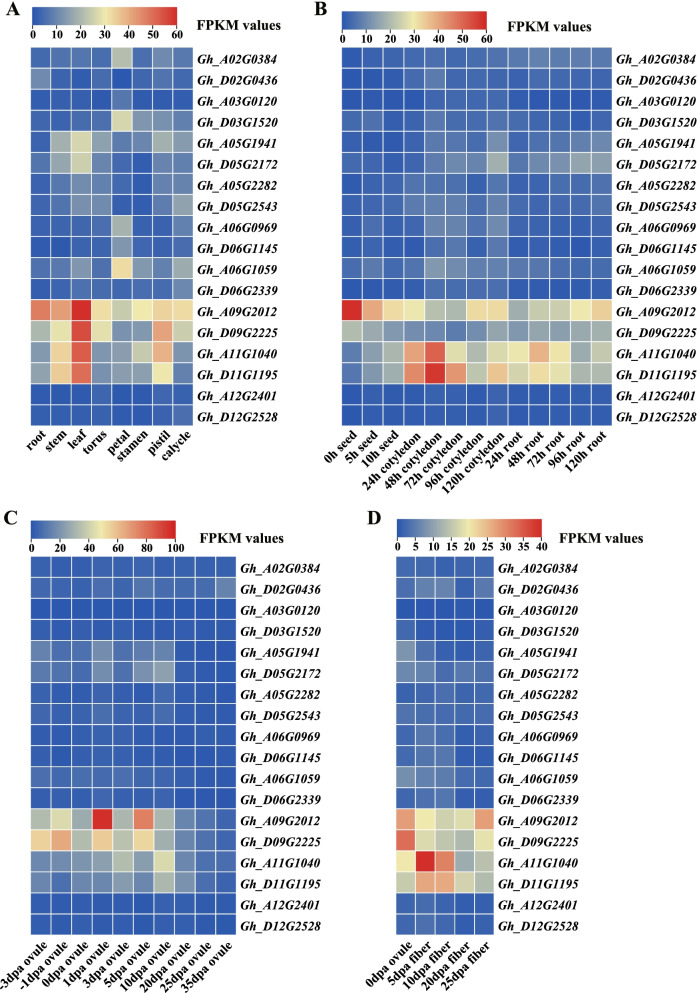
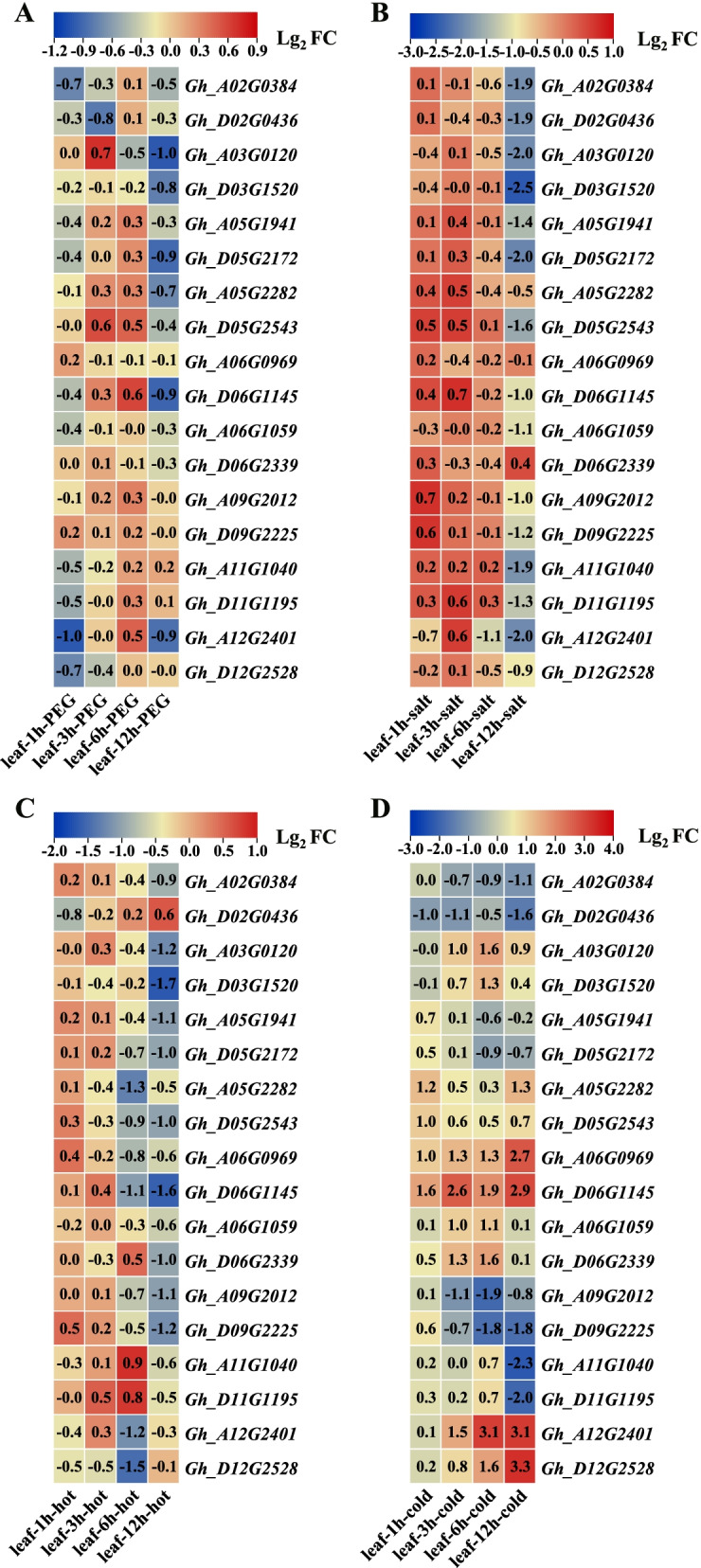
Results: In the present work, a systematic analysis of the CRY gene family was performed on twelve cotton species, resulting in 18, 17, 17, 17, and 17 CRYs identified in five alloteraploid cottons (Gossypium hirsutum, G. barbadense, G. tomentosum, G. mustelinum and G. darwinii), respectively, and five to nine CRY genes in the seven diploid species. Phylogenetic analysis of protein-coding sequences revealed that CRY genes from cottons and Arabidopsis thaliana could be classified into seven clades. Synteny analysis suggested that the homoeolog of G. hirsutum Gh_A02G0384 has undergone an evolutionary loss event in the other four allotetraploid cotton species. Cis-element analysis predicated the possible functions of CRY genes in G. hirsutum. RNA-seq data revealed that Gh_D09G2225, Gh_A09G2012 and Gh_A11G1040 had high expressions in fiber cells of different developmental states. In addition, the expression levels of one (Gh_A03G0120), 15 and nine GhCRY genes were down-regulated following the PEG, NaCl and high-temperature treatments, respectively. For the low-temperature treatment, five GhCRY genes were induced, and five were repressed. These results indicated that most GhCRY genes negatively regulate the abiotic stress treatments.
Conclusion: We report the structures, domains, divergence, synteny, and cis-elements analyses systematically of G. hirsutum CRY genes. Possible biological functions of GhCRY genes in differential tissues as well as in response to abiotic stress during the cotton plant life cycle were predicted.
Keywords: Abiotic stress; Cotton; Cryptochrome; Organ-specific expression; Phylogenetics.
© 2022. The Author(s).
Conflict of interest statement
The authors declare that they have no competing interests.
Figures
References
-
- Cashmore AR, Jarillo JA, Wu YJ, Liu D. Cryptochromes: blue light receptors for plants and animals. Science. 1999;284(5415):760–765. - PubMed
-
- Han X, Chang X, Zhang Z, Chen H, He H, Zhong B, Deng XW. Origin and evolution of core components responsible for monitoring light environment changes during plant terrestrialization. Mol Plant. 2019;12(6):847–862. - PubMed
-
- Ahmad M, Cashmore AR. HY4 gene of A. thaliana encodes a protein with characteristics of a blue-light photoreceptor. Nature. 1993;366(6451):162–166. - PubMed
MeSH terms
Substances
LinkOut - more resources
Full Text Sources
